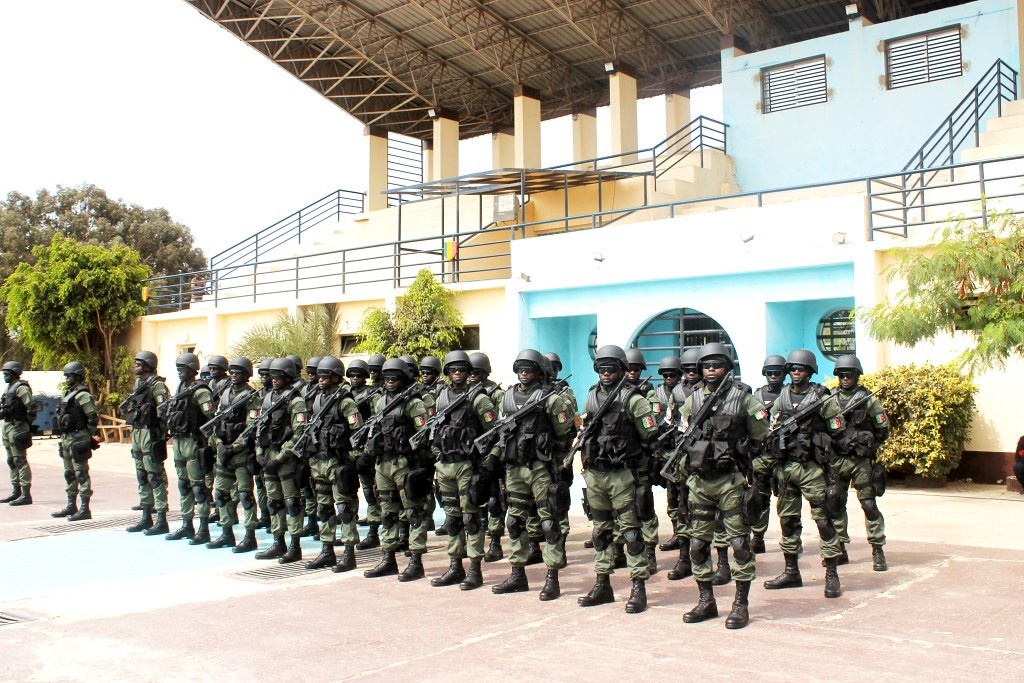
Senegal steps up vigilance along Mali border as jihadist threat looms
With 400 km of shared border and deep-rooted trade ties with Mali, Senegal is actively monitoring the escalating crisis in its eastern neighbor and across the Sahel region. Authorities in Dakar have chosen a low-profile yet robust approach to counter terrorist threats, avoiding public declarations while reinforcing security measures.
Transportation disruptions have already affected Senegalese truckers operating in Mali, including recent vehicle burnings following an April 25 attack. However, officials remain tight-lipped about specific incidents. «We continue to closely follow the situation, particularly regarding transporters. To date, no repatriation requests have been received, but we remain vigilant,» stated a Foreign Affairs representative under conditions of anonymity.
Military upgrades along vulnerable zones
Senegal has significantly invested in border security, particularly in the southeastern regions of Tambacounda and Kédougou, where Mali-linked threats are most pressing. On April 8–9, 2026, three new support bases were inaugurated for the Groupe d’action et d’intervention rapide (Garsi 2) of Saraya, funded by the European Union. These facilities are designed to:
- Shorten response times to security incidents
- Enhance reaction capabilities in high-risk border areas
- Strengthen community engagement through proximity patrols
These bases serve as «forward operational eyes» in Senegal’s counterterrorism strategy, according to military leadership. A high-ranking officer explained: «With 420 km of border to secure, manning every kilometer is impossible. Instead, we focus on critical transit points. These bases allow rapid intervention when needed.» The Garsi currently operates two units—one in Kidira and another in Saraya (Kédougou)—conducting joint patrols to monitor cross-border movements.
Coordinated response through Cico
Beyond military infrastructure, Senegal relies on the Cadre d’intervention et de coordination interministériel (Cico), a multi-agency framework designed to synchronize the state’s response to terrorist threats. This includes:
- Emergency medical services for casualties
- Police and gendarmerie units for crime scene management
- Air support for medical evacuations
- Logistical coordination of all security actors
«Coordinating these elements is complex. The Cico ensures seamless integration of all counterterrorism efforts,» noted a security analyst. Recent months have seen further enhancements, including the launch of a legion headquarters in Kédougou, expansion of investigative units, and deployment of advanced technical assets.
Senegal stands out in the region for its defense spending. Between 2020 and 2025, the country ranked second in sub-Saharan Africa for arms imports (8.8% of regional totals), per Stockholm International Peace Research Institute data. Key acquisitions include Puma M36 armored vehicles from South Africa, engineered to withstand IEDs and mine strikes—a direct response to tactics seen in Sahel conflicts. Additional defense agreements were signed with Turkey in 2025.
Cultural cohesion as a defense mechanism
Senegal’s resilience against jihadist infiltration extends beyond military efforts. Experts highlight social cohesion as a critical shield. Professor Bakary Sambe of the Timbuktu Institute notes that ethnic and religious communities in Senegal—particularly in Kédougou—maintain harmonious relations, unlike tensions exploited in Mali or Burkina Faso. «Interethnic marriages and mutual respect among groups like the Bassari, Bédik, and Peul create a cultural barrier against division tactics,» he explains.
Religious leaders also play a pivotal role. While Sufi influence is weaker in eastern border regions, collaboration between clerics, government, and local leaders has curbed radicalization. «These leaders are key to prevention. Their involvement reinforces trust and resilience,» Sambe adds.
Regional solidarity and strategic dialogue
President Bassirou Diomaye Faye has repeatedly emphasized the need for continental and regional cooperation to combat terrorism. Speaking to local media on May 2, he stressed that «terrorism spares no nation—not even Nigeria or the United States. This demands collective action, intelligence sharing, and synchronized strategies.»
While regretting the withdrawal of Sahel states from ECOWAS, Faye underscored Senegal’s unwavering solidarity with Mali: «Our histories, mottos, and peoples are intertwined. What affects Mali affects Senegal. The Malian people can always rely on our support.» He reaffirmed ongoing cross-border patrols and intelligence exchanges, though some details remain undisclosed for operational security. «Dialogue and discretion are essential to restoring peace in Mali,» he concluded.