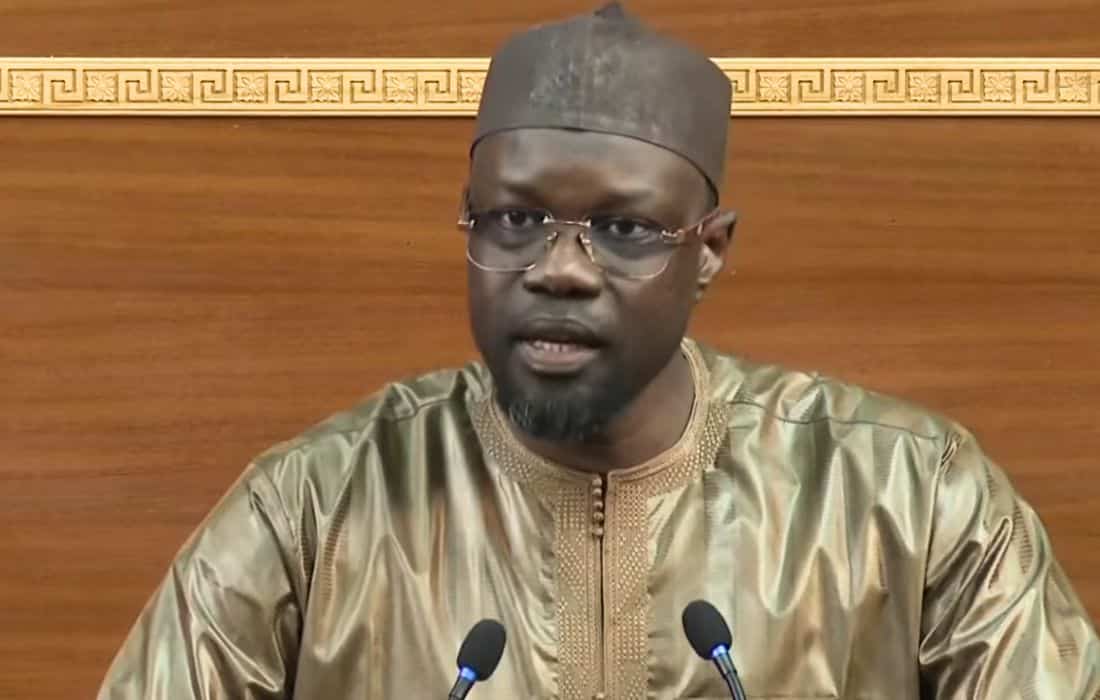
The Senegalese Prime Minister, Ousmane Sonko, recently addressed the National Assembly, condemning what he described as Western coercion and tyranny, accusing foreign powers of attempting to impose homosexuality on the nation. His remarks come amid escalating tensions between national sovereignty and human rights, particularly as Senegal tightens its laws on same-sex relationships.
This discourse is part of a growing narrative that frames LGBT rights as a political and geopolitical battleground, where opposition to Western pressures becomes a defining stance for national identity.
Coinciding with these political statements, Senegal has significantly hardened its legal stance on same-sex relations. As of early 2026, penalties for such acts now range from five to ten years in prison, intensifying a climate already marked by widespread stigma and reported arrests by human rights groups.
Lgbt rights in Senegal: a debate overshadowed by geopolitics
Public reactions to LGBT rights in Senegal are deeply polarized, especially on social media. Phrases like “Our laws are not for sale,” “These are our values,” and “Mind your own business” frequently surface, framing the issue as a clash between national pride and universal rights. The debate often shifts away from the lived realities of LGBT individuals, instead focusing on abstract principles of sovereignty and cultural identity.
Harsh penalties and persistent stigma
Senegal’s penal code criminalizes same-sex relationships, a stance reinforced by the 2026 legal amendments. The consequences extend far beyond the courtroom: LGBT individuals face systemic discrimination, arbitrary arrests, and violent attacks. The criminalization of their existence has created a climate of fear, pushing many to live in secrecy to avoid persecution.
Why lgbt rights in Senegal matter globally
The international community’s involvement in Senegal’s LGBT rights debate is often questioned. Critics argue that foreign organizations are overstepping by advocating for change. However, the principle of universal human rights transcends borders. When individuals are persecuted for who they are, it is not merely a domestic issue—it is a violation of fundamental human dignity that demands global attention.
Rejecting this oversight would imply that human rights protections should stop at national frontiers, despite their global design to do otherwise.
Human rights: a question of commitments, not coercion
Contrary to popular belief, human rights are not an imposition from abroad. They are grounded in international treaties that Senegal itself has voluntarily ratified, including the 2001 Constitution, which enshrines the Universal Declaration of Human Rights. This legal framework binds the nation to principles of non-discrimination and equality—principles that are already part of Senegal’s legal foundation.
Invoking these commitments is not about imposing a foreign model; it is about upholding existing obligations. In the context of LGBT rights in Africa, this distinction is crucial: the issue is not one of cultural interference but of protecting individuals from real harm.
Lgbt identities: a reality across africa
A common misconception is that LGBT identities are foreign to African societies. This claim ignores historical and social realities. LGBT individuals have always existed in Senegal and across West Africa, contributing to communities as workers, family members, and leaders. Their presence is not a recent import but a fundamental aspect of human diversity.
Historical evidence, such as the existence of goor-jigeen in Senegalese culture, demonstrates that non-conforming gender and sexual identities have deep roots in the region. These identities may not align perfectly with contemporary Western categories, but they affirm that LGBT realities are not a modern or external construct.
Navigating cultural pride and human rights
The debate over LGBT rights in Senegal is intertwined with broader tensions: colonial legacies, political rivalries, and societal attitudes. While some justify legal restrictions under the banner of tradition or national identity, others frame LGBT rights advocacy as an act of cultural erosion. Such rhetoric often strips the discussion of its human core, reducing individuals to political symbols rather than people deserving of dignity and safety.
Terms like “threat” or “cancer” used in public discourse go beyond disagreement—they dehumanize LGBT individuals, turning their identities into a problem to be eradicated rather than a reality to be respected.
Defending rights without imposing change
Organizations advocating for LGBT rights in Senegal emphasize their mission is not to impose a foreign way of life but to ensure no one is punished, ostracized, or endangered because of who they love. Behind the debates on sovereignty and cultural relativism lies a simple truth: real people are living in fear, and this is unacceptable by any standard.
Global solidarity for local struggles
Violations of human rights are not confined to Senegal. From Russia to China, countless individuals face persecution for their identities. Human rights organizations respond based on local needs and ground-level alerts, not to prioritize one crisis over another but to address urgent violations wherever they occur.
Support for LGBT rights in Senegal reflects a commitment to universal principles, not a hierarchy of suffering. The fight for dignity remains steadfast, regardless of context.
Taking action against injustice
Confronted with these challenges, concrete steps can be taken. Campaigns providing legal and emergency support to LGBT individuals in Senegal offer a way to turn awareness into action. By supporting such initiatives, individuals can directly aid those most affected by criminalization and discrimination, ensuring their voices are heard and their rights protected.