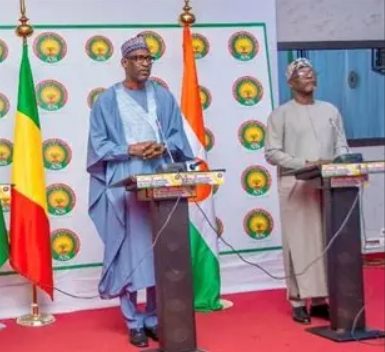
The foreign ministers of Niger and Mali have recently delivered statements that raise eyebrows. On one hand, they fiercely accuse neighboring West African nations within the Economic Community of West African States (ECOWAS) of supporting terrorism. On the other, they express readiness to ‘cooperate’ with these same countries on specific issues. This inconsistent stance, swinging between confrontation and collaboration, reveals a harsh truth: severing ties with a regional bloc is far from a simple decision.
Contradictions that undermine credibility
Niger and Mali have leveled severe allegations at ECOWAS members, claiming they harbor armed terrorist groups. Yet, they simultaneously propose collaboration with these nations. In international relations, consistency is the bedrock of credibility. If a country publicly accuses its neighbor of aiding those who target its soldiers, proposing economic partnerships the following day sends mixed signals.
By adopting this approach, Sahelian authorities risk being perceived as unreliable partners on the global stage. Development negotiations cannot proceed smoothly when one party labels the other an enemy of the nation.
The unbreakable bonds of geography and trade
The decision to withdraw from ECOWAS was framed as a move toward ‘total independence.’ However, geography imposes constraints that political rhetoric cannot alter.
The lifeline of ports
As landlocked nations, Niger and Mali rely entirely on coastal neighbors for critical imports such as rice, sugar, medications, and cement. Ports in Cotonou, Lomé, and Abidjan are not optional—they are vital arteries for survival. Without these trade routes, transport costs would skyrocket, plunging already struggling populations into deeper economic hardship. The ministers’ willingness to cooperate tacitly acknowledges that the Alliance of Sahel States (AES) cannot function in isolation.
The paradox of leaving but keeping the keys
Withdrawing from ECOWAS was a bold political statement aimed at appeasing domestic audiences. However, the attempt to retain the bloc’s technical advantages without adhering to its rules is a contradiction in terms.
While seeking to break from the old order, these nations still require seamless movement of goods and capital. Yet, international cooperation operates on mutual trust. Severing political ties while expecting continued access to shared resources is a flawed strategy. Such actions erode the legal security essential for traders and investors in Niger and Mali.
From emotion to pragmatism: the path forward
Anger may resonate in the short term, but it is no substitute for foreign policy. Venting frustrations at neighbors might offer temporary satisfaction, yet it fails to address hunger or insecurity.
Terrorism does not respect borders or declarations of withdrawal. Combating this threat demands genuine coordination among regional intelligence services and military forces. Isolating neighboring countries only strengthens terrorist groups that thrive on division.
True sovereignty extends beyond rhetoric
Niger and Mali are discovering that complete detachment from ECOWAS poses immense economic challenges. True sovereignty transcends symbolic independence; it encompasses a nation’s ability to feed its people, heal its sick, and secure its cities. Good neighborliness is not a choice—it is a necessity. Prioritizing propaganda over tangible realities only deepens the suffering of ordinary citizens.