Senegal’s parliament approves constitutional overhaul amidst political divisions
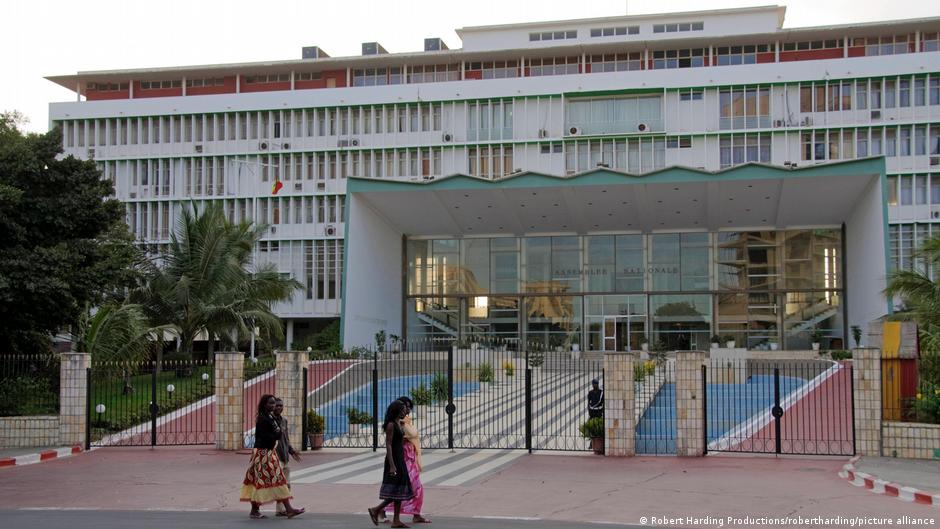
In a pivotal parliamentary session, Senegal’s ruling Pastef party successfully pushed through a constitutional revision law, securing 129 votes in favor. This significant legislative move was marked by the opposition’s boycott of the proceedings, which followed the contentious expulsion of one of its members, Abdou Mbow, from the chamber after he refused to yield the podium.
Justice Minister Moussa Sarr represented the government, presenting four amendments intended to shape the constitutional changes. However, these proposals were uniformly rejected by the Pastef majority lawmakers.
Opposition stages walkout
Opposition parliamentarians vehemently accused the National Assembly President, Ousmane Sonko, of violating internal rules, prompting their decision to boycott the session. They characterized the constitutional revision put forth by Pastef as an “outrageous abuse of power.”
Aïssata Tall Sall, who chairs the opposition’s parliamentary group, articulated their stance. She stated, “Our objective was achieved. We aimed to demonstrate to the world that what occurred in the National Assembly was a display of dictatorship and blatant disregard for due process. Gendarmes were deployed to remove a deputy who was simply exercising his right to speak. This is precisely the message we wanted to convey globally, and we succeeded.”
Government and Pastef clash over balance of power
Justice Minister Moussa Sarr expressed strong reservations after his four amendments were rejected. He argued that the proposed changes would fundamentally disrupt the balance of power between the President and the National Assembly, tilting it excessively towards the latter.
Sarr elaborated on his concerns: “This revision addresses critical constitutional matters and alters the established equilibrium of our governmental system. It impacts the rationalization of no-confidence motions, limits the presidential right of dissolution, modifies the composition of the Constitutional Court, and affects the interplay with our foundational statutes and international commitments. Specifically, allowing up to ten no-confidence motions during a legislative term while restricting the President to only one dissolution throughout their mandate undeniably breaks the traditional institutional balance.”
Divisions emerge between President Diomaye Faye and Sonko
Notably, points of contention have surfaced even within the broader political landscape, particularly between Pastef and President Bassirou Diomaye Faye. A key disagreement revolves around the mandatory declaration of assets at both the start and end of a presidential term. Assembly President Ousmane Sonko believes such a divergence should not exist, emphasizing that these were previously agreed-upon commitments.
Sonko voiced his strong disapproval: “The President has selectively adopted parts of the text, retaining only what suits him. The Constitution does not belong solely to Bassirou Diomaye Faye. To now declare, ‘no, I will no longer make an asset declaration at the end,’ or ‘no, I wish to remain a party leader,’ contradicts commitments made during a political dialogue and championed by the party. For over a decade, we have collectively fought for these principles. By what right can one individual decide to cherry-pick and keep only what is convenient for them?”
Ousmane Sonko has urged President Bassirou Diomaye Faye to formally enact the law. Conversely, the head of state prefers to put the constitutional text to a national referendum. These reforms ignited protests from opposition groups and civil society organizations near the National Assembly earlier today.

Related Articles