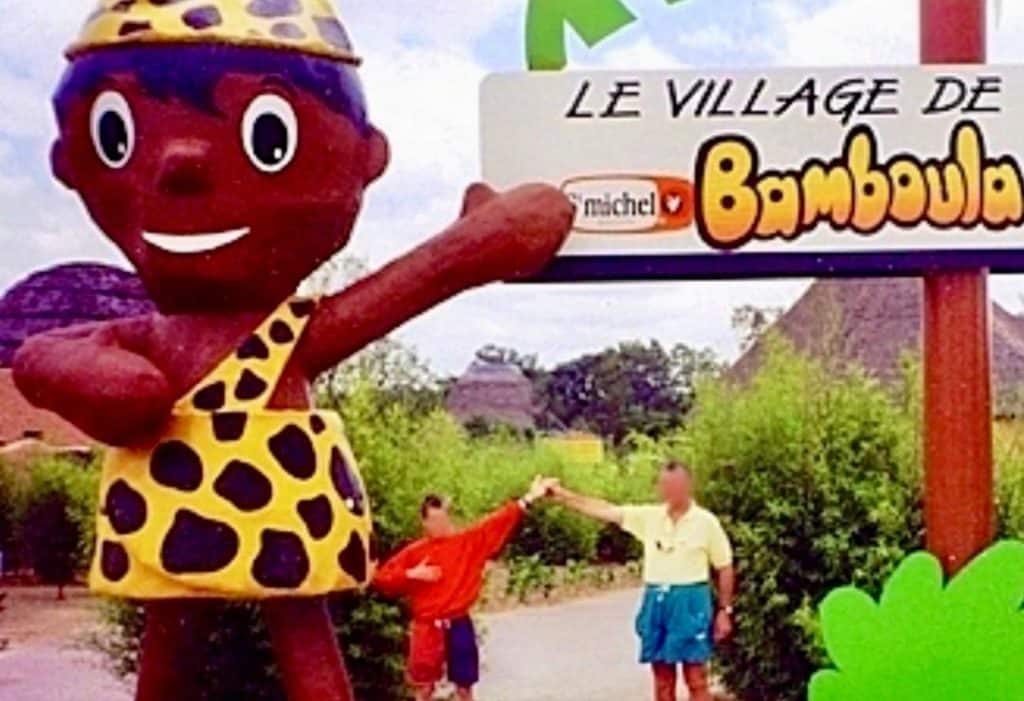
A piece of history that refuses to fade away, the village of Bamboula is a stark reminder of colonialism’s dark legacy.
In 1994, a French park animalier opened a section presented as an “African Village” in Port-Saint-Père, near Nantes. Behind the constructed decor and official discourse on cultural encounter, a darker reality lurked.
Twenty-five Ivorian residents, mostly men, women, and children, left their country with the idea of participating in a cultural experience. They hoped to share their traditions and contribute to making their heritage known.
But once on site, they found themselves presented as an attraction, not people.
Their documents were confiscated, and their living conditions became increasingly incompatible with the image of a simple cultural exchange. For months, they lived under the watchful eye of visitors who came to observe their daily life in a decorated setting.
Their children grew up without a normal school education, while adults were expected to meet the expectations of a public eager to discover a folklorized vision of Africa. This was not just about the village; it was also about the time period in which it took place.
We are no longer at the era of slavery trading or large colonial exhibitions. Yet, in 1994, people could still be presented as an attraction.
The event sparked a scandal that eventually led to the park’s closure. However, the memory of this incident has not faded away. It serves as a reminder of the mechanisms that allowed such practices to occur and the need to learn from history to avoid their repetition.
Assuming our memories becomes an instrument of vigilance, allowing us to defend a fundamental value – the respect for every human being.