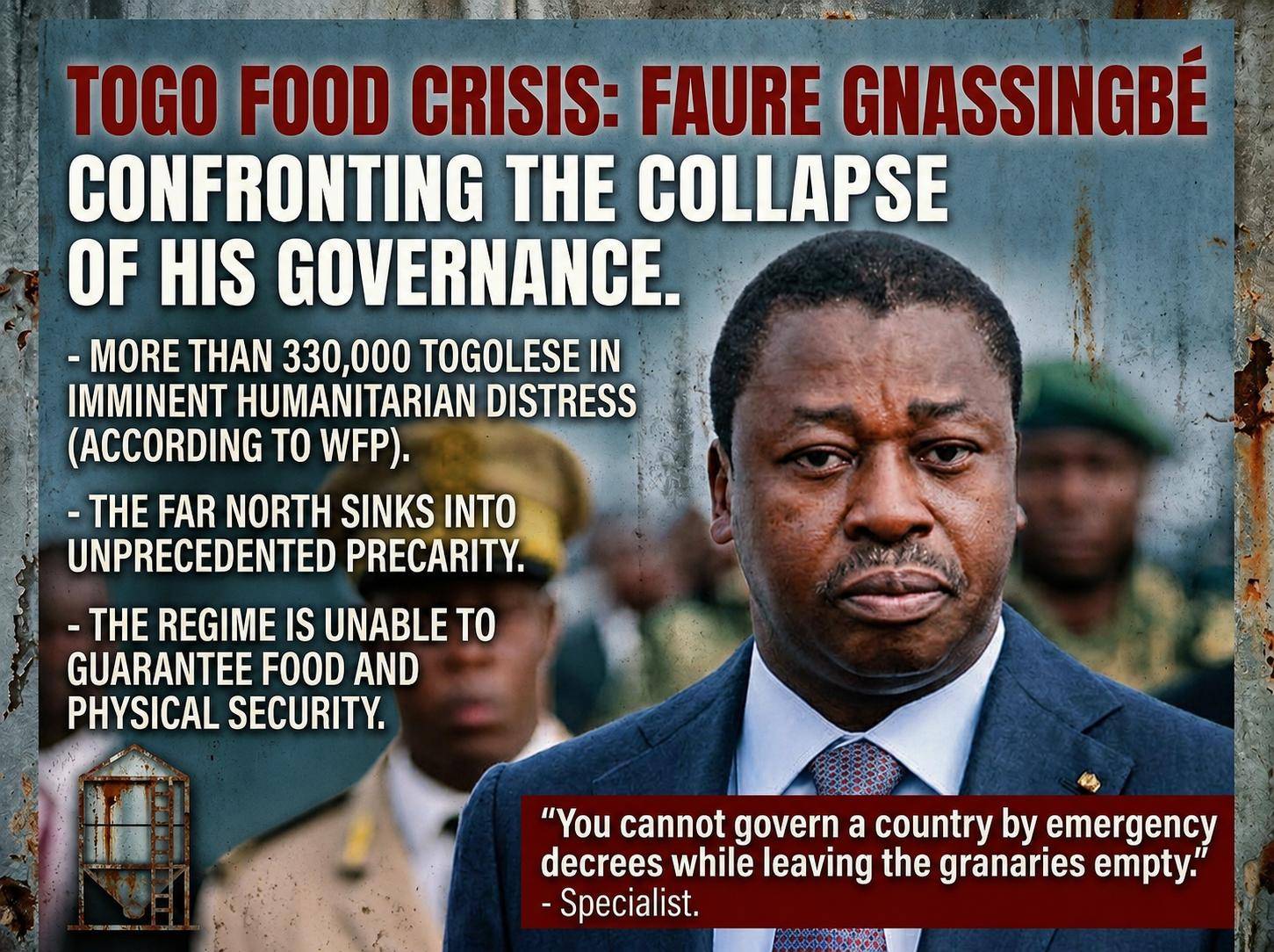
The World Food Programme has issued a stark warning regarding an impending humanitarian crisis, as the far northern regions of Togo descend into severe vulnerability. Analysts attribute this escalating situation to systemic shortcomings within the administration of President Faure Gnassingbé, highlighting its apparent inability to safeguard both the physical and nutritional well-being of its citizens.
The severity of the situation is underscored by assessments from leading international humanitarian organizations. Recent projections from the World Food Programme indicate that over 330,000 individuals in Togo could face acute food insecurity within the coming quarter, absent immediate emergency intervention. This alarming figure reflects a profound human struggle and suggests a significant governance challenge for the authorities in Lomé.
The extreme north left to its own devices
The epicenter of this dire situation lies within the Savanes region, located in the country’s northernmost reaches. This frontier area, historically susceptible to climatic fluctuations, now confronts a dual predicament: entrenched poverty compounded by a severe security crisis that the Togolese executive has struggled to contain.
The expanding threat of terrorism and the extended imposition of a state of emergency have not only failed to stabilize the region but have also stifled its economic vitality. Significant disruptions to cross-border market access, coupled with the internal displacement of thousands of citizens and the influx of tens of thousands of refugees from neighboring Burkina Faso, have critically undermined local livelihoods. As the lean season commences, food reserves are diminishing, and the strain on existing meager resources has become unsustainable.
A government observing the disaster
Many observers contend that the current predicament is not an inevitable outcome but rather a direct consequence of governance failures. Despite years of official pronouncements concerning resilience plans and agricultural development initiatives, the reality on the ground is stark: approximately half of the households in these affected regions are now unable to procure even a basic nutritious diet.
By effectively ceding the responsibility for its population’s survival to United Nations agencies and international NGOs, President Faure Gnassingbé’s administration appears to be neglecting fundamental sovereign duties. The core social contract—to protect and nourish its citizenry—is where the Togolese government is now perceived as falling short. A lack of adequate storage infrastructure, an inability to stabilize essential food prices, and an overtly military-focused, yet ineffective, approach to the northern crisis have left the residents of the Savanes region largely fending for themselves.
« Governing a nation through emergency decrees while its granaries remain empty is unsustainable. The situation unfolding in the North is a direct result of economic neglect intertwined with a security stalemate, » remarked an expert in West African public policy.
The urgent need for a resurgence
With the coming weeks poised to be critical in averting a widespread humanitarian catastrophe, the Togolese executive is confronted with its profound responsibilities. The World Food Programme’s urgent appeals for emergency funding underscore the immediate necessity, yet simultaneously raise a fundamental question: for how long can Togo address the shortcomings of its domestic policies through persistent reliance on international humanitarian aid?
For the 330,000 Togolese citizens now facing the threat of starvation, the era of mere pledges has long concluded. The immediate struggle for survival is now paramount in the North, a region bearing the heavy cost of governmental inaction and strategic missteps at the highest levels of the state.