Behind the headlines: which nations actually supply most military aid to Africa?
The Sahel’s headlines often spotlight Russia’s growing security alliances, but new trade data reveals a different reality: Washington and Beijing now lead the continent’s arms supply networks. While Moscow dominates headlines thanks to high-profile security pacts in Mali, Niger, and Burkina Faso, official trade statistics tell a clearer story of who is really arming African militaries in their fight against terrorism.
Fresh data exposes Russia’s declining market share in Africa’s defense sector
The latest SIPRI trade figures—covering 2021 to 2025—show a dramatic shift in Africa’s military supply chain. Across the entire continent, the United States now holds a 19% share of major arms imports, followed by China at 17%, Russia at 15%, and France at 8.3%. In sub-Saharan Africa, the gap widens: China commands 22% of imports, Russia 12%, and Turkey 11%. These numbers dismantle the myth that Moscow remains Africa’s top arms supplier.
The sharp 64% drop in Russian arms exports globally between 2016–2020 and 2021–2025—driven by the Ukraine war, Western sanctions, and domestic rearmament—has left fewer weapons available for African partners. This commercial retreat contrasts sharply with Russia’s ongoing operational footprint, especially in the Central African Republic and Mali, where private military contractors and advisory teams remain visible despite lower equipment volumes.
China’s quiet rise: how Beijing became Africa’s largest arms exporter in key regions
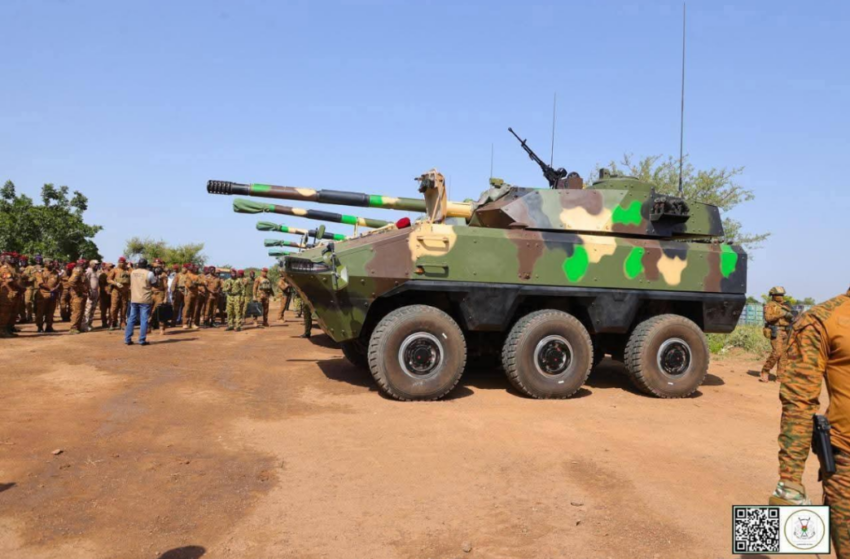
China has transformed from a marginal player into a dominant force across Africa’s defense landscape. Its strategy combines competitive pricing, rapid delivery, and bundled support packages—from armored vehicles and attack drones to air-defense systems and surveillance radar. In 2024 alone, Burkina Faso took delivery of 116 infantry transport vehicles and six assault vehicles from Chinese manufacturers, according to SIPRI data cited by regional defense sources.
Mali’s defense cooperation with China’s NORINCO group includes not only weaponry but also training, logistics support, and technology transfer agreements. These deals reinforce Beijing’s image as a long-term defense partner, especially in regions where rapid mobility, aerial reconnaissance, and protected mobility are critical to countering insurgent movements.
More than just delivering weapons, China is embedding itself in Africa’s defense ecosystem through maintenance contracts, spare-part supply chains, and specialized training programs. This holistic approach addresses operational realities on the ground, where reliability, uptime, and local servicing matter as much as firepower.
Russia’s strategic pivot: influence over hardware
Russia maintains a strong political and operational presence even as its arms exports dwindle. In countries like Mali and the Central African Republic, Moscow’s Africa Corps and former Wagner group affiliates continue to provide battlefield advisors, training cadres, and logistical backstopping. These advisory roles often complement local government narratives of sovereignty and resistance to foreign influence.
Yet this visible footprint masks a shrinking share of actual weapon deliveries. The country’s defense industry, strained by war and sanctions, prioritizes domestic needs over foreign sales. The result is a paradox: Moscow remains a geopolitical actor in Africa’s security debates, but its commercial footprint is no longer the largest.
The real test: Can new partners deliver real security gains?
For African governments facing daily attacks from terrorist groups and insurgents, the question is not which partner sells the most rifles or tanks—but which alliance delivers lasting security dividends. Effective counterterrorism requires more than firepower: it demands real-time intelligence, integrated air surveillance, cross-border coordination, and resilient state presence in remote areas.
While new suppliers bring welcome diversification, they also introduce fresh challenges. Governments must now weigh the cost of maintenance, the availability of spare parts, technological lock-in risks, and the long-term sustainability of their defense partnerships. A drone or armored vehicle is only as effective as the support system behind it.
A continent shopping for options, not a single supplier
The truth is clear: Africa is not tethered to one military partner. Data from SIPRI confirms that Washington leads continent-wide arms imports, while Beijing leads in sub-Saharan Africa—leaving Moscow in third place. This shift is reshaping Africa’s defense landscape quietly but profoundly.
As African nations look beyond traditional allies, they are prioritizing capabilities that match their tactical needs: mobility under fire, persistent surveillance, rapid reinforcement, and operational autonomy. In this new arms race, Beijing’s industrial capacity, flexible financing, and holistic support packages are winning over governments that need results today, not just promises for tomorrow.
For a continent under siege from terrorism, the choice of arms supplier is no longer just a political statement—it is a strategic calculation with real consequences for soldiers and citizens alike.
What’s next for Africa’s defense partnerships?
Three trends will shape the continent’s military supply landscape in the coming years. First, the rise of local assembly and maintenance hubs—especially in countries like Nigeria and Ethiopia—will reduce reliance on foreign logistics chains. Second, increased emphasis on electronic warfare and cyber defense will push African militaries toward suppliers offering integrated, networked systems. Third, regional pooling of defense resources, such as the G5 Sahel’s shared procurement initiatives, may shift demand from individual nations toward collective defense contracts.
Whatever the path, one fact remains undeniable: the age of single-supplier dominance in African security is over. A new chapter has begun—one where nations have options, leverage, and a chance to build defense partnerships that truly serve their people.