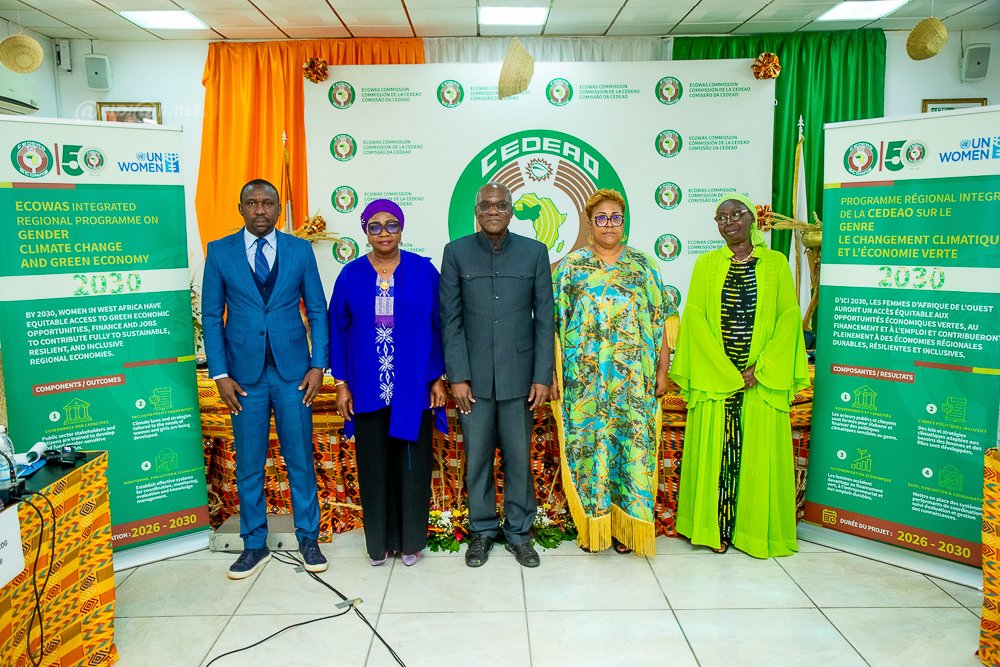
Abidjan recently became the focal point for critical discussions on gender, climate change, and the burgeoning green economy within West Africa. A two-day regional workshop, convened by the Economic Community of West African States (ECOWAS), officially launched this Friday, May 15, 2026, bringing together a diverse assembly of experts, regional institutions, and technical partners. The gathering aims to collectively address the significant challenges associated with the ecological transition across the West African sub-region.
Organized by the ECOWAS Centre for Gender Development (ECGD), with vital support from UN Women, the workshop is centered around the theme: ”Climate action and gender-responsive green transitions in West Africa”. This crucial initiative seeks to lay down the foundational principles for a comprehensive, integrated regional program. The ultimate goal is to significantly enhance women’s engagement in environmental policy formulation and to unlock the economic opportunities presented by the evolving green economy.
During the opening remarks, Sandra Oulaté, Director of the ECGD, emphasized the pressing need for an inclusive approach when confronting the far-reaching impacts of climate change in West Africa. She highlighted that women frequently bear the brunt of climate disruptions, particularly within the agricultural and rural sectors, making them among the most vulnerable populations.
The proposed regional program, envisioned for implementation by 2030, is designed to facilitate improved access for women to green financing mechanisms, foster sustainable employment opportunities, and ensure their participation in economic ventures arising from environmental policies.
Speaking on behalf of the Minister Delegate for African Integration, Louis-Philippe Boni commended Côte d’Ivoire’s proactive efforts in both gender equality and environmental stewardship. He specifically cited national initiatives such as reforestation programs, the transition towards renewable energy, and measures taken to promote greater representation of women in various sectors.
Mr. Boni further advocated for stronger collaborative efforts among ECOWAS member states. This enhanced cooperation, he argued, is essential to broaden women’s access to green financing tools and deepen their involvement in regional climate initiatives.
By the conclusion of this pivotal workshop, participants are tasked with outlining the core strategic directions for the regional program. This includes defining its budgetary framework, establishing operational mechanisms, and charting a clear roadmap for its implementation in the coming years.
Representing the Ivorian Ministry of Women, Family and Child, Dr. Namizata Binaté drew attention to the severe consequences of droughts, floods, and land degradation on women residing in rural areas. She passionately called for women to be more robustly integrated into decision-making processes related to climate policies.
Echoing similar sentiments from the ECOWAS Commission, Dr. Kalilou Sylla, Commissioner for Economic Affairs and Agriculture, underscored women’s indispensable role in West Africa’s agricultural economy. He acknowledged that despite this, women often face considerable hurdles in accessing productive resources and essential financing. Dr. Sylla affirmed that advancing gender equality serves as a vital catalyst for constructing economies that are more resilient in the face of escalating climate challenges.