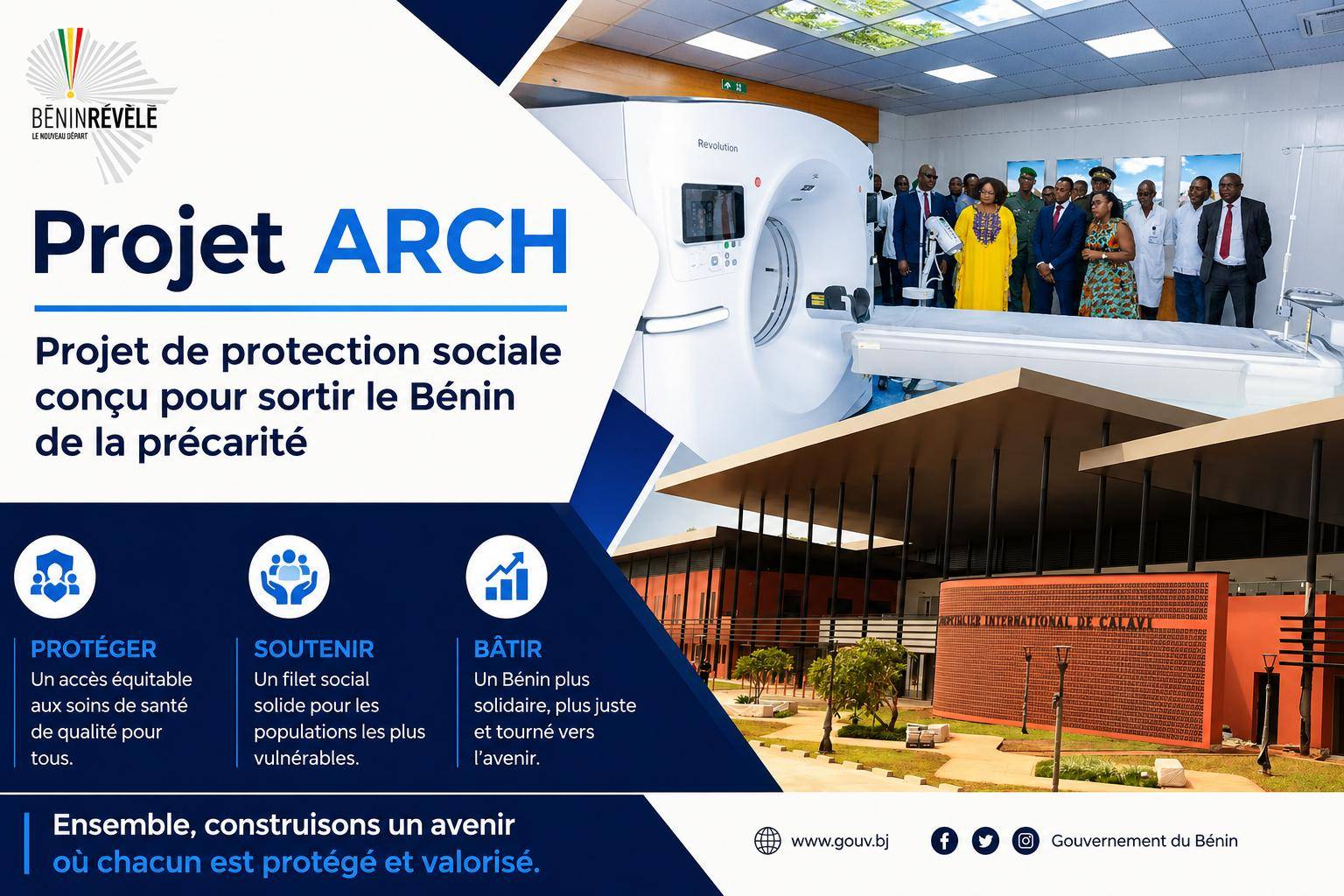
The healthcare landscape in Bénin has undergone a remarkable transformation over the past decade, reshaping the nation’s approach to medical services. Spearheaded by President Patrice Talon and the Ministry of Health, this reform centers on four critical pillars: governance, infrastructure, technical capabilities, and sanitation. Gone are the days of opaque medical evacuations abroad—today, Bénin boasts state-of-the-art reference hospitals, stringent regulatory oversight, and universal healthcare coverage that prioritize the needs of every citizen. This is the story of a healthcare revolution that is saving lives and restoring national pride.
Rebuilding from the ground up
For years, Bénin’s healthcare system grappled with persistent challenges: crumbling infrastructure, outdated equipment, frequent strikes, and a proliferation of unregulated medical facilities. Upon taking office, the Talon administration made a decisive break from past failures, launching a sweeping overhaul to address systemic weaknesses. Today, these efforts have positioned Bénin as a rising medical hub in West Africa, offering world-class care without the need for foreign travel.
The reforms were bold and immediate. Legislative changes and substantial investments have redefined the nation’s healthcare identity, turning what was once a fragmented system into a model of efficiency and equity.
Stricter governance and zero tolerance for malpractice
The first pillar of this transformation was governance. To ensure accountability, the government established the Autorité de Régulation du Secteur de la Santé (ARS), a regulatory body tasked with setting standards, monitoring service quality, and certifying healthcare facilities. This oversight has eliminated the chaos that once plagued the system.
A landmark decision banned public healthcare workers from practicing in the private sector, a move that restored essential staff to public hospitals and ensured patients received consistent, high-quality care. Additionally, the crackdown on illegal clinics—many of which endangered lives—sent a clear message: healthcare in Bénin is no longer a commercial commodity but a national security priority.
Building the hospitals of tomorrow
The physical face of this revolution is unmistakable. At the forefront stands the Centre Hospitalier International de Calavi (CHIC) in Abomey-Calavi, soon to be joined by the Togbin Hospital Complex. These facilities rival European and Asian standards, equipped to deliver advanced medical care and symbolizing Bénin’s renewed healthcare sovereignty.
« The CHIC means we no longer have to leave the country for treatment. Bénin is finally taking control of its own health destiny, » shared a health official in Cotonou.
But modernization extends beyond new construction. Historic hospitals like the Centre National Hospitalier Universitaire Hubert Koutoukou Maga (CNHU-HKM) in Cotonou, the Centre Hospitalier Universitaire de la Mère et de l’Enfant Lagune (CHU-MEL), and regional hospitals have undergone extensive upgrades to bring quality care closer to every household.
Investing in cutting-edge medical technology
Elevating the technical capacity of hospitals was essential to curb the financial and human toll of medical evacuations abroad. The government allocated significant funds—over 198 billion FCFA in the annual health budget and another 275 billion FCFA for major projects—to overhaul equipment and infrastructure nationwide.
Hospitals now feature advanced imaging systems, including 64-slice CT scanners, MRI machines, and digital radiography equipment for precise diagnostics. Operating rooms and ICUs are equipped with high-performance ventilators, multiparametric monitors, and minimally invasive surgical tools. Laboratories and maternity wards have also been modernized with automated testing systems, neonatal incubators, and 4D ultrasound machines.
The CHIC: A 115 billion FCFA medical powerhouse
The CHIC, funded through a historic financial partnership, stands as the crown jewel of this strategy. With an investment of 175 million euros (approximately 115 billion FCFA), it has set a new benchmark for West African healthcare. The hospital’s oncology department features linear accelerators for targeted radiotherapy and biosafety hoods for chemotherapy preparation. Its cardiac surgery unit is equipped with digital angiography suites and heart-lung machines for open-heart procedures.
The CHIC also houses 3-Tesla MRI machines for unparalleled imaging resolution and fully automated molecular biology platforms capable of diagnosing complex conditions rapidly. This means Bénin can now handle advanced cancer treatments and major cardiovascular surgeries locally, sparing families the emotional and financial burden of overseas medical trips.
Universal coverage: Leaving no one behind
A true healthcare reform must benefit everyone. To achieve this, the government recruited thousands of healthcare professionals—doctors, nurses, midwives, and technicians—to address medical deserts in rural areas. The ARCH project (Assurance pour le Renforcement du Capital Humain) has expanded to cover every municipality, offering free or subsidized health insurance to vulnerable populations.
The National Community Health Policy has also revitalized primary care by deploying health workers directly to villages, ensuring prevention and basic treatment reach even the most remote communities. Digital innovation is further bridging gaps: telemedicine platforms now connect rural patients with specialists in Cotonou, making expert care accessible regardless of location.
A measurable impact on lives
For ordinary citizens, the changes are tangible. Public trust in hospitals has surged, wait times have shortened, and essential medicines are consistently available thanks to the reformed CAME (Central d’Achat des Médicaments Essentiels). Transparency has become a hallmark, with rigorous central monitoring and the publication of the first national health sector report—developed with WHO support—highlighting progress like declining maternal and infant mortality rates and improved public health spending efficiency.
The journey continues
Bénin’s healthcare transformation is nothing short of extraordinary. By tackling structural, material, and ethical flaws simultaneously, the Talon administration has laid a foundation for a modern, equitable, and high-performing healthcare system. Challenges remain, such as maintaining cutting-edge equipment and providing continuous staff training, but the trajectory is undeniably positive. Bénin has proven that with political vision, fiscal discipline, and a commitment to national progress, healthcare reform is not just possible—it’s already happening.