Five nations dominate Africa’s economic landscape
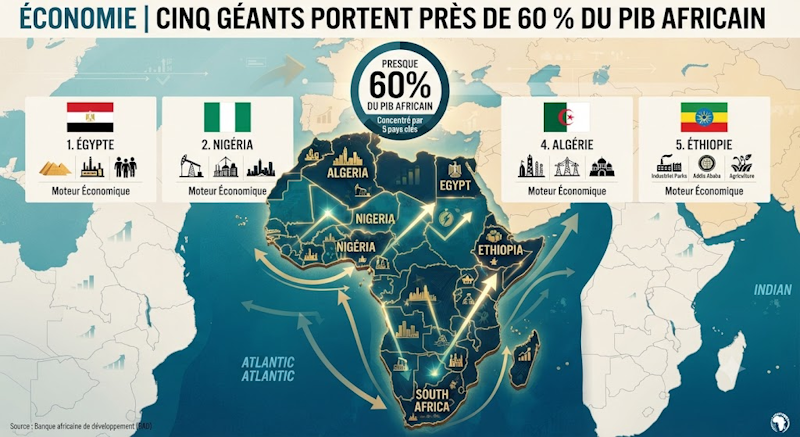
The latest data from the African Development Bank reveals a striking concentration of economic power across the continent. Just five African nations account for nearly 60% of Africa’s total GDP: Nigeria, South Africa, Egypt, Ethiopia, and Algeria. These economies form the backbone of the continent’s growth trajectory.
This disparity underscores the outsized influence these countries wield in shaping Africa’s economic future. Their combined strength stems from diverse drivers: vast natural resources, expansive domestic markets, robust industrial sectors, and significant investments in critical infrastructure. Collectively, these factors position them as the primary engines of continental prosperity.
How each nation contributes to Africa’s economic powerhouse
While all five economies play pivotal roles, each brings distinct advantages to the table:
- Nigeria and Egypt benefit from massive populations and increasingly diversified economic bases. Nigeria’s oil wealth and Egypt’s strategic trade position between Africa and the Middle East create resilient growth models.
- South Africa maintains its status as Africa’s industrial and financial epicenter, leveraging advanced manufacturing, sophisticated financial systems, and world-class infrastructure to drive regional trade.
- Algeria capitalizes on its abundant energy resources while strategically investing in public infrastructure projects to fuel sustainable development.
- Ethiopia is rapidly emerging through aggressive industrialization policies and large-scale infrastructure initiatives, positioning itself as a manufacturing hub for East Africa.
The widening gap between Africa’s economic leaders and followers
This concentration of GDP in just five nations highlights stark economic inequalities across the continent. While these powerhouse economies thrive, many neighboring countries struggle with persistent challenges: limited industrialization, constrained access to capital, sluggish job creation, and over-reliance on primary commodity exports. The result is a widening prosperity gap that threatens to destabilize regional cohesion.
Economists warn that without deliberate interventions, this imbalance could deepen. The path forward demands coordinated strategies that extend the benefits of growth beyond these five dominant economies to the broader African community.
The road to balanced continental prosperity
Experts emphasize that achieving sustainable development across Africa requires more than just celebrating the success of its top performers. Policy makers must prioritize inclusive growth strategies that:
- Expand access to financing for small and medium enterprises in smaller economies
- Enhance cross-border trade infrastructure to connect emerging markets with established hubs
- Invest in education and vocational training to build competitive local workforces
- Encourage technology transfer and innovation ecosystems across all regions
The next decade will test whether Africa can transform its economic dominance—currently concentrated in a handful of nations—into a continent-wide prosperity story. The choices made today will determine whether these five economic giants will pull the rest forward, or if Africa will remain divided between thriving centers and struggling peripheries.