Why this military cooperation matters more than official statements suggest
The Algeria-Niger military pact, signed in private corridors of power in October 2026, is being hailed as a landmark agreement in the fight against regional terrorism and cross-border crime. Yet, beyond the ceremonial handshakes and glowing press releases, real-world consequences are beginning to surface for everyday citizens, small-scale traders, and local businesses operating near the Tamanrasset-Tahoua corridor and the Lake Chad basin. What happens when military cooperation imposes new security controls on already fragile border economies? Who bears the cost when joint patrols disrupt traditional trade routes? And how will regional stability be reshaped when two of the Sahel’s most influential states deepen their military alignment?
While Algerian and Nigerien authorities remain tight-lipped about the inner workings of the agreement, early indicators suggest direct impacts on local livelihoods, supply chains, and even food security in communities already struggling under the weight of conflict and climate change.
More than just ink on paper: the unspoken operational layers
From the outside, the accord looks like a simple diplomatic development. High-ranking officials met in Algiers, flags were raised, and a protocol was signed. But the devil, as always, lies in the operational details that have not been disclosed. What the public sees is a promise of “enhanced security cooperation.” What local business owners and farmers may soon experience is a tightening of military control over access points that have historically been lifelines for cross-border commerce.
What we don’t know—and why it matters
- Shared intelligence networks: Will the pact establish real-time intelligence sharing between Algerian and Nigerien military intelligence units? If so, how will this data be used—and will it filter down to local border authorities who currently struggle to distinguish between armed groups and civilian traders?
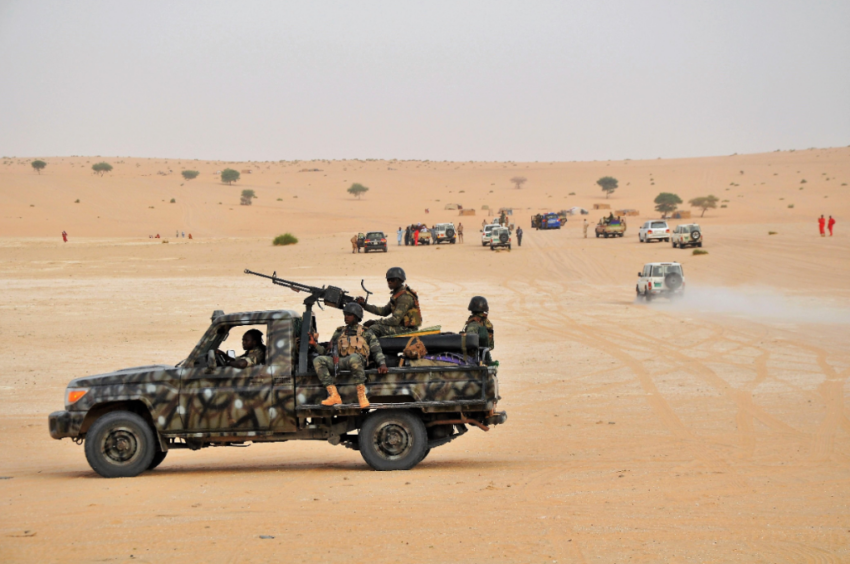
- Joint border patrols: Are these patrols already active? Reports from traders in Arlit, Tahoua, and In Guezzam indicate an increase in military presence and vehicle checks near key routes used for transporting uranium and agricultural goods. The absence of official confirmation does not mean the operations aren’t underway.
- Data sovereignty and privacy: If intelligence is shared, what safeguards protect the identities and commercial activities of individuals and small businesses caught in the information flow? Many regional farmers export goods through informal channels—will their transactions now fall under military surveillance?
These operational gaps create a climate of uncertainty. Traders in the Agadez-Tahoua axis, for instance, have already reported delays in cross-border movement. Some attribute this to “enhanced security measures,” while officials remain silent. Without clarity, rumors turn into barriers—and those barriers hurt economies that rely on open, albeit regulated, trade.
The silent toll on local economies
Border economies across the Sahel are not abstract entities. They are the arteries of regional commerce, the source of income for thousands of families, and the foundation of food distribution networks. In communities like Diffa and Ouallam, small traders move goods that feed populations in both Algeria and Niger. But when military cooperation tightens border controls, those movements slow down. And when movements slow down, prices rise, and supply chains break.
Three immediate economic consequences to watch
- Supply chain disruptions: Uranium exports from Niger to Algeria—vital for Algeria’s energy sector—could face stricter inspection protocols. Any delay means lost revenue for Nigerien mining operators and higher energy costs for Algerian consumers.
- Food price volatility: Nigerien markets depend on imported staple foods from Algeria. If border checks become more rigorous, food shipments may be delayed, leading to shortages and price surges in markets that are already vulnerable to inflation.
- Informal economy contraction: The informal trade sector employs an estimated 30% of the rural workforce in border regions. If joint patrols begin targeting unregistered traders—even inadvertently—the knock-on effect could push thousands into poverty.
A shifting regional power balance
The agreement doesn’t exist in a vacuum. It arrives at a time when the Alliance of Sahel States (AES)—a bloc including Niger, Mali, and Burkina Faso—is redefining its security strategy. Algeria, meanwhile, maintains its own alliances and strategic interests. Where does this new bilateral cooperation fit into the larger regional puzzle?
Is this a step toward a wider military bloc in the Sahel? Or is it simply a targeted response to shared threats like armed groups in the Liptako-Gourma region and Boko Haram operatives near Lake Chad?
What is clear is that the agreement could influence how other Sahelian states perceive Algeria’s role. A strong military alignment between Algiers and Niamey might push regional actors to recalibrate their own security partnerships—whether by strengthening ties with external powers or by forming counter-alliances.
What needs to be done: transparency as a path to stability
Transparency is not just a democratic ideal—it is a practical tool for preventing unintended consequences. If Algeria and Niger want to reassure their populations, protect local economies, and avoid escalating tensions, they must go beyond ceremonial announcements. They need to publicly outline the operational scope, responsibilities, and safeguards embedded in the military pact.
Three transparency measures that can restore confidence
- Publish a joint framework: A simplified version of the protocol’s key provisions—without compromising sensitive data—would help clarify what is being done, how it will be implemented, and how compliance will be monitored.
- Conduct joint impact assessments: Independent economic and social impact studies should be commissioned to evaluate how border communities are affected by new security measures. These should be made public and discussed openly.
- Establish a civil-military dialogue mechanism: Create a forum where local leaders, business owners, and military officials can exchange concerns, report challenges, and propose adjustments. This would help prevent misunderstandings from escalating into full-blown crises.
Beyond the pact: what lies ahead for the Sahel
History shows that well-intentioned military agreements can have unintended regional consequences. If the Algeria-Niger pact is not accompanied by clear communication and inclusive governance, it risks becoming another source of instability in an already fragile region.
In the coming months, the real test of this cooperation will not be the number of meetings held or the amount of ink spilled in press releases. It will be measured in the lives of the people who wake up every morning in towns like Tillabéri and Tamanrasset—their safety, their livelihoods, and their hope for a stable future.
Until then, the pact remains a shadow agreement with visible consequences. And as the world watches, it’s the silent voices of the borderlands that will ultimately determine whether this cooperation brings peace—or simply another layer of hardship in the Sahel.