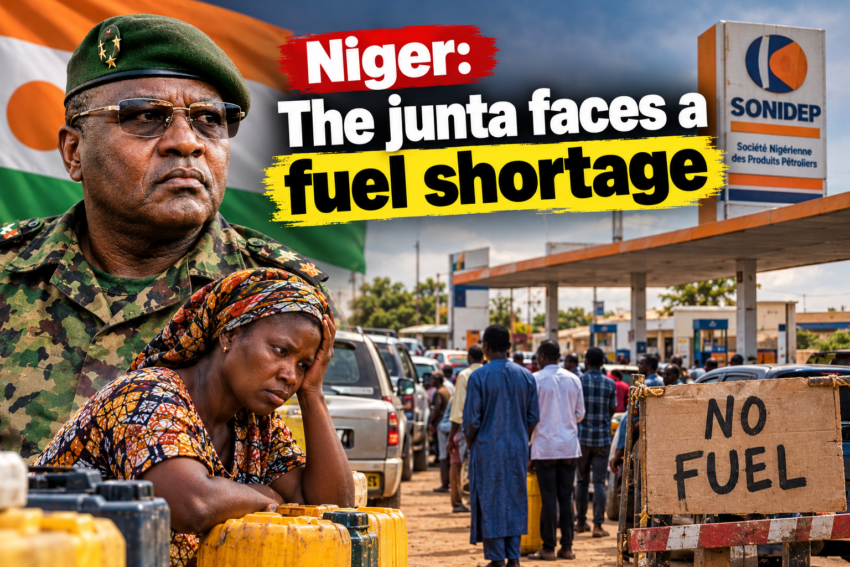
The ongoing fuel shortage in Niger is more than a logistical challenge it is a crisis that is reshaping economic stability and daily routines across the country. With the capital, Niamey, now fully affected, the repercussions are spreading beyond gas stations, disrupting transportation, commerce, and the livelihoods of ordinary citizens.
From fuel pumps to economic paralysis
The scarcity has evolved from sporadic delays to a persistent bottleneck. Taxi drivers spend hours queueing, small business owners face rising delivery costs, and families grapple with inflated transport prices. Each day without resolution deepens the burden on households that can least afford further strain on their budgets.
At the heart of this issue lies a stark contradiction: Niger is an oil producer, yet its people are struggling to access essential fuel. While national production figures may impress, the real challenge lies in the inefficiencies of refining, storage, transportation, and distribution. Without a smooth flow from refineries to service stations, oil reserves offer little relief to drivers or businesses.
Who bears the weight of the shortage?
Not every segment of society feels the crisis equally, but nearly all are affected in some way:
Transport workers: Taxi drivers and truckers face longer waits and reduced earnings as routes become unreliable.
Small traders: Deliveries of goods from food to construction materials are delayed, driving up local prices.
Daily wage earners: Commuting to work becomes unpredictable, threatening income stability.
Public services: Ambulances, waste collection, and other essential services operate under pressure, risking service disruptions.
The human cost is visible not just in queues at pumps, but in the broader slowdown of economic activity. Markets grow quieter, construction projects stall, and the rhythm of city life falters.
The Junta’s credibility test
Since assuming control in 2023, the military leadership has framed its governance around sovereignty, self-reliance, and national development. Yet, when citizens cannot reliably refuel their vehicles or transport goods, the gap between rhetoric and reality becomes glaring. Energy independence, the argument goes, should translate into reliable access to energy not just the existence of resources.
Public frustration is not rooted in a rejection of the junta’s authority, but in the failure to meet basic expectations. When oil is produced but fuel is not available, questions arise about the efficacy of energy policies, supply chain resilience, and distribution networks. Citizens demand accountability: not just explanations, but actionable solutions that restore normalcy.
This moment tests more than economic management it challenges the junta’s legitimacy in the eyes of a population that values practical results over political promises.
A way forward: transparency and action
To regain trust, authorities must go beyond general statements. The public needs clarity on several fronts:
Stock levels: What are current reserves, and how long will they last under current consumption?
Production and refining output: How much oil is being converted into usable fuel?
Distribution bottlenecks: Are there delays in transportation from refineries to depots?
Import needs: Is domestic production sufficient, or are supplementary imports required?
Timeline to resolution: When can consumers expect a return to stable supply?
Honest communication about these factors can prevent panic and speculation. Meanwhile, short-term measures such as prioritizing essential services, rationing where necessary, and expediting fuel imports could help mitigate the most immediate hardships.
Ultimately, the fuel crisis is a symptom of deeper systemic challenges: infrastructure gaps, policy inconsistencies, and a disconnect between resource wealth and service delivery. Addressing them will require more than patchwork fixes it demands a sustained commitment to modernizing energy logistics and putting the needs of citizens first.
Beyond the crisis: a nation at a crossroads
Niger stands at a pivotal moment. It holds significant oil reserves, yet its people are paying the price in time, money, and security for a fuel system that fails to deliver. For a country charting a new path under military leadership, this is more than an economic issue; it is a test of governance, trust, and national resilience.
As long as the lights stay on at the pumps but the tanks remain empty, the message to leadership is clear: sovereignty is not measured in barrels, but in the daily lives it sustains.
By Cécile Mboua — Journalist