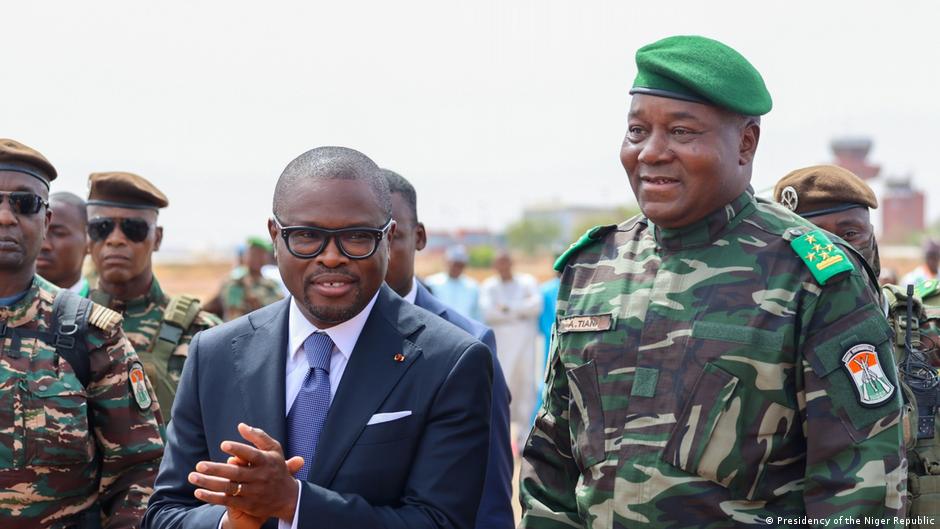
A joint expert committee has ignited cautious optimism by presenting a potential resolution to the prolonged dispute between Bénin and Niger, centered on the reopening of their shared border. The framework addresses security protocols, transit regulations, and select legal and economic considerations, though Niamey’s three “non-negotiable” prerequisites may still stall final political ratification.
The prolonged closure has inflicted severe economic and humanitarian strain on both nations. With the frontier sealed since 2023, the ripple effects are felt across sectors, from trade corridors to daily livelihoods. Can this thaw translate into tangible progress?
Niamey’s three pillars for a lasting resolution
The Nigerien delegation in Cotonou has outlined three unyielding conditions for reopening the border with Bénin:
- Formal defense pact: A binding security agreement to enshrine mutual non-aggression and prohibit either nation from hosting destabilizing forces against the other.
- Shared intelligence hub: Establishment of a joint cell for real-time intelligence exchange, particularly targeting terrorism and cross-border trafficking.
- Transparency on foreign military presence: Full disclosure of any international military partnerships or deployments near the shared frontier.
Régis Hounkpè, executive director of InterGlobe Conseils, underscores the necessity of these conditions: “Mutual non-aggression isn’t just standard—it’s essential in today’s climate of heightened distrust. The challenge lies in practical implementation, ensuring both nations uphold these commitments without coercion.”
On foreign military transparency, Hounkpè emphasizes Bénin’s sovereign freedom to forge global partnerships—whether with Western allies or others—so long as these alliances don’t undermine Niger’s stability. “Pragmatism dictates against destabilizing neighbors. No nation benefits from exporting conflict.”
economic fallout from the closed border
The closure has crippled critical trade arteries. For Niger, a landlocked nation, Bénin serves as the primary maritime gateway, handling nearly 70% of its imports. The suspended transit has driven up logistics costs by 30–50% and severed Niger’s oil exports via the 2,000 km pipeline to Bénin’s Sèmè-Kpodji port, costing millions in lost revenue.
Bénin isn’t spared: congested ports, diverted trade routes, and plummeting customs revenues—down 60% in some sectors—threaten its regional hub status. “The pipeline alone exports 90,000 barrels daily. Every stalled shipment drains budgets already stretched thin,” notes Hounkpè.
human cost: markets, mobility, and resilience
The border’s closure has devastated local economies. Markets in Malanville (Bénin) and Gaya (Niger), once bustling, now see half the usual foot traffic. Shop closures and job losses abound, while essential goods—re-routed via Nigeria—face shortages and inflated prices.
Communities on both sides endure severed ties. Families separated by bureaucratic hurdles resort to perilous pirogue crossings, while smuggling and extortion networks thrive in the void. “Survival trumps ideology,” Hounkpè asserts. “Leaders must prioritize economic survival, logistics, and security over political posturing.”
a glimmer of hope?
The recent diplomatic thaw stems from Bénin’s post-election reset. President Romuald Wadagni’s June 2026 visit to Niamey catalyzed the expert committee, signaling a shift toward pragmatic cooperation. Hounkpè foresees a phased border reopening, starting with high-priority goods and reinforced controls.
The stakes extend beyond bilateral ties. A successful resolution could “inspire the Economic Community of West African States (ECOWAS) and the Alliance of Sahel States (AES), mirroring Côte d’Ivoire’s recent détente with Mali.
As Hounkpè concludes: “Geography binds these nations. Their survival depends on collaboration—not confrontation.”