A joint expert committee has reignited hopes of thawing the long-standing crisis between Benin and Niger. The latest developments suggest real progress on security, transit logistics, and key legal and economic frameworks. Yet, Niamey’s insistence on three “non-negotiable” conditions may still delay the political ratification of any agreement.
What does this mean for a dispute that has dragged on for three years, leaving both nations—especially their economies—grappling with severe consequences?
Three “non-negotiable” demands from Niamey
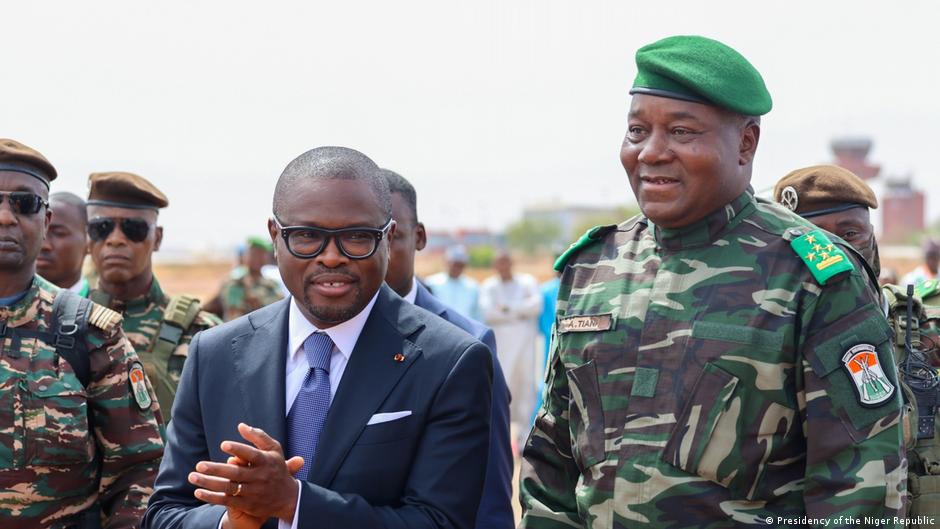
The Nigerien delegation in Cotonou has laid down strict conditions before considering a lasting reopening of the border with Benin, shut since 2023.
- The first demand is a formal defense and security pact with Benin, enshrining mutual non-aggression and a pledge by both nations not to allow their territories to be used as staging grounds for destabilizing the other.
Analyst Régis Hounkpè, executive director of InterGlobe Conseils, sees this as a logical step: “Of course Benin will not attack Niger, just as Niger will not attack Benin. It’s standard practice, but given the three-year freeze in relations, it feels almost unprecedented. The real test will be implementation. Both sides are working to ensure this non-binding yet essential clause is respected.”
- The second condition focuses on intelligence-sharing through a joint task force that enables real-time information exchange, particularly on terrorism and cross-border trafficking.
Hounkpè welcomes this move as a step toward reciprocity: “It’s crucial that this cell ensures neither side harbors destabilization ambitions.”
- The third stipulation demands full transparency regarding the presence of foreign or military forces in Benin, especially near the shared border.
“This touches on sovereignty, notes Hounkpè. The Beninese president has repeatedly stated his country’s right to forge any external partnerships. The underlying concern may be Benin’s ties with Western nations, particularly France, but Niger must respect Benin’s sovereign choices—as long as those alliances aren’t weaponized against it.”
He adds pragmatically: “No nation benefits from instability beyond its borders.”
These demands reflect deep-seated mistrust that has festered since the military takeovers in both countries in July 2023, fueling mutual suspicion over regional alliances and security strategies.
How the closed border hurts Niger’s economy
The border closure has choked off a vital trade corridor. For landlocked Niger, Benin is the primary gateway to the sea—nearly 70% of its imports pass through this route. The port of Cotonou is equally essential for other Sahel nations like Burkina Faso and Mali, which rely on Benin for fuel, construction materials, and staples like rice.
Detours around Benin are longer, riskier, and far costlier. Logistics costs have surged by 30 to 50% in less than three years. The 2,000-kilometer pipeline linking Niger’s Agadem oilfields to Benin’s Sèmè-Kpodji port is another casualty—exports have stalled, depriving Niger of critical revenue.
Benin faces economic strain too
Benin, meanwhile, earns transit fees, but the blockade has triggered widespread congestion at the Port of Cotonou and clogged supply chains. Revenue losses are staggering—down by up to 60% in customs duties, transport, wholesale trade, and logistics. Blocked containers have forced rerouting to Togo and Nigeria, threatening Benin’s status as a regional hub.
The crisis has also disrupted daily life. Markets near the border in Malanville (Benin) and Gaya (Niger) report up to 50% fewer customers. Essential goods have become scarce, prices have skyrocketed, and families separated by the closed frontier struggle to stay connected. Vulnerable communities face worsening poverty, fueling smuggling and extortion networks.
Why cooperation is a must
According to Régis Hounkpè, both nations stand to gain from reopening the border, starting with economic revival. “Trade flows would resume, lifting Cotonou’s port out of its slump. Nigeria’s transporters, logisticians, and business owners would regain access to Benin’s coastal trade. It’s a win-win.”
Hounkpè stresses the broader stakes: “Presidents today play pure geopolitics, but geography binds them. They have no choice but to work together. Ideology must give way to economic survival, logistics, security, and counterterrorism cooperation.”
The most likely outcome is a phased reopening, prioritizing essential goods with tighter controls. Should negotiations advance, Hounkpè believes the breakthrough could set a positive example for the Economic Community of West African States (ECOWAS) and the Alliance of Sahel States (AES)—much like the recent rapprochement between Mali and Côte d’Ivoire driven by economic pragmatism.