Cotonou hosts landmark education summit to reshape national learning pathways
This week, Cotonou has become the epicenter of a historic overhaul in Benin’s educational landscape. From June 22-26, 2026, the Azalaï hotel is hosting a pivotal workshop focused on developing a National Curriculum Framework. Spearheaded by Minister Armand Kuyema Natta, this initiative aims to create a unified, modern education system that closely aligns with the country’s socio-economic realities, preparing students for tomorrow’s challenges.
A cross-government commitment to educational transformation
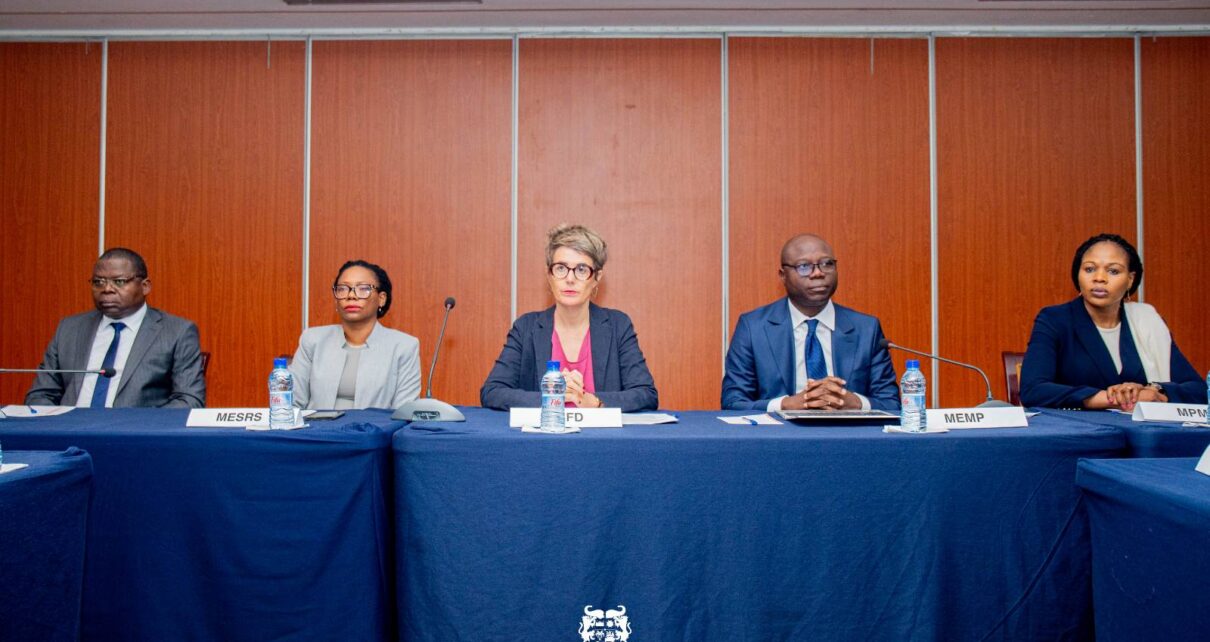
The official launch on June 22 drew an unprecedented gathering of Benin’s top education officials. The significance of this reform was underscored by the presence of nearly all ministers responsible for various levels of education nationwide.
The delegation included leaders from early childhood, primary, secondary, higher education, scientific research, technical and vocational training sectors. Joining them was a representative from the National Education Council and Madame Laure Weisgerber, Director of the French Development Agency (AFD), representing key technical and financial partners.
This coordinated approach signals the government’s determination to break away from traditional siloed educational administration. The reform transcends isolated curriculum updates, seeking instead to establish a comprehensive, inclusive dialogue spanning all educational levels across the nation.
Curriculum revision as a reflection of national aspirations
During the opening ceremony, Mr. Wilfried Guezodjè, Permanent Technical Secretary of the Sectoral Education Plan, outlined both the philosophical foundations and technical aspects of the reform. Far more than a bureaucratic exercise, the curriculum revision touches the very core of civic life.
« The curriculum isn’t merely a pedagogical document. It serves as a mirror reflecting the societal choices we make for our children. It determines not just what they learn, but the kind of citizens we envision them becoming, » emphasized Guezodjè.
He described the process as « challenging yet hopeful, » emphasizing the collective ambition to equip every Beninese child with skills for personal fulfillment and future employability. The framework’s primary challenge lies in balancing local relevance with international quality standards.
From fragmented reforms to a cohesive educational vision
The morning’s highlight came with Minister Kuyema Natta’s address, which candidly assessed past initiatives while underscoring the current workshop’s necessity. While previous efforts successfully reopened and updated primary and secondary programs, these isolated reforms had inherent limitations.
« Even the most rigorous isolated curriculum updates prove insufficient, » stated the Minister. « For an education system to function effectively, students must transition seamlessly from primary to secondary without methodological gaps, and university-bound graduates must possess the prerequisites for their chosen fields. » The National Curriculum Framework now serves as the guiding thread connecting all educational levels from early childhood through higher education.
International backing for a transformative project
Such a sweeping transformation requires robust support and sustainable partnerships. Madame Weisgerber of the AFD reaffirmed her institution’s unwavering commitment to the Beninese government’s vision during the event.
International partners view this reform as a structural breakthrough with potential to maximize educational investment returns. By aligning programs with actual labor market needs—particularly through technical and vocational training—the reform positions Benin to combat youth unemployment and stimulate economic growth.
A pivotal moment for Benin’s educational future
The Cotonou workshop, concluding June 26, marks the beginning of a renewed social contract between the state, educators, families and learners. By prioritizing harmonized learning pathways over piecemeal updates, Benin is making a deliberate choice for educational coherence.
The development of a National Curriculum Framework represents a major milestone. While implementation challenges remain, this week’s demonstrated political will—supported by international partners—points toward a promising future for Benin’s schools. An education system that is more unified, inclusive and unequivocally forward-looking.