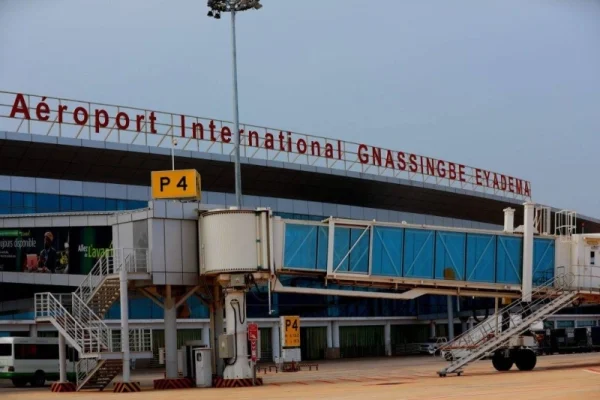
When the third edition of the pan-African Biashara Afrika forum kicked off in Lomé on a bright Monday, the gathering’s high-flying promises of continental integration collided spectacularly with the harsh realities at Lomé’s Gnassingbé Eyadéma International Airport.
The event, billed as a « grand stage » for celebrating the African Continental Free Trade Area (AfCFTA) and its 1.4 billion consumer market, instead became an unintended classroom on how bureaucratic hurdles can derail even the most ambitious economic visions.
When a CEDEAO passport isn’t enough to cross the border
The opening ceremony had barely begun when Nigeria’s Minister of Industry, Trade and Investment, Dr. Jumoke Oduwole, took the podium. Instead of echoing the usual optimism about intra-African trade, she shared a real-time cautionary tale that left the audience stunned.
Two high-profile investors – one Nigerian, one Ghanaian – had flown in from Europe the previous night, armed with their respective CEDEAO passports. Their crime? Attempting to enter Togo using documents that should have granted them free movement under a four-decade-old regional agreement.
The border police response was swift and uncompromising: entry denied. To set foot in Lomé, the businessmen had to surrender their African passports, produce European ones, and request 24-hour transit visas.
Minister Oduwole, drawing on nine years of Nigerian commercial diplomacy, delivered the verdict with surgical precision: « One of them, a financial services investor, told me he wouldn’t consider investing here. We hadn’t even left the airport, and his decision was already made. Imagine an African needing a visa to enter the EU on an African passport – it simply wouldn’t happen. »
The irony was palpable. At a forum dedicated to dismantling trade barriers, Togo’s airport had just demonstrated how easily bureaucratic inertia can sabotage continental ambitions.
From hub aspirations to border absurdity
Lomé positions itself as a regional logistics and financial gateway, yet the incident exposed a glaring contradiction. Visa restrictions on neighboring Africans don’t just inconvenience travelers – they actively repel investment capital. The airport’s overzealous enforcement of entry rules had just broadcast to the world’s business elite that in Africa, some passports carry more weight than others.
For a country banking on its reputation as an investment destination, the message was clear: an African passport doesn’t guarantee access to Africa.
Faure Gnassingbé’s 48-hour ultimatum
The blunt critique from Minister Oduwole and Afreximbank president had clearly struck a nerve. Rather than convening a six-month parliamentary inquiry, Togo’s president Faure Gnassingbé chose an immediate, high-visibility response.
Addressing the forum’s stunned delegates, he issued a military-style deadline: « I’m giving the Minister of Security 48 hours to resolve this anomaly. »
The message was unambiguous. By the forum’s closing on Wednesday, the country’s immigration services would either demonstrate compliance with free movement principles – or face immediate consequences.
Biashara Afrika 2026 had set out to dismantle non-tariff trade barriers. The airport incident proved that even a single misplaced stamp can derail billion-dollar ambitions.
AfCFTA’s credibility gap: when policy outpaces practice
Economists and entrepreneurs at the forum were unanimous: « Without free movement of people, the AfCFTA remains a hollow shell. »
A Ghanaian entrepreneur put it more bluntly: « If we need European passports to do business in Africa, then integration is just empty rhetoric. »
The Lomé incident crystallized the continent’s paradox: policymakers celebrate AfCFTA’s projected $3.4 trillion GDP and 1.4 billion consumer market, yet daily border procedures systematically undermine these goals. The solution? Harmonizing visa policies, digitizing border procedures, and – most critically – aligning political will with practical implementation.
As the forum drew to a close, one lesson was undeniable: in Africa’s integration journey, a single bureaucratic error can cost millions in lost investment – and Lomé had just learned that lesson the hard way.