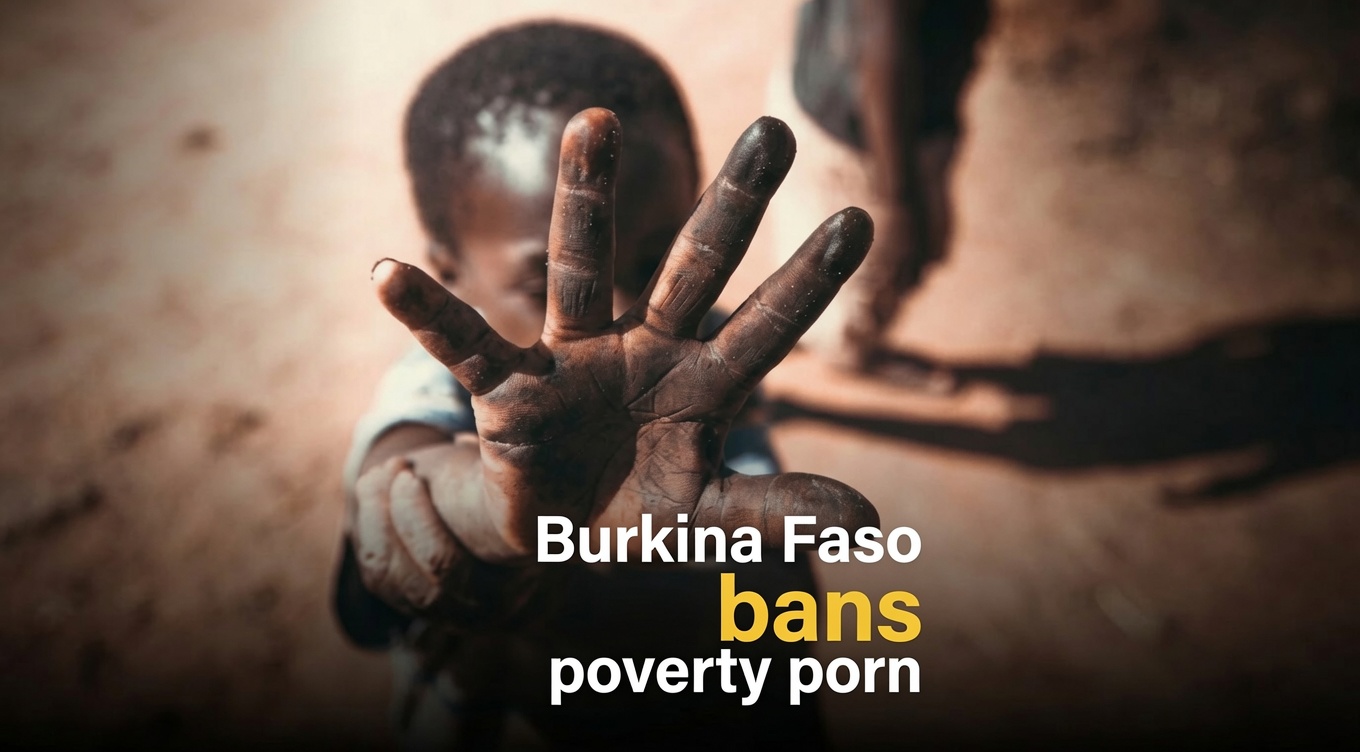
The Government of Burkina Faso has enacted stringent measures against the dissemination of so-called poverty porn, a practice that exploits human suffering for digital engagement or financial gain. This legislative move marks a decisive shift in how distress is portrayed in public discourse, prioritizing human dignity over sensationalism.
Ethical concerns fuel government crackdown
The proliferation of social media has turned misérabilism into a profitable industry. Influencers and organizations frequently post close-up footage of malnourished children, internally displaced persons, or families enduring extreme hardship. While such content may aim to raise awareness or secure donations, its ethical implications are profound. By reducing individuals to passive objects of pity, these videos strip them of their autonomy and dignity—a concern now formally addressed by Burkinabè authorities.
National image and security drive policy
Beyond ethical considerations, Burkina Faso’s ban on poverty porn reflects broader strategic objectives. In the midst of a complex crisis, the unchecked circulation of images depicting the country solely through a lens of despair risks distorting its global perception. Authorities argue that while the goal is not to conceal the crisis, it is equally unjustifiable to allow the nation’s narrative to be reduced to a stereotype of helplessness. This regulation seeks to reclaim control over Burkina Faso’s international image.
Critics warn of hidden agendas
Opponents of the transitional administration view this policy with skepticism, suggesting it serves as a tool to suppress unfavorable realities. They contend that by restricting the documentation of hardship, the government may be concealing the true scale of the humanitarian emergency—including widespread displacement, food shortages, and collapsing healthcare systems. Critics argue that the law functions as a smokescreen, prioritizing the regime’s image over the urgent needs of its citizens.
Reshaping humanitarian communication
This legislative shift presents a challenge for humanitarian organizations and content creators: how to advocate for aid and highlight crises without resorting to exploitative imagery or violating new restrictions? The solution lies in adopting a more respectful and solution-oriented approach to storytelling. By focusing on resilience, community initiatives, and systemic responses, communicators can uphold the gravity of the situation while honoring the dignity of those affected. This method not only preserves ethical standards but also ensures that Burkina Faso’s challenges are acknowledged without reducing its people to passive victims.