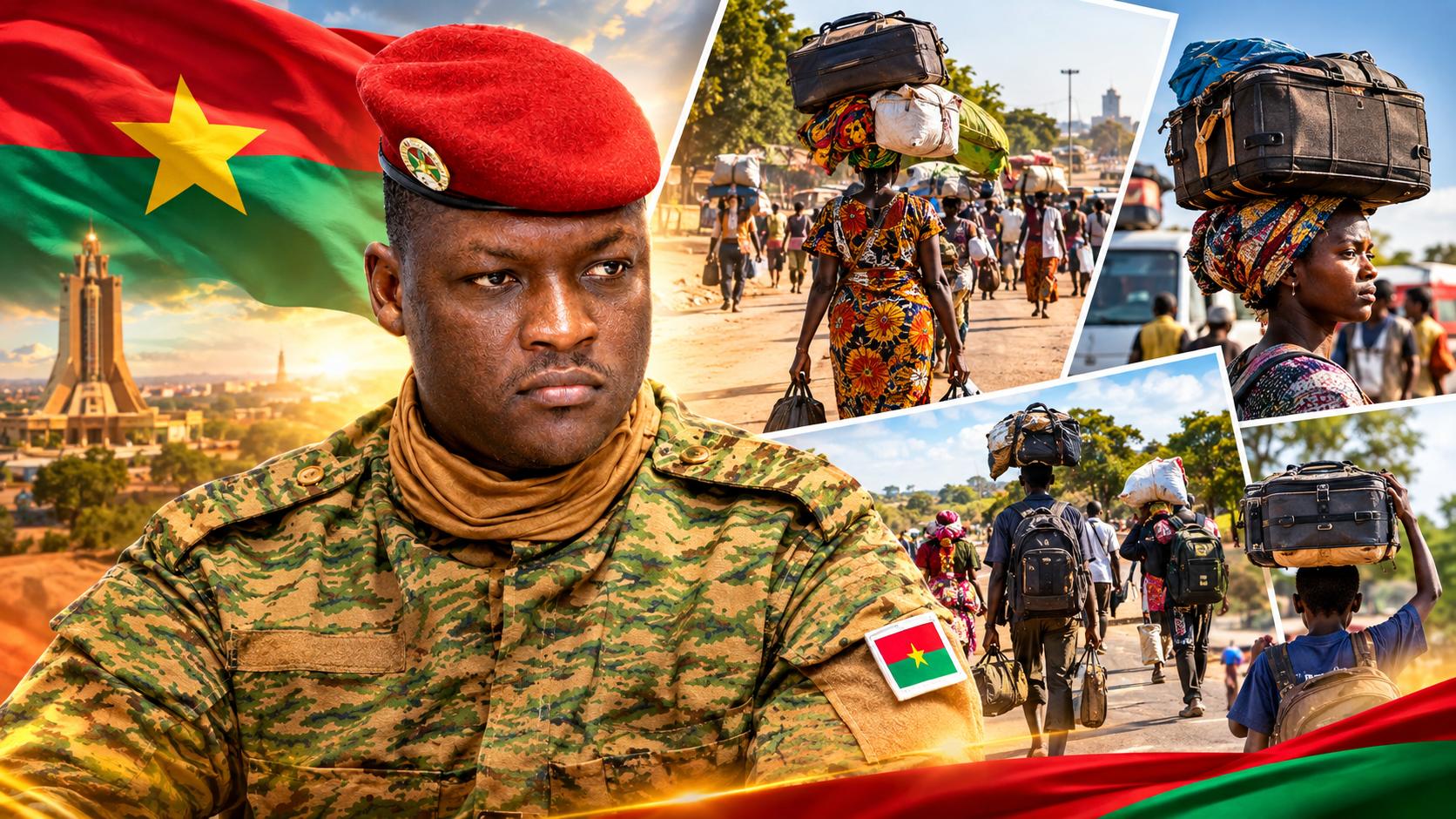
Ouagadougou — When Captain Ibrahim Traoré seized power in Burkina Faso on September 30, 2022, he framed his takeover as a necessary step to rescue a nation teetering on the brink of collapse. Four years later, the young junta leader presents a bold narrative: territory reclaimed, military capability strengthened, and national sovereignty fiercely asserted. But beneath the official triumph, the human and democratic cost of this transformation is sparking fierce debate.
Can a state at war justify its tactics when civilians pay the price?
Traoré’s rise to power was driven by a single promise: to end the jihadist insurgency that had engulfed Burkina Faso. His government expanded the armed forces and launched the Volunteers for the Defense of the Homeland (VDP), civilian auxiliaries meant to support military operations. The junta also distanced itself from Western partners, turning instead toward Russia and forming closer ties with Mali and Niger under the Alliance of Sahel States.
The government claims to have retaken several territories once under militant control, pointing to increased military capabilities and mass mobilization as proof of progress. Yet, despite these assertions, violence persists. Armed groups continue to launch deadly attacks on both security forces and civilians, according to independent conflict monitors. The ACLED data shows jihadist factions remaining operationally active across vast regions, with civilian-targeted raids showing no sign of abating.
A humanitarian crisis written in displacement and loss
Nowhere is the human toll of this conflict more visible than in the staggering number of displaced civilians. By late 2025, the UNHCR reported over two million internally displaced persons (IDPs) inside Burkina Faso, with tens of thousands more seeking refuge in neighboring countries. This exodus was compounded by reports of civilian casualties — including at least 1,800 deaths documented by Human Rights Watch between 2023 and 2025. Shockingly, these killings were not solely attributed to armed militants.
Human rights monitors have also recorded incidents involving government forces and VDP members targeting civilians accused — often without evidence — of aiding insurgents. The paradox is stark: a state fighting to reclaim control is also forcing its people to flee.
Journalists as soldiers: the blurred line between mobilization and repression
The rising cost of speaking out
One of the most disturbing shifts under Traoré’s rule has been the shrinking space for free expression. The authorities argue that wartime exigencies justify tighter media controls and even forced mobilization. But observers warn these measures are being used to silence dissent. Reporters Without Borders (RSF) documented multiple cases in 2025 where journalists were arrested, forcibly conscripted, or subjected to prolonged interrogations. In one emblematic case, Atiana Serge Oulon, editor-in-chief of the newspaper L’Événement, was abducted in June 2024 and later presented by authorities as having been drafted into the military. Independent investigations, however, suggest he was held secretly in Ouagadougou — far from any frontline.
Forced conscription: weaponizing patriotism or crushing opposition?
Reports indicate that dozens of civil society activists, opposition figures, and even magistrates have been forcibly enlisted under military law. While the state insists such mobilizations serve national defense, human rights groups question the legality and fairness of these procedures. Many of those conscripted report being unable to challenge their assignments, raising concerns about whether patriotism is being exploited as a tool of repression.
Sovereignty versus freedom: the two faces of Traoré’s Burkina Faso
Traoré’s government champions a bold vision of self-determination, marked by reduced reliance on former colonial powers and increased collaboration with African allies. The push for resource sovereignty — particularly in the mining sector — has been framed as economic liberation. Yet this narrative of autonomy comes at a price. Critics point to a tightening grip on political freedoms: arrests of journalists, forced disappearances, and the forced exile of activists have become increasingly common. The result is a country that is more militarized and less democratic.
Four years of rule, four years of contradictions
As Burkina Faso marks four years under Traoré’s military leadership, the verdict on his presidency remains unsettled. On one hand, there’s measurable progress in military restructuring and territorial control. On the other, the civilian toll is undeniable: escalating displacement, persistent violence, and systemic erosion of civil liberties. The central question facing Burkinabè today is no longer just whether security can be restored — but at what human cost.
Can a nation be rebuilt on the back of a war that continues to displace its own people? That is the uncomfortable dilemma Burkina Faso now confronts.