When terror strikes twice in one day: Burkina Faso’s security dilemma
Saturday, September 26, 2026, marked a turning point in Burkina Faso’s ongoing conflict with armed groups. Two simultaneous assaults—one in the southeastern province of Koulpélogo and another in the northern city of Ouahigouya—exposed critical vulnerabilities in the nation’s defense strategy. While the Koulpélogo attack left one soldier dead and resulted in the looting of military equipment, the northern assault saw the destruction of a military armored vehicle. The coordinated nature of these strikes, later claimed by the Group for the Support of Islam and Muslims (JNIM), underscores the evolving tactics of jihadist groups in the Sahel.
Lalgaye under siege: a military outpost overwhelmed
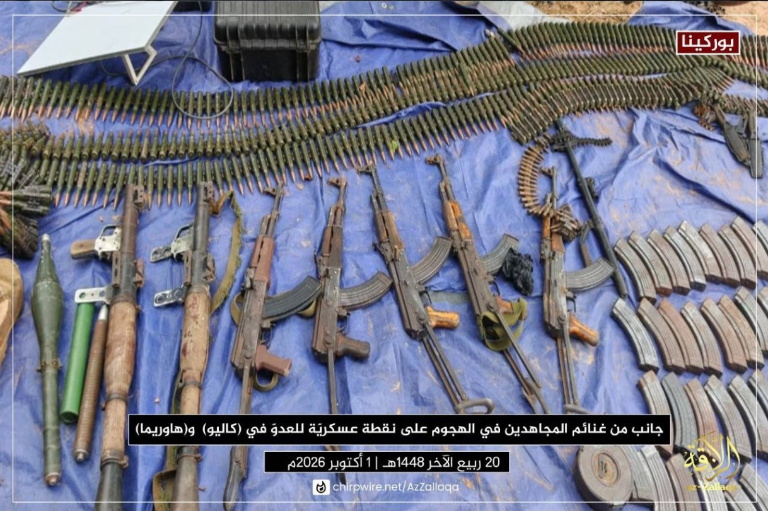
The assault on Lalgaye, a small town in Koulpélogo province roughly 20 kilometers from Ouargaye, was a calculated strike against a remote military checkpoint. According to later statements attributed to the JNIM, a well-armed group launched a surprise attack on the installation, overwhelming lightly defended forces. Despite a fierce counterattack, the attackers breached the compound, killing one soldier and seizing a significant cache of weapons, ammunition, and individual gear before retreating into nearby wooded areas.
The method of operation followed a familiar pattern in the region. By targeting isolated military posts, armed groups achieve three key objectives: weakening local security coverage, replenishing their own supplies, and creating gaps in government control. The looting of equipment—particularly small arms and communication devices—reduces the operational capacity of Burkinabè forces while bolstering the jihadists’ logistical network.
Ouahigouya in the crosshairs: coordinated assaults on northern frontlines
As fighting raged in Koulpélogo, coordinated attacks unfolded hundreds of kilometers to the north. Two military-controlled positions near Ouahigouya, a strategic hub in the Yatenga province, came under heavy fire from armed fighters. While the human toll remains partially undisclosed, the material damage was clear: at least one light armored vehicle was destroyed by heavy weaponry or an improvised explosive device (IED). The precision timing of these attacks—executed within hours of the Lalgaye strike—highlights the attackers’ ability to plan and execute large-scale operations with minimal warning.
The Yatenga region, bordering Mali and Niger, has long been a contested zone. Its proximity to major road networks and urban centers makes it a prime target for groups seeking to disrupt supply lines and project influence across the Sahel.
Why these coordinated strikes matter now
The September 26 attacks were not isolated incidents but part of a broader shift in jihadist strategy. The JNIM, an Al-Qaeda-affiliated coalition operating across the Sahel, has increasingly adopted a harassment-and-logistics approach, designed to stretch national forces thin while securing new resources. The simultaneous nature of the strikes suggests heightened coordination among factions, possibly in response to recent counterinsurgency efforts by the Burkinabè government.
Analysts point to three major implications of these events:
- Attrition warfare: By repeatedly targeting remote outposts, armed groups degrade the operational effectiveness of the military without engaging in large-scale battles.
- Logistical gains: Capturing weapons and equipment reduces dependence on external supply chains, making the insurgency more self-sustaining.
- Psychological pressure: Delayed claims of responsibility—such as the October 1 statement by the JNIM—create an atmosphere of uncertainty, undermining public trust in government assurances.
Government response: a race against time and terrain
In the aftermath of the attacks, Burkinabè forces launched immediate pursuit operations, deploying aerial surveillance in both affected regions to track fleeing attackers. The government has reiterated its commitment to reclaiming lost territory, but the recent escalation poses significant challenges. Key concerns include:
- The vulnerability of isolated military detachments to surprise assaults.
- The widespread use of IEDs along rural roads, which disrupts mobility and humanitarian access.
- Resource constraints facing the armed forces, including shortages of trained personnel and advanced weaponry.
Local residents in Lalgaye and surrounding areas continue to live under the constant threat of incursions. While military operations intensify to restore security, the human cost of this prolonged conflict remains staggering.
What lies ahead for Burkina Faso’s security landscape
These twin attacks serve as a stark reminder of the shifting dynamics in Burkina Faso’s war against terrorism. The JNIM’s ability to execute large-scale, coordinated operations signals a new phase in the insurgency, one that demands adaptive responses from both military and civilian leadership. As the Burkinabè government grapples with these challenges, the question looms large: Can national forces regain the upper hand, or will the jihadists continue to dictate the pace of conflict?
The stakes could not be higher. With rural communities caught in the crossfire and national resources stretched thin, the outcome of this struggle will shape Burkina Faso’s future for years to come.