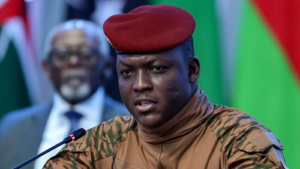
The military junta in Burkina Faso, led by Ibrahim Traoré, is increasingly aligning its governance with ideological and institutional models drawn from the Soviet era and present-day North Korea. This pivot marks a sharp break from the country’s traditional diplomatic and political alignments.
The term “Burkina-Faciaux” has surfaced to describe this transformation, reflecting the junta’s embrace of authoritarian, state-centric structures. The rhetoric, policy directives, and international positioning now echo those of Soviet-style command systems and North Korean autarky.
This shift raises questions about the future direction of Burkina Faso and its place in regional and global affairs, as the junta consolidates control and distances itself from Western partnerships.