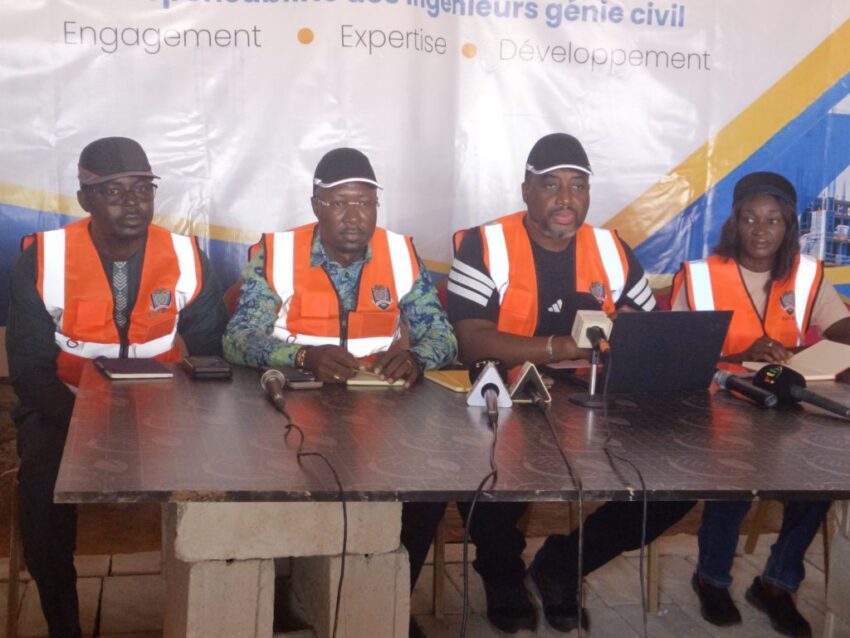
The Burkina Faso Order of Civil Engineers (OIGC-BF) has come under intense pressure following a high-profile press briefing in Ouagadougou, where its president, Ousmane Honoré Ouédraogo, outlined the profession’s role in addressing the country’s deteriorating infrastructure crisis. The event, held on October 23, 2026, has sparked a national debate about accountability, regulatory enforcement, and the future of public safety in construction.
Construction safety takes center stage as civil engineers face public backlash
The OIGC-BF’s latest move follows mounting concerns over unsafe buildings and infrastructure across Burkina Faso. During the press conference, Ouédraogo emphasized that the quality of every bridge, road, and structure directly reflects the competence of civil engineers and the effectiveness of national regulations.
The discussions took place against the backdrop of President Ibrahim Traoré’s broader push for national sovereignty through self-reliance in infrastructure development. Ouédraogo argued that a nation’s resilience is measured not just by its political stability but by the durability of its infrastructure and the qualifications of its engineers.
Illegal practices threaten public safety and economic stability
Among the most pressing issues raised was the rise of unlicensed practitioners operating in Burkina Faso’s civil engineering sector. The OIGC-BF president delivered a stark warning: unqualified professionals pose serious risks to public safety and undermine the credibility of legitimate engineers.
According to Ouédraogo, the Law No. 020-2012/AN of May 10, 2012, which governs the profession, leaves no room for ambiguity. Its Article 8 explicitly states that only engineers registered with the OIGC-BF are legally permitted to practice civil engineering in the country. Meanwhile, Article 68 defines unauthorized practice as a criminal offense—punishable by imprisonment, heavy fines, or even the confiscation of assets.
The president underscored the legal framework’s importance: « These laws aren’t barriers—they’re safeguards. They ensure every taxpayer-funded project is designed, supervised, and signed off by qualified, accountable professionals. »
Regulatory reforms and professional standards in the spotlight
The OIGC-BF has outlined a multi-pronged strategy to tighten oversight and modernize the profession. Key priorities include:
- Cracking down on illegal engineering practices and unregistered firms
- Developing standardized fee structures for engineering services
- Updating outdated laws to align with current industry needs
- Enhancing training programs for new graduates and interns
- Mandating continued professional development for practicing engineers
Ouédraogo acknowledged the profession’s invisible heroes—engineers laboring in labs and on construction sites—but stressed that their work must be governed by strict ethical and legal standards.
Regional collaboration emerges as a solution to Sahel-wide challenges
Looking beyond Burkina Faso’s borders, the OIGC-BF is forging alliances with engineering orders in neighboring Mali and Niger to tackle shared infrastructure challenges. A major step forward will be the upcoming Alliance of Sahel States (AES) Engineering Sciences Conference, scheduled for 2027.
This regional gathering aims to establish unified technical standards tailored to the Sahel’s unique climate and geographical conditions. Ouédraogo stressed the event’s significance: « This conference will bring together engineers from across the Sahel and beyond to draft harmonized norms that ensure safety, sustainability, and innovation in our infrastructure projects. »
The road ahead: balancing accountability and progress
The OIGC-BF’s initiatives come at a critical juncture, with Burkina Faso’s infrastructure woes drawing sharp public criticism. The debate now centers on whether regulatory reforms can restore trust in civil engineering—and whether enforcement will keep pace with the profession’s ambitions.
The coming months will reveal whether Ouédraogo’s vision of a safer, more accountable engineering sector translates into tangible change—or if the cracks in Burkina Faso’s infrastructure will widen further.