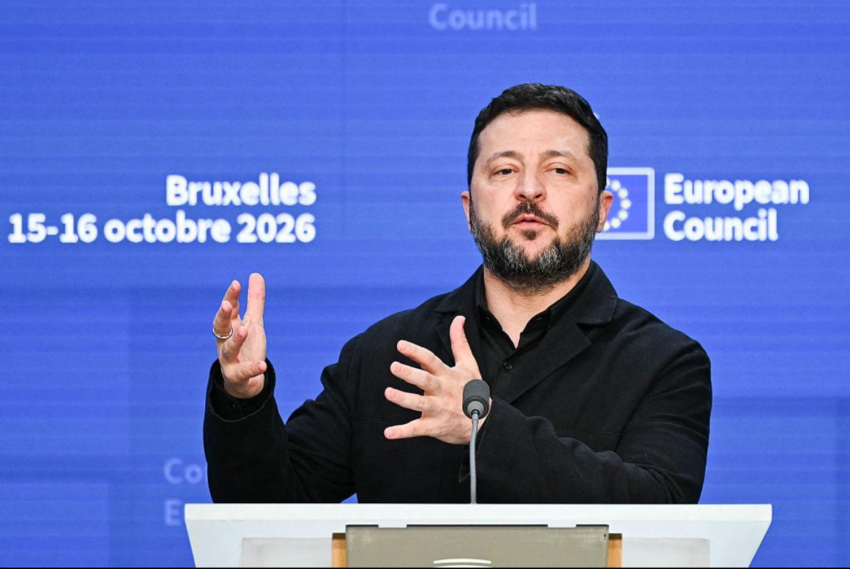
The real-world stakes of Ukraine’s proposed frontline freeze are coming into sharp focus after president Volodymyr Zelensky announced on 21 october 2026 that kyiv is ready to halt active combat along current military positions. Speaking to Fox News, he framed the move as a pragmatic step to stop the bloodshed and lay groundwork for talks on long-term security guarantees with Washington and European capitals. Yet within 24 hours, in a CNN interview, he made it unequivocally clear that freezing the front would not translate into recognition of russian-occupied land or surrender of any area still under ukrainian control.
Freezing the front leaves the door open to talks
Zelensky’s proposal to pause hostilities on existing contact lines signals a potential shift in the conflict’s trajectory. By describing the freeze as a ‘necessary first step’, he hopes to create breathing space for political dialogue after years of relentless war. The immediate goal is to end daily casualties and destruction, using the lull to address deeper issues through negotiations. This approach, however, stops short of conceding the legal status of territories seized by Russia since the full-scale invasion began.
The distinction is critical: a military standstill does not equate to ukrainian acceptance of Moscow’s annexation claims. For kyiv, the current frontlines reflect a temporary battlefield reality, not a permanent border adjustment. The challenge lies in preventing a frozen war from hardening into a de facto partition that undermines ukrainian sovereignty.
No territorial concessions despite pressure on the ground
In his CNN remarks the following day, the ukrainian leader”(…) that our land is very important, because it is about people. It is not about kilometers.” This stance underscores kyiv’s refusal to legitimise russian control over occupied regions, particularly in the donbas, where intense fighting continues. Zelensky reiterated that areas still held by ukrainian forces—even if contested—would remain under kyiv’s jurisdiction, regardless of any ceasefire.
The donbas dilemma encapsulates the core tension. While Russia demands full control over the entire donetsk region, Ukraine insists on retaining every inch it currently defends. A frontline freeze may reduce violence, but it fails to resolve the underlying territorial dispute fuelling the war. For civilians trapped in these areas, the consequences are dire: prolonged uncertainty, divided families, and shattered local economies hanging in the balance.
Security guarantees emerge as the make-or-break factor
Beyond the battlefield, the durability of any truce hinges on robust security commitments from Western partners. Zelensky envisions a multi-layered framework where the united states and European nations provide credible deterrents against future russian offensives. Without such assurances, a ceasefire risks becoming a mere pause before renewed hostilities.
Key questions remain unanswered: what form would these guarantees take? Would NATO members or the EU offer military deployments, economic sanctions, or diplomatic action if Moscow violates the agreement? The answers could determine whether kyiv’s gamble pays off in lasting stability or backfires into a more fragile security landscape.
Recent strains in US-Ukraine relations add another layer of complexity. While Zelensky acknowledges ongoing challenges in obtaining consistent american military aid and communication systems, he still views Washington as indispensable to any sustainable solution. Meanwhile, european support—both financial and strategic—remains vital, though its scope depends on political will across multiple capitals.
The economic and human cost of a fragile truce
For ukrainian businesses and citizens, the implications of a frozen front are mixed. On one hand, a halt in active combat could allow critical infrastructure to be repaired, supply chains to be restored, and displaced populations to return home. Local economies in frontline regions might begin to recover, reducing reliance on emergency aid. On the other, the lack of a permanent resolution leaves investments in limbo, discourages long-term reconstruction, and keeps families separated by shifting occupation lines.
Prolonged uncertainty also threatens to drain public morale. Many ukrainians have sacrificed loved ones to defend territorial integrity; accepting a freeze without clear guarantees could feel like a betrayal of their efforts. Meanwhile, businesses operating in grey-zone areas face legal ambiguity, unclear property rights, and ongoing security risks that stifle growth.
Diplomatic opening or dead end?
While Zelensky’s proposal marks a rare diplomatic opening, it falls short of a comprehensive peace deal. Fundamental disagreements persist over territorial claims, the terms of a ceasefire, and the security mechanisms needed to prevent future conflicts. Russian president vladimir putin has signalled willingness to engage in US-mediated talks but continues to insist on security concessions that kyiv finds unacceptable.
At its core, Ukraine’s strategy seeks to decouple military reality from legal recognition. A frontline freeze could initiate de-escalation, but only if all parties agree on its implementation and underpin it with reliable safeguards. Until Moscow and kyiv reconcile their incompatible demands on sovereignty and security, the prospect of lasting peace remains distant. For now, Ukraine walks a tightrope—balancing the urgent need to stop the fighting with an unyielding commitment to its territorial wholeness.