From Moscow to Brussels: the junta’s shifting financial strategy
The Burkina Faso transitional government has long framed its diplomatic stance as a rejection of Western partnerships, positioning Russia as the primary alternative to secure financial and security support. Yet recent high-level meetings in Brussels expose a stark reality: Ouagadougou’s economic survival still hinges on European funding despite public posturing.
Russia’s promises fall short as budget deficits mount
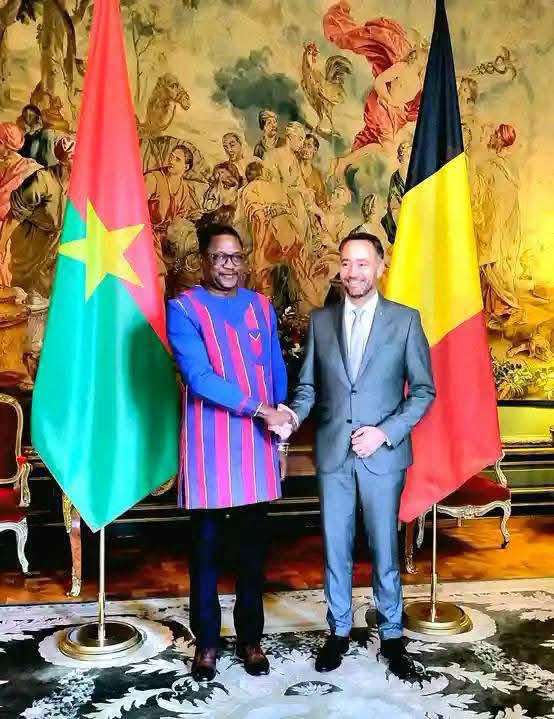
In November 2026, Foreign Minister Karamoko Jean Marie Traoré traveled to Brussels just days after attending the Russia-Africa Economic and Humanitarian Forum in Moscow. While the forum highlighted new cooperation agreements including a memorandum between the AES Con-federal Investment and Development Bank and Russia’s VEB.RF the tangible financial benefits remain elusive. Signing cooperation frameworks does not equate to immediate funding, leaving Burkina Faso’s pressing economic needs unmet.
The country’s 2026 budget reflects these challenges: projected revenues of 3,431.5 billion West African CFA francs fall short of expenditures totaling 3,918.3 billion, resulting in a deficit of 486.8 billion. The International Monetary Fund further projects a 4% GDP budget deficit for the year. These figures underscore the urgent need for external financing, regardless of political narratives.
Belgium’s €40 million pledge exposes diplomatic contradictions
During the Brussels visit, Belgian Deputy Prime Minister and Foreign Minister Maxime Prévot announced a €40 million financial commitment to Burkina Faso through Enabel, Belgium’s international cooperation agency. This pledge, earmarked for post-2027 support, underscores a critical truth: despite anti-Western rhetoric, Ouagadougou continues to pursue and secure European partnerships to sustain its development goals.
The minister’s agenda also included meetings with European Commission officials and operational cooperation bodies like Enabel and Bio Invest, signaling a deeper engagement beyond symbolic diplomacy. These discussions focus on consolidating financial support to address national priorities, including security, infrastructure, and social programs.
Ideology vs. economic reality: the cost of mixed messages
The junta’s public rejection of Western influence creates a paradox. How can a government justify portraying Europe as an adversary while actively negotiating financial aid from its institutions? The disconnect between political rhetoric and practical diplomacy risks undermining public trust, particularly when citizens face mounting economic pressures.
If Russia was intended as a viable replacement for Western partners, why have concrete financial outcomes from Moscow not been disclosed? The absence of clear results raises questions about the feasibility of relying solely on non-Western partnerships to fund national development.
Sovereignty through results, not slogans
Burkina Faso’s path to economic resilience demands more than ideological posturing. Sustainable development requires tangible investments, transparent partnerships, and measurable outcomes. While diversification of international alliances is a strategic necessity, the junta must reconcile its public stance with the realities of its financial dependencies.
The Brussels meetings serve as a reminder that no nation can sustain its economy on rhetoric alone. For the Burkinabè people, the true test of sovereignty lies in the government’s ability to secure and deploy resources effectively regardless of where they originate.
What has Moscow delivered?
The junta’s pivot back to Brussels forces a reckoning: after years of championing Russia as the solution to Burkina Faso’s challenges, what tangible benefits has the partnership yielded? With European funding resuming its central role, citizens are justified in asking for accountability. The time has come for Ouagadougou to demonstrate that its financial strategies align with the needs of its people not just the demands of political messaging.
By Martin Ngu — Journalist