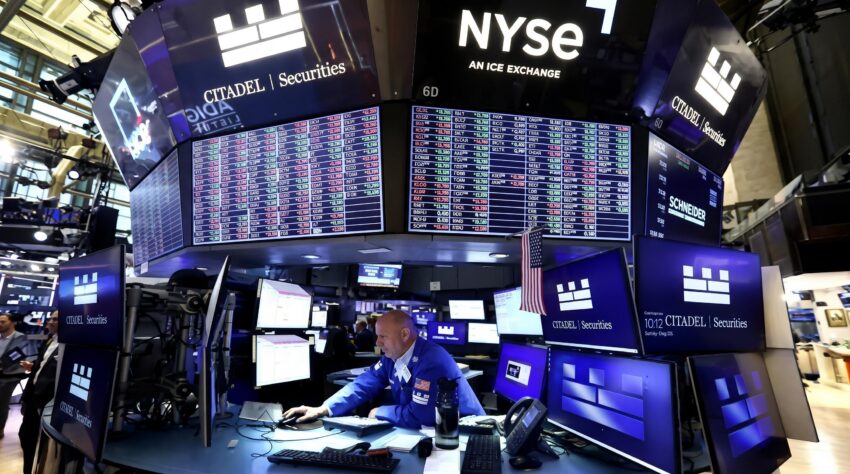
New York — Wall Street just endured its most brutal trading session in a year and a half. Fueled by a wave of panic selling, the tech-dominated Nasdaq Composite crashed, dragging global markets down with it. In a single trading day, more than $2.5 trillion in market capitalization evaporated from technology and semiconductor stocks alone.
AI titans take the hardest hit as panic sweeps the markets
The artificial intelligence sector—long the darling of equity markets—found itself at the epicenter of the storm. Once hailed as the growth engine of the decade, it now faces an abrupt reckoning.
Nvidia leads the fall from grace
As the undisputed leader of the GPU revolution, Nvidia saw its shares plunge up to 9%, vaporizing tens of billions in market value within hours. Its stock, which had been a darling of momentum traders and long-term investors alike, now faces intense scrutiny over whether its sky-high valuations reflect real earnings potential or unsustainable hype.
AMD and Broadcom follow suit
AMD, a key player in AI processors and data center chips, fell sharply between 6% and 17%, wiping out billions. Broadcom, another AI infrastructure heavyweight, also suffered severe losses as investors pulled back from high-flying tech bets.
Memory makers absorb devastating blows
The semiconductor supply chain—already under pressure from overcapacity and shifting demand—bore the brunt of the sell-off. Micron Technology plunged between 10% and 17%, Western Digital sank 13%, and SanDisk crashed between 15% and 22%. These declines underscore a rapid retreat from data center investments, raising alarm about the sector’s long-term growth trajectory.
U.S. market indices fall into deep correction territory
The sell-off wasn’t confined to tech. Major U.S. indices spiraled downward in synchronized fashion.
- Nasdaq Composite: Shed more than 10%, led by megacap tech stocks.
- S&P 500: Dropped over 2.6%, marking its worst single-day performance of the year.
- Dow Jones: Fell more than 3%, dragged down by industrial and tech-linked components.
- VIX Index (the “fear gauge”): Soared 33% to levels above 60, signaling extreme volatility and gut-wrenching uncertainty among fund managers.
Three tipping points that triggered the financial earthquake
The collapse wasn’t random. Three converging pressures finally broke the fragile consensus that had propped up tech valuations for years.
1. The ROI illusion in AI
Investors are no longer willing to accept investment cycles stretched beyond reason. Despite billions poured into AI infrastructure, data centers, and energy-intensive computing, the tangible returns have lagged far behind the hype. Profitability timelines now appear dangerously elongated, shaking confidence in the entire sector’s sustainability.
2. Regulatory dark clouds over data center growth
Emerging political headwinds in Washington are casting long shadows over the future of AI expansion. New proposals aimed at curbing energy consumption in data centers and limiting their construction pose a direct threat to chip demand forecasts. Analysts warn that stricter regulations could throttle the very engines powering AI—semiconductors.
3. Automated liquidations amplify the rout
After months of relentless gains, trading algorithms and hedge funds hit predefined exit triggers—especially when key technical support levels were breached. Once those automated sell signals fired, the downtrend accelerated into a full-blown liquidation spiral, turning what might have been a healthy correction into a rout.
Global markets tremble as shockwaves radiate overseas
The crisis at the heart of American equities sent tremors across continents. In Asia, the damage was immediate and severe.
- Nikkei 225 (Tokyo): Plunged 6% as investors fled tech-linked exporters.
- Kospi (Seoul): Crashed more than 8%, dragged down by chip giants Samsung and SK Hynix.
As market watchers debate whether this is a long-overdue market reset or the leading edge of a deeper tech bubble burst, all eyes are now on central bank responses and upcoming corporate earnings. With the VIX spiking and global portfolios hemorrhaging value, one thing is clear: the era of unchecked tech euphoria may be over.