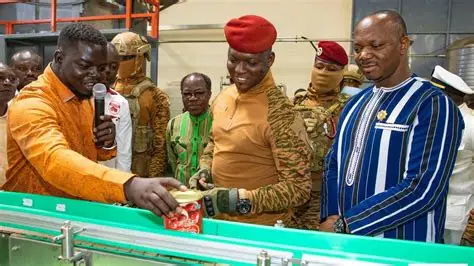
In recent months, Captain Ibrahim Traoré has intensified efforts to showcase Burkina Faso’s industrial development through high-profile inaugurations and site visits. From tomato processing plants to gold refineries, the transitional government has deployed a carefully orchestrated communications strategy to project an image of economic resurgence. Yet beneath the polished media coverage, the harsh realities of the country’s security and economic crises remain unaddressed.
Publicity over substance: the illusion of progress
The government’s reliance on high-visibility infrastructure projects reflects a familiar tactic among regimes seeking legitimacy. By emphasizing local job creation and economic sovereignty, the administration positions itself as a bulwark against external dependence. Supporters argue that each groundbreaking ceremony represents a step toward self-reliance, while critics view these initiatives as superficial gestures rather than a coherent development strategy.
Opaque financing and unanswered questions
Closer examination of these industrial ventures reveals troubling inconsistencies. While ribbon-cutting ceremonies draw significant attention, critical details—such as funding sources, operational viability, and long-term sustainability—are conspicuously absent. Reports of financial mismanagement and questionable allocation of patriotic funds further undermine public trust, particularly as traditional businesses struggle under heavy fiscal burdens and escalating insecurity.
The widening gap between rhetoric and reality
The disconnect between state propaganda and the lived experiences of Burkinabè citizens could not be starker. Basic necessities have become increasingly unaffordable, with staple foods like rice, oil, and millet reaching unaffordable price levels. The humanitarian crisis deepens as over two million internally displaced persons remain trapped in precarious conditions, reliant on sporadic aid convoys due to terrorist blockades on rural areas.
The informal economy, traditionally the backbone of Burkina Faso’s commerce, has ground to a halt. Persistent power outages and road insecurity have crippled trade networks, leaving communities isolated and struggling to survive.
Media spectacle vs. national suffering
The stark contrast is undeniable: glossy state broadcasts depict gleaming machinery and a resolute leader, while families grapple with the inability to afford education and soldiers operate under extreme duress. The narrative of a ‘thriving Burkina Faso’ serves as a temporary shield against criticism, but its foundations are crumbling. Without tangible progress in securing agricultural land or ensuring the functionality of newly built factories, these televised performances risk becoming mere illusions in an already harsh landscape.
The captain’s gamble on perception over substance may yield short-term political dividends, but the disconnect from the population’s suffering could ultimately prove unsustainable. Industrialization, though a commendable ambition, cannot flourish on unstable ground. Without transparent financial practices and genuine security guarantees, the president’s efforts risk remaining nothing more than mirages in the Sahel’s unforgiving terrain.