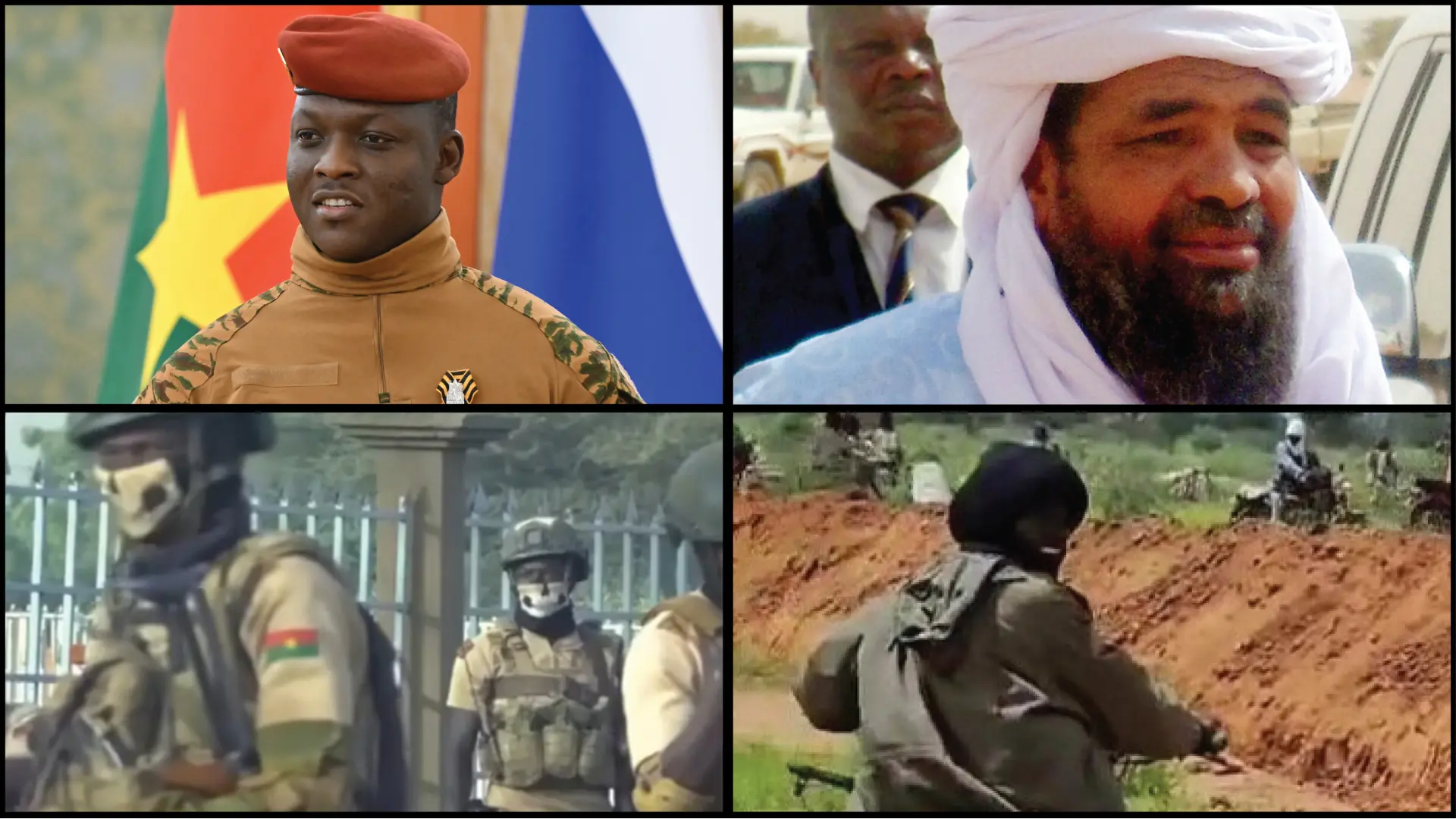
Captain Ibrahim Traoré, a 36-year-old military leader, now occupies the presidential palace, a position secured without electoral mandate following the abolition of democratic processes. This convenient shift allows for direct communication with journalists, circumventing the need to address voters. From the Koulouba palace, Traoré delivers a two-hour address to six assembled journalists, presenting a rosy picture of national progress. He asserts that the army is reclaiming territory, industrial sectors are flourishing, gold reserves are accumulating, infrastructure projects like highways are expanding, and Burkinabè citizens enjoy unprecedented freedoms. This narrative, however, starkly contrasts with emerging realities.
The report that spoils the party
Yet, as Captain Traoré presented his optimistic report, a comprehensive 351-page document from Human Rights Watch (HRW) emerged, filled with witness testimonies, satellite imagery, and lists of the deceased. Titled “No One Will Escape,” the report details the tragic deaths of 1,837 civilians over two and a half years. The perpetrators include the national army, VDP militias, and JNIM jihadists. While all factions contribute to the violence, the report highlights a disturbing pattern: state-affiliated forces, often operating with drone surveillance and clear directives, are systematically involved in widespread killings.
The documented atrocities encompass war crimes, crimes against humanity, and the specific targeting of the Fulani ethnic group. Incidents include the summary execution of 223 civilians, among them 56 children, in Nondin in February 2024; hundreds more fatalities in Baraboulé in December 2023; and the massacre of 130 Fulani individuals near Solenzo in March 2025. Evidence points to mass graves, survivor accounts, and corroborating satellite data. Despite this overwhelming evidence, the official narrative often dismisses such findings as a “Western conspiracy.”
The ‘recaptured’ towns (built on corpses)
Ironically, Traoré proudly announced the “recapture” of towns like Baraboulé and Pétégoli, locations prominently featured in the HRW report. However, HRW’s investigation revealed that these areas were the sites of “Operation Tchéfari 2” – poetically named “The Warriors’ Honey” in Fulfulde. This operation, hailed as a “success” by state television, saw the army kill hundreds of civilians across 16 villages, a reality survivors describe as a horrific slaughter. This stark divergence underscores a profound difference in perspective.
Traoré attempts to explain away these killings by claiming they are the work of disguised terrorists who film their own actions. This explanation suggests an extraordinary level of sophistication for individuals who, according to Traoré, merely “read the Quran in the bush.” It implies that these “terrorists” don Burkinabè military uniforms, deploy military drones, coordinate multiple battalions, and then vanish without a trace.
The word that must not be spoken
Throughout his two-hour interview, the word “Fulani” was conspicuously absent. This omission is particularly jarring given the systematic targeting of the Fulani community documented by HRW. Comprising 8% of the population, this group has been collectively accused of terrorism, leading to village-by-village massacres and the displacement of hundreds of thousands. The report even quotes Traoré himself from February 2023, addressing Fulani leaders: “There will be many dead. And it will be more complicated for your community.” His presidential guard chief reportedly delivered an even more chilling message: “We will kill them all.” This silence, therefore, speaks volumes about the grave challenges facing the Fulani population in Burkina Faso.
Freedom of expression: hilarious
Traoré controversially claims that citizens in Burkina Faso are “much freer” than those in Europe. However, this “freedom” appears to extend primarily to the freedom to disappear. Journalists have been forcibly abducted and conscripted into militias, independent media outlets have been shut down, and human rights websites are blocked. Furthermore, the electoral commission has been abolished, and the death penalty reinstated, painting a grim picture for civil liberties. Adding to this repressive environment, pro-junta troll networks, known as the “BIR-C” (Rapid Communication Intervention Battalions), actively disseminate propaganda and deepfakes on social media, glorifying the current leadership. The scale of this state-sponsored disinformation makes comparisons to other authoritarian regimes seem almost understated.
Justice, but not for everyone
Human Rights Watch advocates for an investigation into Traoré’s command responsibility, naming six generals. Yet, none have faced trial. The junta’s decision to withdraw from the International Criminal Court (ICC) raises further questions, suggesting a reluctance to submit to international scrutiny. While minor offenses, such as a traffic officer pocketing 500 CFA francs, are publicly shamed by Traoré as national scandals, the massacre of hundreds of civilians by the army is dismissed as “terrorist perfidy.” This stark contrast highlights a troubling prioritization of justice, where accountability for severe human rights abuses appears to be selectively ignored.
The West’s fault, as usual
Any criticism, whether from a European Parliament resolution, the French army chief, NGOs, or the media, is routinely dismissed by Traoré’s regime as “interference,” “manipulation,” or outright “lies.” The internet, territorial maps, and even the extensive 351-page HRW report with 450 interviews are all branded as “fake.” While acknowledging the legitimate historical grievance of postcolonial exploitation by France, using this fact as an impenetrable shield against criticism, especially while committing atrocities against one’s own population, is a dangerous tactic. Anti-imperialism does not grant a license to kill.
In a recent development, Traoré encouraged Burkinabè citizens to “have children” because “the land is rich.” This statement carries a chilling irony, given the extensive human cost of the ongoing conflict and the documented mass graves across the nation.