End of Moroccan scholarships exposes authoritarian grip on education
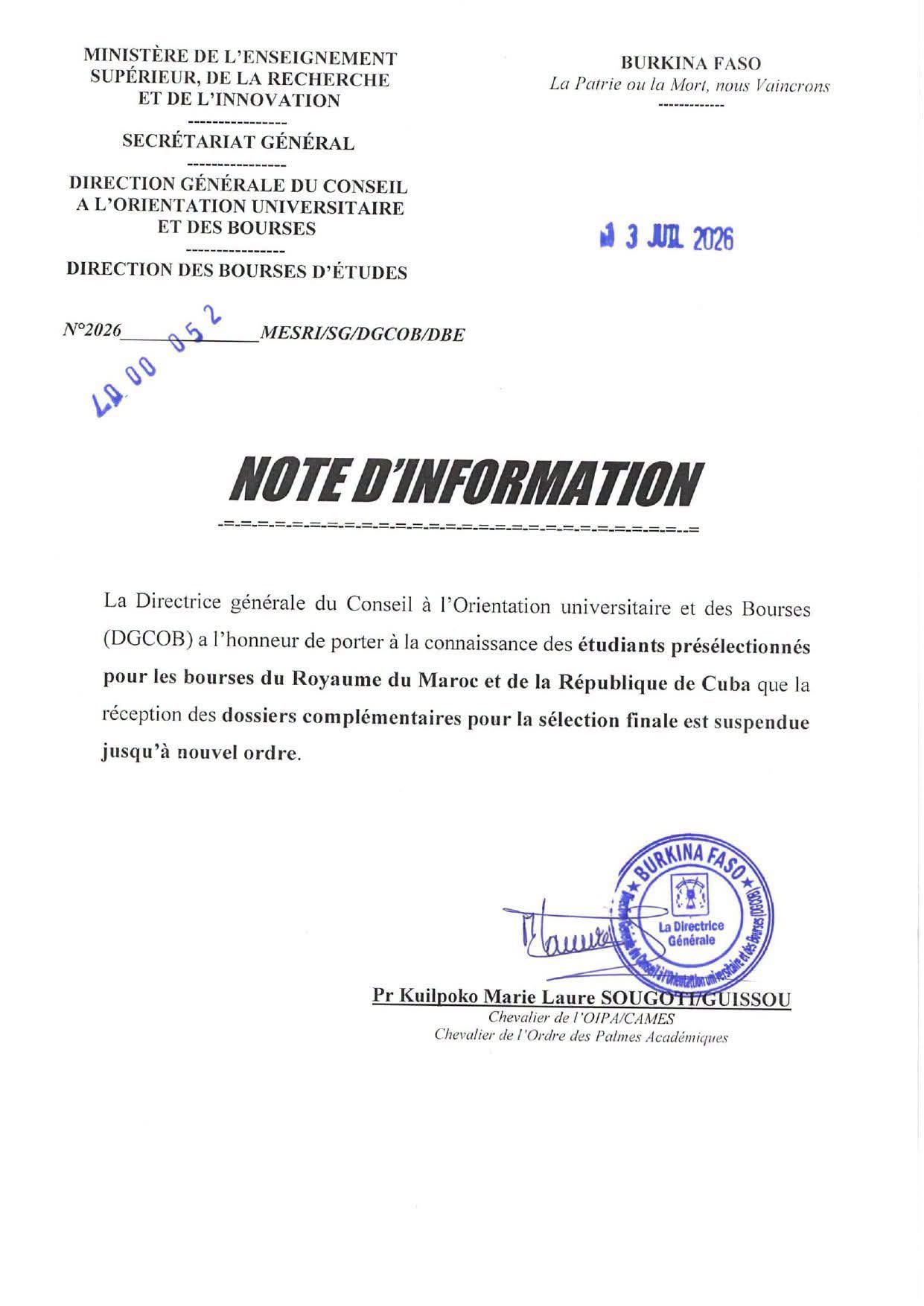
The abrupt termination of scholarship programs for Burkinabè students destined for Moroccan universities marks a pivotal moment in the country’s educational crisis. Authorities’ decision to sever these academic pathways has intensified concerns about the military regime’s tightening control over intellectual freedom and its disdain for the nation’s youth.
For years, these scholarships have served as a lifeline for aspiring professionals, enabling future doctors, engineers, and researchers to pursue advanced studies abroad before returning to contribute to Burkina Faso’s development. The sudden withdrawal of this opportunity threatens to extinguish the last embers of hope for a generation already suffocating under economic hardship and escalating insecurity. Under Captain Ibrahim Traoré’s leadership, the military junta appears determined to dismantle any avenue for critical thought or independent intellectual growth.
The decision reflects a broader pattern of repression sweeping across the nation. With the country grappling with spiraling violence, economic collapse, and diplomatic isolation, the regime’s latest move underscores its willingness to sacrifice the future of Burkinabè youth on the altar of absolute control. For families from modest backgrounds, these scholarships were often the sole means of social mobility—a chance to break the cycle of poverty through merit and education.
A calculated strategy of isolation
Opponents of the regime argue that the move is not merely a financial decision but a deliberate political maneuver to sever Burkina Faso’s ties with longstanding partners like Morocco. By restricting access to foreign education, the junta aims to cocoon the youth within increasingly rigid national borders, stifling intellectual exchange and global exposure.
Analysts warn that such policies will have lasting repercussions. The erosion of access to elite international education will deepen the skills gap in critical sectors, undermining the nation’s long-term competitiveness. More ominously, the decision sends a chilling message to the next generation: ambition is not rewarded under Traoré’s rule, and the path to progress is deliberately obstructed.
By systematically closing doors to opportunity, the military regime seeks to neutralize dissent and stifle future challenges to its authority. The long-term consequences are stark: a nation stripped of its brightest minds, either through forced exile or the crushing weight of unfulfilled potential. Burkina Faso’s sovereignty, experts caution, will inevitably weaken as its human capital dwindles, leaving the country more vulnerable to instability and decline.
In the shadow of this authoritarian gambit, the youth of Burkina Faso are left to navigate a landscape devoid of prospects, where the pursuit of excellence is met not with encouragement but with repression. The junta’s iron-fisted grip on education and mobility may secure its short-term survival, but at the cost of the nation’s future.