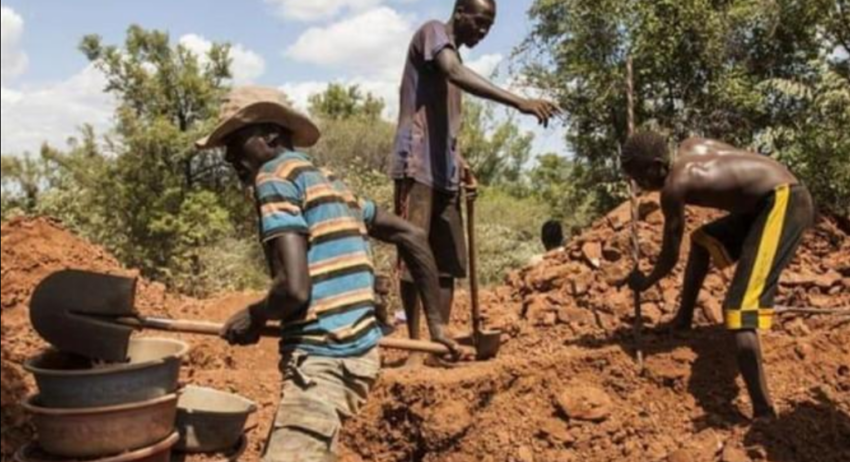
Forced to leave Guinea after years of perilous labor in its gold mines, thousands of Burkinabè miners now confront an even harsher reality: returning home to a nation still gripped by terrorism, displacement, and economic collapse. What once seemed a lifeline has become a dead end, leaving these workers and their families in a precarious limbo with no clear path forward.
From flee to fall: the journey of Burkina Faso’s abandoned miners
Many of these artisanal miners did not choose Guinea for adventure or fortune. They fled in desperation from Burkina Faso’s spiraling insecurity, where relentless armed attacks, state violence, and collapsing livelihoods have made daily survival nearly impossible. With no stable income or safety in their home villages, they sought refuge in Guinea’s Siguiri region—one of West Africa’s richest gold belts.
There, despite grueling work, hazardous conditions, and negligible labor protections, they earned enough to send money to relatives back home. But their fragile stability vanished overnight when Guinean authorities began evicting foreign miners—especially Burkinabè workers—under sweeping anti-illegal-mining operations. For many, this wasn’t just the loss of a job—it was the disappearance of their last source of income.
What awaits them back in Burkina Faso?
The return is not a relief—it’s a reckoning. Many cannot go back to their villages, now either abandoned or under jihadist control. Fields lie fallow, homes have been looted or destroyed, and infrastructure is in ruins. Those who do return often settle in overcrowded displacement camps or swelling urban peripheries like Ouagadougou, where competition for housing, food, and work is already fierce.
With dwindling savings and no jobs on the horizon, these men face an impossible choice: join the swelling ranks of the unemployed, risk dangerous migration again, or fall prey to predatory recruitment by armed groups. The latter is not speculative—it’s a documented strategy in conflict zones where poverty and desperation create fertile ground for radicalization.
When survival trumps security
Humanitarian agencies warn that the longer these ex-miners remain without support, the higher the risk they become targets for violent extremist organizations. These groups exploit economic despair, offering small stipends or the promise of protection to young men stripped of hope. While not all will join, the door opens wider with every week of hunger, displacement, and rejection.
Local communities, already stretched thin by years of displacement and meager resources, are ill-equipped to absorb another wave of dependent arrivals. Social tensions rise. Trust erodes. And the state’s legitimacy weakens further in regions where security forces are already under scrutiny for rights abuses.
Can Burkina Faso turn a crisis into a chance for recovery?
This isn’t just a refugee problem—it’s a national security risk wrapped in humanitarian urgency. Successive governments have struggled to stabilize rural areas and protect civilians. Expelling Burkinabè from Guinea may solve one problem for Conakry—but it shifts a far greater burden back to Ouagadougou.
Without coordinated action involving social protection, vocational training, and economic reintegration, these returnees risk becoming permanent statistics in a worsening crisis. Some key steps are already on paper: cash transfers, job placement programs, and security screening. But execution has been inconsistent, plagued by limited funding, bureaucratic delays, and poor targeting.
Time is not on anyone’s side. Every day without support is another day closer to desperation—and another potential recruit for extremist networks.
Reinsertion must begin today, not tomorrow
First, authorities must identify who is returning, where they came from, and why they cannot return home safely. Vulnerable groups—elderly miners, single fathers, and families with children—need priority assistance. Financial aid should be tied to participation in training or public works, restoring dignity and self-reliance.
Second, partnerships with local NGOs and development agencies are not optional—they’re essential. Humanitarian actors can monitor needs, distribute aid efficiently, and provide psychosocial support. Development partners can link training programs to local markets, ensuring new skills translate into real jobs.
Finally, diplomacy must matter. Burkina Faso and Guinea must negotiate humane repatriation policies that respect labor rights and avoid collective punishment. Expulsions should include proper identification, fair procedures, and safe return—before more lives are ruined on both sides of the border.
No one should be left behind twice
The narrative of Burkinabè miners runs deeper than gold or expulsion. It’s a story of flight, resilience, and now—betrayal. They fled violence. They worked hard. And now they’re being pushed into the arms of the very instability they tried to escape.
The real tragedy is not that they had to leave—it’s that they returned to nothing. Burkina Faso’s future may depend not on expelling outsiders from gold fields, but on saving its own citizens from the hunger of despair.