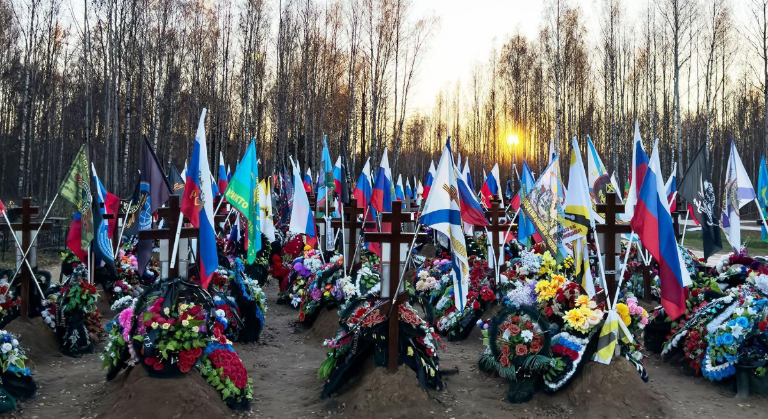
Whistleblowers claim to have exposed a massive data breach at Russia’s federal statistics agency, revealing a staggering human cost of the Ukraine war that Moscow has long sought to conceal. The leaked documents allegedly include death certificates documenting at least 412,576 Russian military fatalities since the February 2022 invasion—far exceeding the Kremlin’s official toll. This revelation is poised to ignite a new wave of scrutiny over the war’s true impact on Russian society and the Kremlin’s transparency.
How a cyber operation exposed Russia’s hidden war casualties
A coordinated hacking campaign by two cyber groups—Belarus-based Silent Crow and Cyberpartisans—has allegedly compromised Rosstat’s confidential databases, disseminating records that appear to confirm unprecedented military losses. Among the leaked files are administrative documents and military death certificates, which cybersecurity analysts describe as internally consistent and highly specific.
Rosstat has acknowledged cyber intrusions targeting its systems, but disputes the authenticity of the leaked data, arguing that sensitive information remains secure. The agency’s stance, however, has done little to dispel growing skepticism over the scale of Russia’s Ukraine war casualties and the government’s reluctance to provide verifiable statistics.
Moscow’s silence fuels global skepticism
Since the invasion began, Russian authorities have released only fragmentary casualty figures. The last official estimate, published in September 2022, put military deaths at just 5,937—a figure widely rejected as implausibly low by international observers. Independent analysts and Western intelligence agencies have repeatedly suggested that Russia’s actual losses are orders of magnitude higher, but without access to official records, the true human toll remained obscured.
If confirmed, the leaked documents could force a reckoning over whether Moscow’s reported death toll was ever grounded in reality. They also raise critical questions about the definition of a ‘casualty’ in this context: Do the numbers include only combat fatalities, or do they also encompass soldiers who died from injuries sustained in battle, the missing presumed dead, or other wartime-related losses?
Demographic ripple effects: The cost beyond the battlefield
The war’s human toll extends far beyond military personnel. Analysts warn that the loss of over 400,000 working-age men could have severe repercussions on Russia’s labor force, particularly in remote regions like Siberia and the Far East, where recruitment has been especially heavy. These areas already face economic stagnation, aging populations, and outmigration—factors that are likely to intensify as families grieve and communities reel from the absence of breadwinners.
For Russian families, the emotional and financial burden is immense. Many bereaved relatives have received no formal notification, no body for burial, and no state recognition of their loved ones’ deaths. The lack of transparency has left thousands in limbo, compounding grief with uncertainty and mistrust toward authorities.
Why these figures matter—and what happens next
While the leaked data has not been independently verified, its emergence underscores a broader crisis of credibility facing the Russian government. The opacity surrounding military losses has fueled public doubt, opposition movements, and even whispers of discontent within the military establishment itself. If authenticated, this trove of documents could become one of the most significant disclosures about wartime casualties since the conflict began.
Yet for now, the figures remain unverified. Questions persist about data integrity, potential manipulation, or selective disclosure by the hackers themselves. Until a credible third-party review confirms the authenticity and scope of the documents, their revelations must be treated with caution.
Regardless of the final count, one fact remains undeniable: the war has exacted a devastating human cost, one that continues to shape Russia’s future—economically, socially, and politically—long after the guns fall silent.