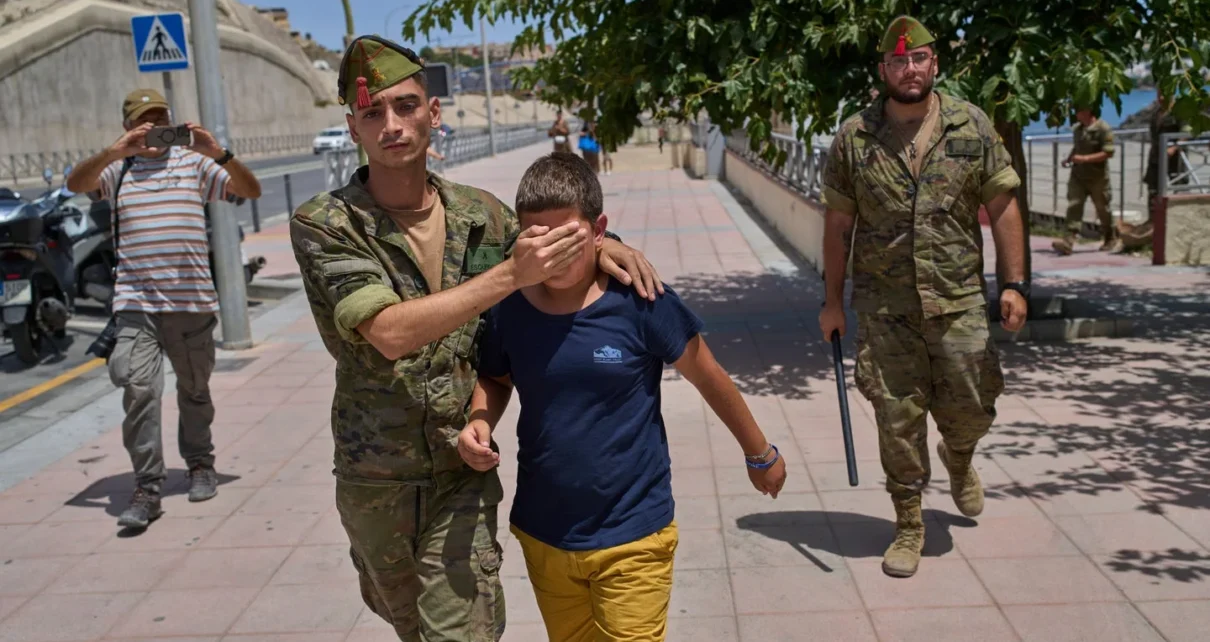
Moroccan justice minister pushes for minors’ return from Ceuta
Morocco’s Minister of Justice, Abdellatif Ouahbi, has urged the repatriation of Moroccan minors currently in Spain, including those who arrived in Ceuta during the most recent migration surge. This appeal follows royal directives instructing relevant ministries to expedite the identification and return process for these children.
Uncertain numbers complicate the situation
The exact count of affected minors remains unclear. Spanish authorities reported 1,527 unaccompanied minors in Ceuta following the crisis, though this figure may not reflect arrivals from July 30-31 alone—some were already present in the enclave prior to the migration wave.
A 2007 agreement governs returns
Contrary to some assumptions, Spanish law does not prohibit the return of Moroccan minors. A bilateral agreement signed in 2007 between Morocco and Spain outlines measures to prevent irregular migration by unaccompanied minors, ensure their protection, and facilitate coordinated returns. The treaty mandates cooperation between both nations to locate minors’ families and, when feasible, arrange their return to relatives or to Moroccan authorities.
However, the agreement does not permit collective or automatic repatriations. Spanish law requires a case-by-case evaluation to ensure each child’s return aligns with their best interests. This involves gathering family background details, consulting Moroccan officials, and allowing the minor to present their views. The public prosecutor’s office also plays a key role in the process.
The necessity of this individualized review explains why minors could not be treated the same as adults during the initial expulsion measures. Their irregular entry does not negate their status as minors under Spanish protection.
2021 Ceuta crisis casts a legal shadow
The cautious approach stems from the 2021 Ceuta migration crisis. After a large influx of migrants into the enclave, Spanish authorities repatriated several hundred minors to Morocco in a coordinated operation. However, the Spanish judiciary later ruled this procedure unlawful.
In January 2024, the Supreme Court upheld the illegality of the 2021 returns, citing failures to meet legal safeguards—particularly the lack of thorough individual assessments. This precedent now looms large over any future collective repatriation efforts. While both Morocco and Spain express interest in resolving the situation, Spanish authorities must ensure every return complies with legal requirements.
Distributing minors across Spain as an interim solution
In the meantime, Spain faces immediate pressure to address Ceuta’s overcrowding. The government has activated protocols to transfer some unaccompanied minors to other autonomous communities. This relocation strategy operates separately from potential repatriation discussions.
The move has sparked political divisions in Spain. The central government advocates for regional redistribution to alleviate Ceuta’s strain, while the Popular Party insists on prioritizing returns to Morocco. Juan José Imbroda, President of Melilla, has also called for implementing the 2007 agreement with Morocco.
The current dilemma is less about Spain’s refusal to return minors and more about a legally binding process. Morocco demands their repatriation and insists it is prepared to receive them. Spain can approve these returns but must process each case individually.
The coming weeks will test whether bilateral cooperation can swiftly identify families and meet the conditions for repatriation. The 2021 judicial ruling serves as a stark reminder that rushed collective operations risk renewed legal challenges.