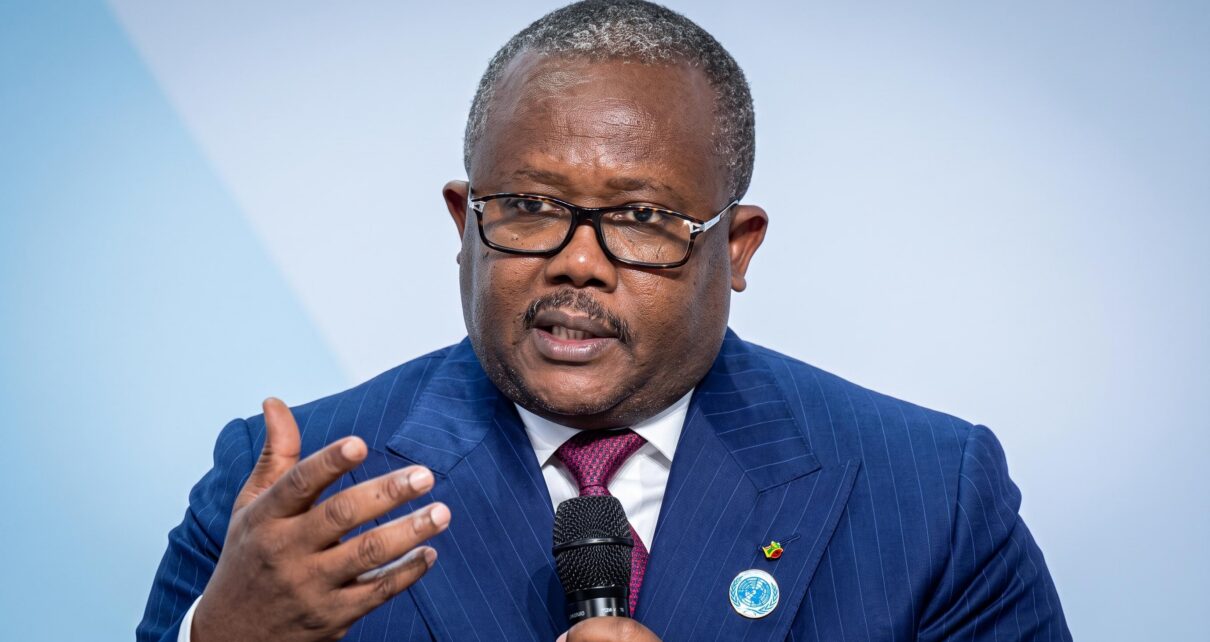
The political scene in Guinea-Bissau has shifted decisively following President Umaro Sissoco Embaló’s formal announcement that he will seek a second term. The move, long anticipated but never certain, immediately sparked a wave of reactions across the country and among international observers. For many Bissau-Guineans, the question is no longer whether Embaló will run, but what his candidacy means for a nation already grappling with deep institutional fractures.
A candidacy that ends months of speculation
After repeatedly hinting that he might step aside, Embaló has now put an end to the ambiguity. By bowing to calls from his supporters and coalition partners, the president has repositioned himself at the very center of the political arena. The announcement comes as the country prepares to enter a decisive electoral period, with the opposition forced to recalibrate its strategy.
Five years of reforms and recurring crises
Since his contested election in late 2019 and his inauguration in early 2020, Embaló has pursued an agenda focused on raising Guinea-Bissau’s diplomatic profile and modernizing infrastructure. His tenure included a stint as chairman of the ECOWAS Authority of Heads of State and Government, which brought renewed international visibility to Bissau.
Yet his term has also been defined by persistent political instability:
- Repeated dissolution of parliament: The president dissolved the National People’s Assembly twice (in 2022 and late 2023), citing destabilization attempts and institutional deadlock.
- Clashes with the opposition: The opposition coalition, led by the PAIGC (African Party for the Independence of Guinea and Cape Verde), has consistently accused the government of authoritarian drift and restrictions on public freedoms.
- Securing the regime: The authorities have had to contend with several episodes of military tension and alleged coup attempts in the capital.
Reactions at home and abroad
Within Guinea-Bissau, reactions have been swift and divided. Supporters of the president view his candidacy as a guarantee of continuity and stability, while opposition figures warn that a second term could further entrench the very tensions that have marked the past five years. Civil society groups have called for a transparent and peaceful electoral process, urging all parties to avoid inflammatory rhetoric.
Regional partners and international observers have echoed those concerns. For them, the priority remains an inclusive, credible vote that can preserve the fragile political stability of this West African nation. The coming months will test whether Embaló’s candidacy can help bridge the country’s divisions or deepen them further.
What lies ahead for Guinea-Bissau
With the electoral battle now officially underway, attention will focus on the practical organization of the vote and the level of participation by opposition forces. How the government handles the process—and how the opposition responds—will determine whether Guinea-Bissau moves toward a more settled political future or slides back into familiar patterns of instability.