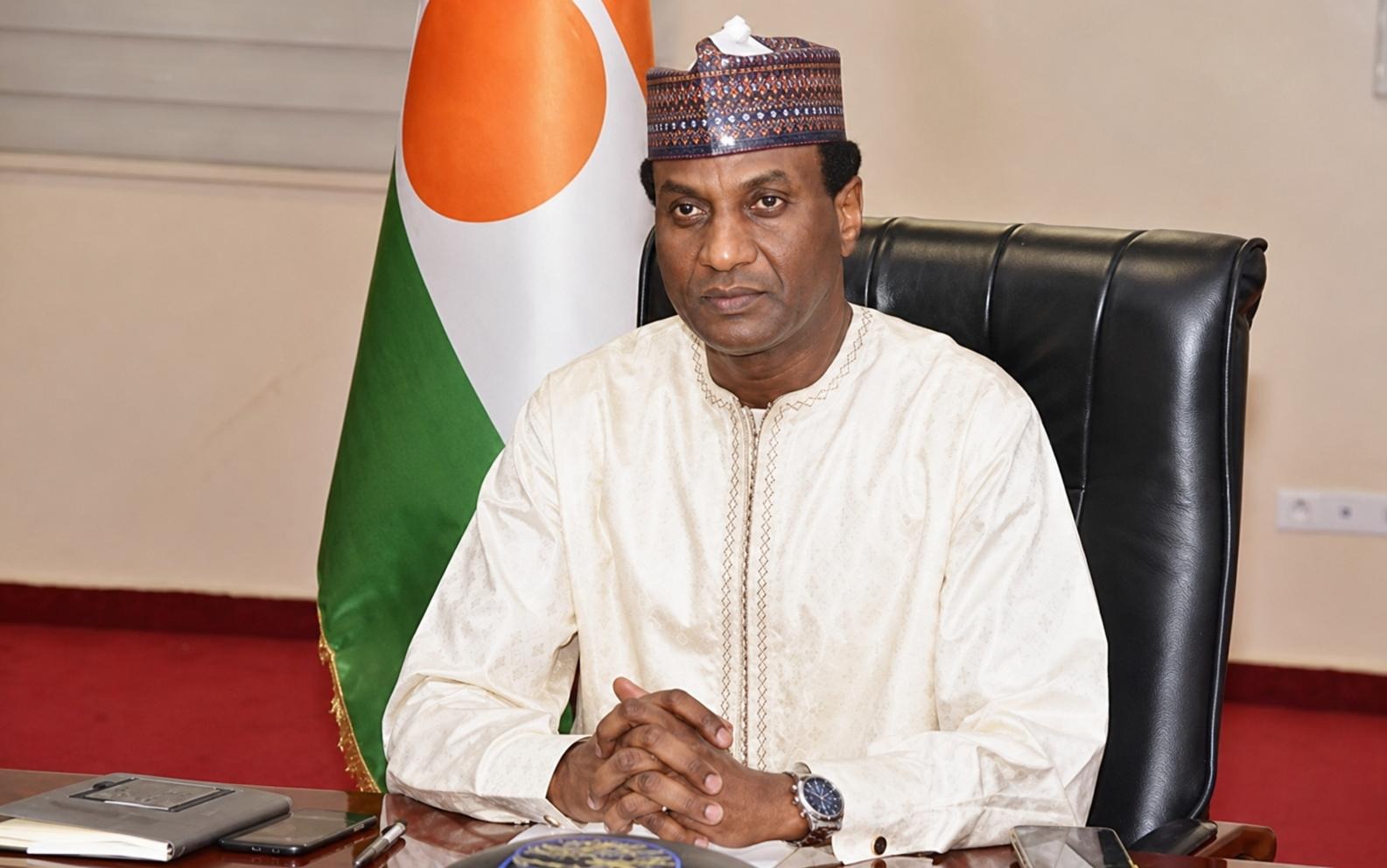
In the shifting sands of Niger’s transitional military regime, the line between trusted advisor and political liability can blur with unsettling speed. Recent developments surrounding Prime Minister Ali Mahamane Lamine Zeine have reignited concerns about the precarious position of civilian leaders operating under junta rule.
Insiders close to the Prime Minister’s office report a growing sense of unease among his inner circle. Security protocols around Zeine have tightened dramatically in recent days: his entire protective detail has been replaced without notice, while even routine visitors face rigorous body searches. Officially, the Prime Minister’s prolonged absence from his duties—now stretching into days—has been attributed to a severe bout of malaria. Yet behind the scenes, speculation swirls that he may be under effective house arrest, with whispers of his imminent resignation gaining traction.
The ambiguity surrounding these measures speaks volumes about the political dynamics at play. In systems where military authority overrides civilian governance, the control of information becomes a powerful tool. When authorities fail to provide clear explanations for sudden security shifts, rumors fill the void—especially when protective measures around a civilian leader resemble containment rather than protection.
This pattern is not new in Sahelian military transitions. The doctrine of absolute alignment remains a defining feature: when civilian technocrats or officials resist adopting the junta’s strategic or ideological direction, the security apparatus swiftly moves to neutralize dissent. Rather than risk public backlash through outright dismissal, regimes often resort to a subtler approach—gradually eroding a leader’s autonomy through restricted movement, surveillance of communications, and a shrinking sphere of influence.
The advantages of this strategy are clear. By maintaining the appearance of continuity while tightening control behind the scenes, military authorities preserve the fiction of institutional stability. This allows them to gauge reactions from international partners, domestic factions, and public opinion before taking more decisive action. The method also serves as a test case: how far can dissent be pushed without triggering broader instability?
Zeine’s predicament raises a critical question: how much real authority do civilian leaders truly wield within military-led transitions? In several Sahelian states, technocrats are often brought in to reassure donors, stabilize economies, and project an image of structured governance. Yet this administrative legitimacy remains entirely dependent on unwavering political loyalty to the military command.
The broader regional context underscores this reality. Similar dynamics have played out elsewhere in the Alliance of Sahel States. Recall the challenges faced by Mali’s former transitional leader Choguel Maïga or Burkina Faso’s Apollinaire Kyélem de Tambèla—civilian figures whose influence waned as soon as they clashed with military priorities. The message is consistent: civilian officials serve as economic buffers or diplomatic fig leaves, but their role is conditional on absolute deference to the junta’s agenda.
Beyond security concerns, these measures send a broader signal: no official, regardless of rank, operates outside the military command’s purview. The replacement of a protective detail, the restriction of access, or the filtering of communications are not merely security protocols—they are deliberate political statements. For Zeine, the challenge is no longer about managing day-to-day governance but navigating a labyrinth of suspicion where every movement is scrutinized and every silence interpreted as dissent.
Ultimately, this episode underscores a harsh truth: in military-led regimes, civilian power may exist on paper, but its durability hinges on the whims of those holding real authority. The illusion of inclusion masks a far more fragile reality—one where trust is provisional, loyalty is conditional, and dissent is met with swift containment.