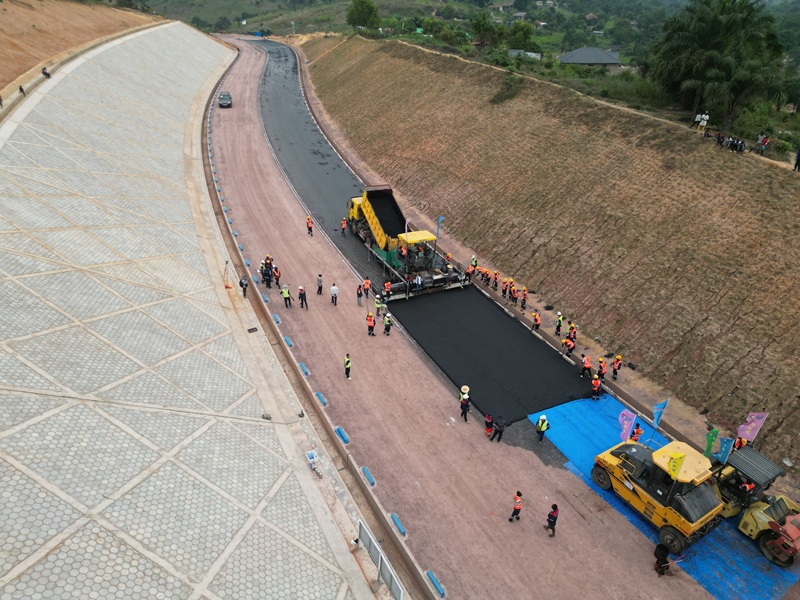
The Sino-Congolese Programme, aimed at boosting infrastructure development across the Democratic Republic of the Congo (DRC), faces significant setbacks due to prolonged customs delays. Despite coordinated efforts from technical, financial, and institutional stakeholders, the impasse at Matadi port threatens to stall critical construction projects nationwide.
bitumen shortages halt major roadworks
Nico Nzau Nzau, Director-General of the Congolese Agency for Major Works (ACGT), recently briefed Infrastructure Minister John Banza on the crisis. He highlighted that road surfacing activities could have progressed on multiple infrastructure sites had 1,477 tonnes of bitumen—imported by SISC SA over six months ago—been cleared. This shipment, despite qualifying for duty exemptions under Law No. 14/005 (2014) and the 2024 Collaboration Agreement Amendment No. 5, remains stranded at Matadi port.
The blockade extends to 1,650 tonnes of bitumen intended for the rehabilitation of National Road 1 (RN1), Mbujimayi–Nguba section, currently held up in Haut-Katanga. Additionally, heavy machinery, including concrete plant components for Idiofa Stadium, spare parts, and other essential construction materials, are trapped in customs, preventing their deployment to project sites.
inspection caravan reveals progress amid challenges
Since June 19, Minister Banza and his delegation have been touring Grand Bandundu to inspect ongoing projects funded by SICOMINES. Notable achievements include the expansion of Kikwit General Reference Hospital, where 17 new buildings are under construction and 11 existing ones are being modernized. Capacity has increased from 150 to 650 beds, while the morgue now accommodates 90 bodies instead of nine.
However, the dry season—typically ideal for construction—is proving counterproductive this year due to these delays. Projects like Kinshasa’s South-East and South-West bypasses, the Manterne–Tshela–Singini road, Kananga–Kalamba Mbuji route, RN1 (Mbujimayi–Nguba), Idiofa Stadium, and Kikwit Hospital are all at risk of missing their delivery timelines.
urgent calls for customs intervention
The Programme’s success hinges on the swift resolution of these logistical hurdles. The Agency for Coordination and Monitoring of Conventions (APCSC) plays a pivotal role as the liaison between stakeholders and customs authorities, ensuring the timely clearance of imported materials. Without decisive action, the entire nation risks losing valuable time and infrastructure advancements that are vital for economic growth and public welfare.