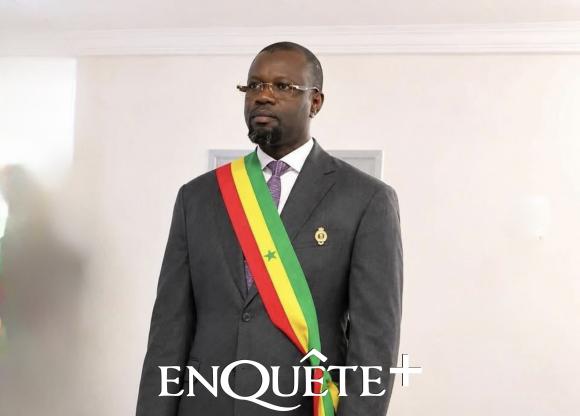
Dakar, Senegal — A coalition of opposition lawmakers has escalated a legal battle by filing a petition with the Constitutional Council to challenge the reinstatement of Ousmane Sonko as a deputy, a move they argue paves the way for his election as President of the National Assembly.
The group, representing nearly two dozen opposition and independent deputies, filed their complaint yesterday, invoking Article 54 of the Constitution to contest the National Assembly Bureau’s decision to reinstate Sonko on May 24. Their petition centers on claims that his reinstatement violates constitutional principles, particularly the separation of powers.
Constitutional concerns and procedural disputes
The opposition argues that Sonko’s election as a deputy in 2024 while serving as Prime Minister created an ipso facto incompatibility under the Constitution. By retaining his government position, they contend, he forfeited his parliamentary mandate—a stance they say was ignored when he was reinstated. The reinstatement, followed by his swift election to the Assembly presidency on May 26 with 132 of 133 votes, has only intensified their legal challenge.
Beyond the constitutional debate, the deputies highlight a procedural grievance: their repeated attempts to obtain critical documents—including Sonko’s reinstatement decree and the May 26 plenary session minutes—were blocked. After formal summons were ignored, they accuse Assembly leaders of obstructing transparency and undermining democratic norms by withholding what they describe as public records.
Political context and legal uncertainty
The timing of the reinstatement and election has added fuel to the fire. Sonko, removed from his Prime Minister post on May 22 by President Bassirou Diomaye Faye, staged a dramatic political comeback by securing the Assembly presidency just days later. The opposition had boycotted the vote, labeling it a “constitutional coup.”
Legal experts remain divided. Some argue that Article 54 does not explicitly address suspension or automatic reinstatement, leaving room for interpretation. Others point to the Assembly’s internal regulations, which supposedly allow for the replacement of deputies appointed to government roles. Yet the opposition’s right to challenge the reinstatement directly is itself in question—parliamentarians typically lack standing to file such petitions, a power reserved for the President of the Republic. The Presidency has denied initiating any such filing.
As the Constitutional Council reviews the case, the outcome could reshape Senegal’s political landscape, testing the boundaries of institutional power and legal precedent.