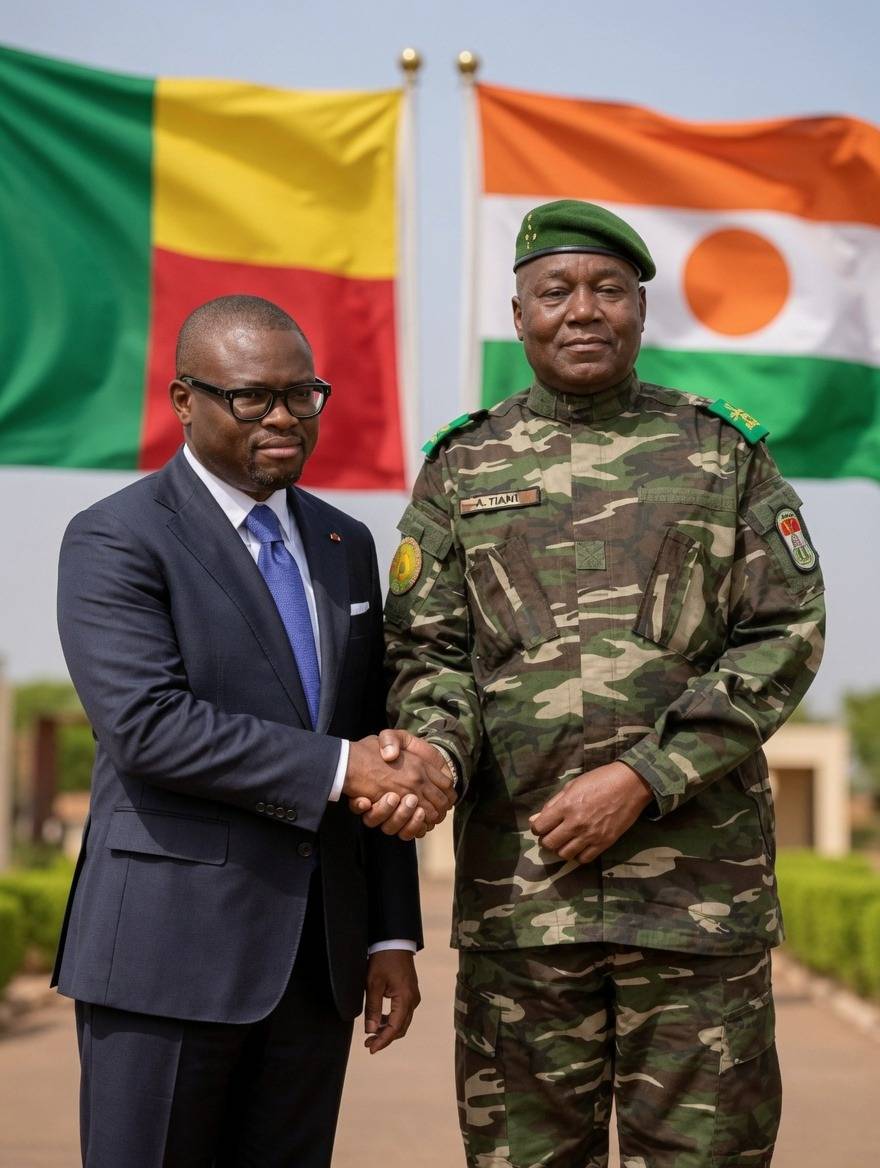
The relationship between Cotonou and Niamey plunged into a severe crisis following the July 2023 coup d’état in Niger and the subsequent imposition of stringent regional sanctions. This period was marked by tightly sealed borders and persistent accusations from Nigerien authorities. However, a closer examination of events reveals a more intricate narrative: despite the resolute stance of the Alliance of Sahel States (AES), Bénin consistently pursued avenues for reconciliation. The recent official visit of Bénin’s new president, Romuald Wadagni, to Niamey stands as the pinnacle of this proactive diplomatic engagement, unequivocally demonstrating Cotonou’s commitment to restoring harmony.
Persistent efforts for de-escalation amidst ongoing obstacles
If the crisis intensified over many months, Bénin initiated concrete actions early on to ease tensions:
- Prompt lifting of economic restrictions: By the close of 2023, Bénin had already rescinded suspensions on goods transiting to Niger via the autonomous Port of Cotonou. This move by Cotonou aimed to reactivate Niger’s vital economic artery, yet it encountered resistance as Niamey maintained border closures, citing “security reasons.”
- Strategic emissary diplomacy: Confronted with the deepening impasse, Béninois authorities actively supported and facilitated high-level mediation efforts. The initiatives undertaken in Niamey by former Béninois Presidents Nicéphore Soglo and Thomas Boni Yayi in the summer of 2024 underscored Cotonou’s unwavering resolve to re-establish dialogue, transcending existing political divisions.
- Safeguarding shared infrastructure: Despite significant contention surrounding the WAPCO Niger-Bénin crude oil export pipeline terminal, Bénin consistently prioritized its protection. This pragmatic approach averted an irreparable breach and preserved the singular technical link connecting the two nations.
The advent of Romuald Wadagni: a fresh start opportunity
The election and subsequent inauguration of Romuald Wadagni as Bénin’s president in May 2026 created a significant window for renewed engagement. A highly regarded technocrat and former Minister of Finance, the new head of state brought invaluable political neutrality to the role, unburdened by association with the most contentious decisions made in the aftermath of the 2023 coup.
A powerful initial gesture emanated from Niamey, as Nigerien Prime Minister Ali Mahamane Lamine Zeine traveled to Cotonou to attend President Wadagni’s investiture, effectively signaling an end to a prolonged period of diplomatic isolation.
The ultimate pledge of goodwill
By dedicating one of his inaugural official trips to Niamey, President Romuald Wadagni delivered the “pledge of goodwill” that the Alliance of Sahel States (AES) regimes had long sought. This presidential visit underscores Bénin’s commitment to prioritizing regional reconciliation. By directly engaging with General Abdourahamane Tiani and Captain Ibrahim Traoré, President Wadagni affirmed his government’s readiness for open, pragmatic, and straightforward dialogue.
Interdependencies dictating pragmatic approaches
This diplomatic thaw extends beyond mere symbolic gestures; it addresses tangible and shared imperatives:
- The security imperative: Armed violence within the shared transborder area, particularly the W-Arly-Pendjari complex, surged by nearly 86% between 2024 and 2025. Neither nation can effectively combat the jihadist threat in isolation. Re-establishing bilateral military cooperation is crucial for the survival and safety of border communities.
- Economic necessity: Niger urgently requires the Béninois corridor to mitigate living costs and ensure stable supply lines. Conversely, Bénin aims to boost revenues generated by the Port Autonome de Cotonou.
By venturing into the heart of the AES, Romuald Wadagni has definitively turned the page on past misunderstandings. Bénin unequivocally demonstrates its respect for the sovereignty of its neighbors and its unwavering commitment to shared stability and prosperity across the sub-region. The onus now rests with Niamey to convert this diplomatic breakthrough into a complete and enduring reopening of borders.