Why Maïmouna Dièye’s statements about Ousmane Sonko sparked controversy in Khombole
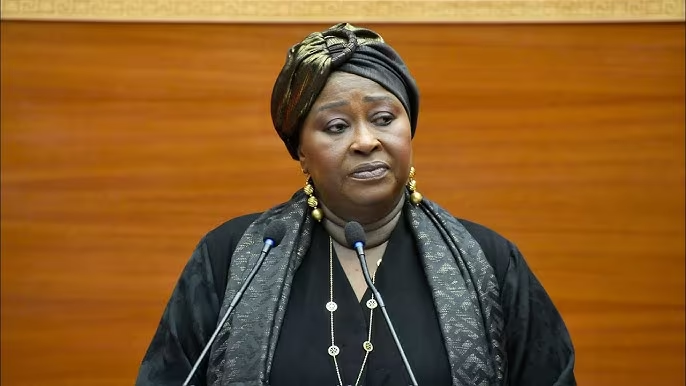
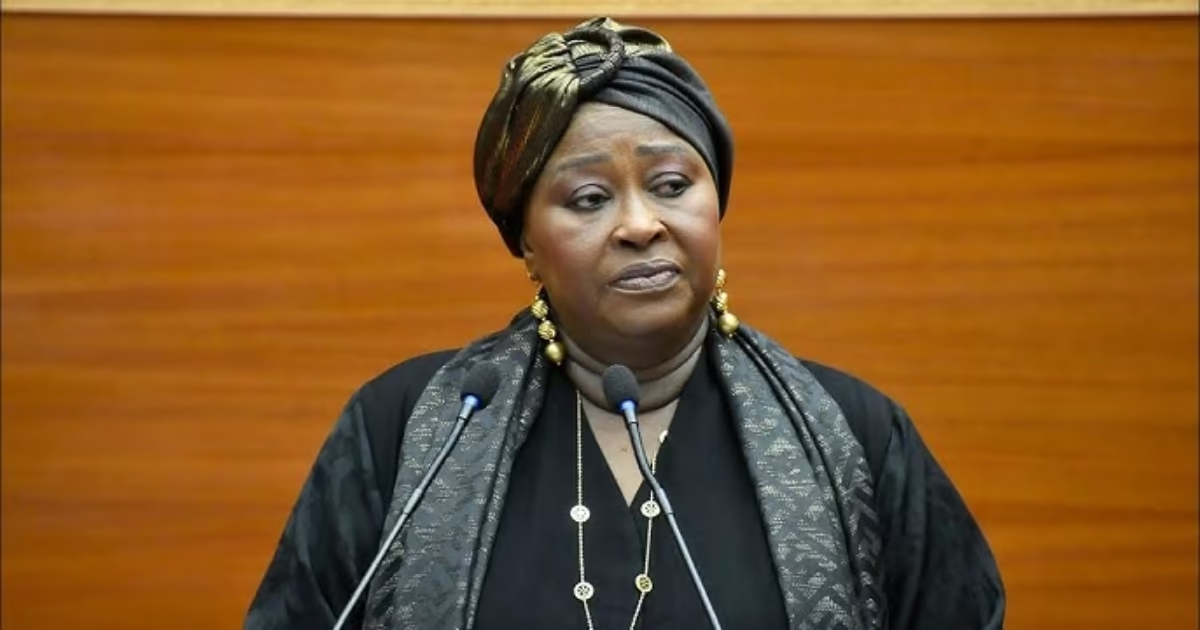
Maïmouna Dièye’s choice of words when addressing Ousmane Sonko in Khombole has ignited a heated discussion about the boundaries between political admiration and religious reverence in Senegal.
During a public appearance in Khombole this past Saturday, Maïmouna Dièye’s remarks directed at Ousmane Sonko sent an unmistakable ripple of unease through the audience. The phrase she used struck at the heart of a deeply sensitive issue within Senegal’s Muslim-majority society.
Maïmouna Dièye’s controversial phrasing
By stating that she was speaking « under the presence of Seyidina Ousmane Sonko Salalahou Aleyhi Wa Salam », Dièye placed the opposition leader in the same spiritual context reserved for the Prophet Mohammad (peace and blessings upon him) and, in certain interpretations, other revered prophets. In Islamic tradition, this invocation is a form of blessing exclusively associated with the Prophet and holds profound spiritual significance. Its application to any other figure—no matter how prominent—violates a fundamental tenet of Islamic teaching, making the choice of words particularly contentious. This explains why many observers perceived the statement as a serious misstep.
The incident raises broader questions about the growing tendency among political supporters to elevate their leaders to almost sacred status. Islamic scholars and religious leaders have repeatedly cautioned against this practice, emphasizing the importance of distinguishing between respect for a political figure and the veneration reserved for the divine and its prophets. Ousmane Sonko, visibly uncomfortable with the implication, responded swiftly by acknowledging his supporters’ affection while firmly clarifying that no political leader—including himself—should ever be equated with the Prophet.
Ousmane Sonko’s swift response
In addressing the matter publicly, Ousmane Sonko sought to prevent the controversy from escalating further. His immediate correction of Dièye’s statement reflects the careful political balancing act required in Senegal, where religious sensitivities run deep. For public figures in the country, navigating such issues demands extreme caution, as the line between respectful admiration and sacrilegious overreach is thin and highly scrutinized.