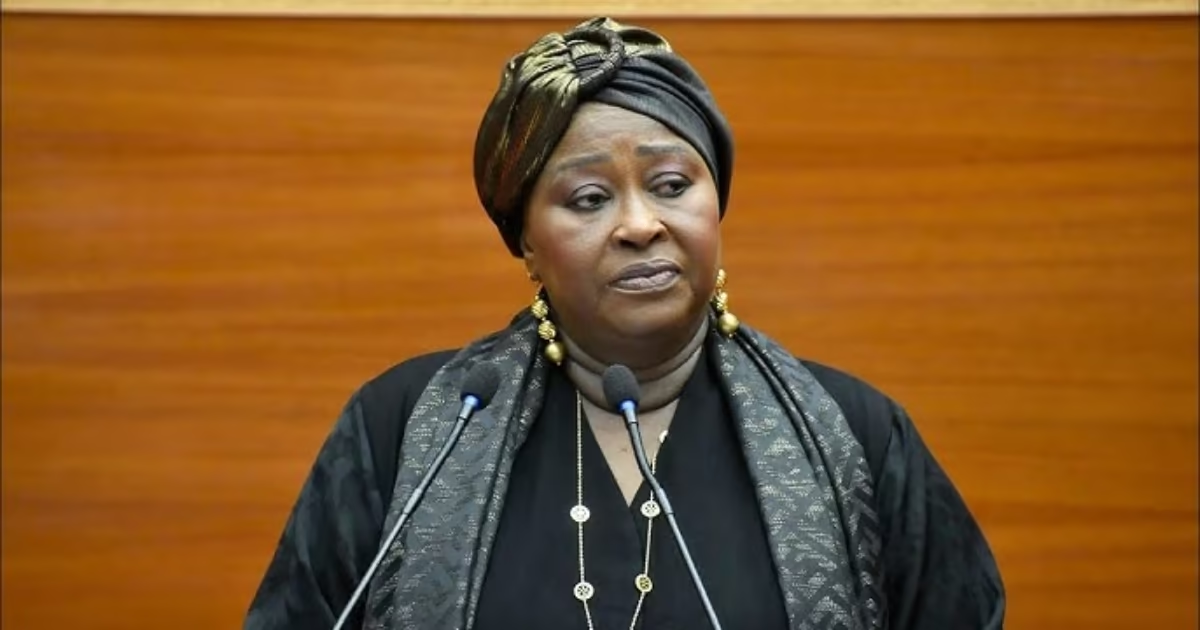
Maïmouna Dièye’s comments about Ousmane Sonko during a gathering in Khombole this past weekend have ignited a heated debate across Senegal. The activist’s choice of words—invoking a religious blessing typically reserved for the Prophet Mohammad—has drawn sharp criticism and raised questions about the boundaries between political reverence and religious sacralization in Senegalese public discourse.
Why Maïmouna Dièye’s words struck a raw nerve
During her address in Khombole, Maïmouna Dièye introduced Ousmane Sonko by declaring she spoke in his presence under the invocation “Seyidina Ousmane Sonko Salalahou Aleyhi Wa Salam.” This phrase, which translates to a blessing upon the Prophet Mohammad, holds deep religious significance in Islam. It is traditionally used exclusively when referring to the Prophet or, in some interpretations, other recognized prophets—not political figures, no matter their stature. By applying this sacred invocation to Sonko, Dièye effectively elevated his status beyond that of a mere leader, crossing a line that many consider sacrilegious. The move was not merely a verbal slip but a breach of religious decorum that carries serious implications in Senegal, where faith and public life are closely intertwined.
The gravity of the situation was compounded by the fact that Sonko himself appeared visibly uncomfortable with the wording. His discomfort underscores the sensitivity of the issue, as even those accustomed to public adulation recognize the limits of what is permissible in matters of faith. The invocation, repeated in daily prayers across Senegal, is a testament to the respect accorded to the Prophet Mohammad and cannot ethically or theologically be extended to others.
A swift public correction
Ousmane Sonko quickly moved to address the controversy, publicly clarifying that the blessing he received was not intended to equate him with the Prophet. In a clear and measured statement, he acknowledged the affection of his supporters but firmly rejected any attempt to place him on the same spiritual pedestal reserved for the Prophet Mohammad. “I have never reached such a level, nor do I seek it,” he declared, emphasizing his commitment to maintaining the necessary separation between political leadership and religious veneration.
His response was not just a personal clarification but a strategic move to prevent the incident from being exploited by opponents. In Senegal’s political landscape, where religious sentiment runs deep, such missteps can quickly escalate into major controversies. By addressing the matter head-on, Sonko demonstrated a keen understanding of the cultural and religious sensitivities at play, reinforcing his image as a leader who respects tradition while navigating the complexities of modern politics.
The episode in Khombole serves as a reminder of the delicate balance political figures must maintain in Senegal, where public respect for religious norms is both a social expectation and a political necessity. As debates over the sacralization of leaders continue, Sonko’s swift reaction may have helped contain the fallout—but the controversy has already sparked broader conversations about the intersection of faith, politics, and public speech in the country.