Côte d’Ivoire confirms status as economic powerhouse of UEMOA
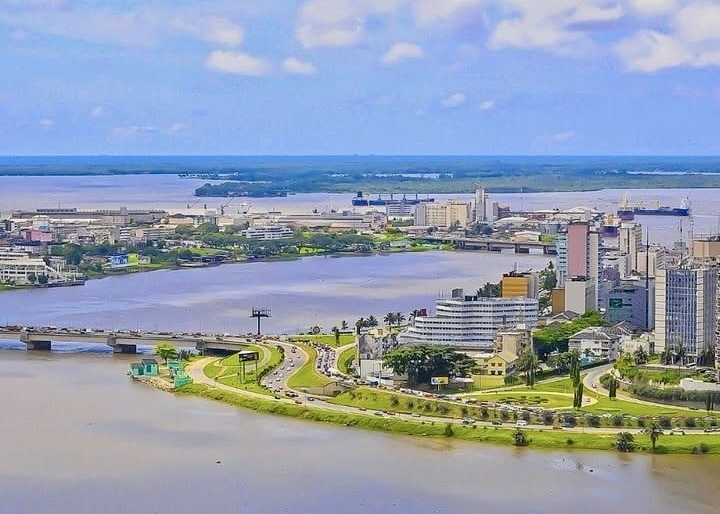
As the largest economy in the West African Economic and Monetary Union (UEMOA), Côte d’Ivoire continues to strengthen its influence through a rare combination of factors in the sub-region: a dynamic domestic market, modern infrastructure, a leading port activity, and an investment capacity that far exceeds that of its neighbours. These indicators reinforce Abidjan’s position as a major economic hub on the continent.
- Politics

With more than 4,195 billion FCFA allocated to public investments, Côte d’Ivoire remains the primary economic engine of UEMOA. This level of financial commitment places the country far ahead of its regional partners and demonstrates its ability to simultaneously support major projects in infrastructure, transport, energy, and urban development. Figures from the budget exercise reveal the scale of this effort. The Ivorian envelope alone far exceeds the combined amounts of Mali, Burkina Faso, and Niger. The three countries of the Alliance of Sahel States (AES) together program about 2,100 billion FCFA in public investments, roughly half the volume mobilized by Abidjan.
Côte d’Ivoire’s position is equally striking when compared to the entire community space. With nearly 44% of programmed public investments in UEMOA, Côte d’Ivoire alone concentrates a considerable share of resources dedicated to regional economic development. Its envelope is nearly three times that of Bénin, more than four times that of Sénégal, and several dozen times larger than that of Guinea-Bissau.
This financial capacity rests on the size of the Ivorian economy, now the largest in the Union. According to economist Nouvou Berté, who holds degrees in political economy and international finance, this lead is explained by the size of the domestic market, the level of tax revenues, and access to financial markets. These levers allow the country to finance large-scale programs in sectors deemed essential for economic transformation. Per capita analysis also highlights the scale of resources mobilized. Côte d’Ivoire records about 116,500 FCFA in public investments per citizen, ahead of Togo and Bénin. The gap is particularly visible with Sénégal, Mali, Burkina Faso, and Niger.
However, the volume of spending is not the only performance indicator. Some countries dedicate a larger share of their budget to investment. Togo and Bénin show ratios higher than that of Côte d’Ivoire. This perspective reminds that beyond amounts committed, the efficiency of public spending remains a determining factor. Roads, ports, universities, electricity grids, and industrial zones only produce their effects when projects are executed rigorously and meet the real needs of the economy.
Medium- and long-term outlooks nonetheless confirm the place held by Côte d’Ivoire in the region. In a report published at the end of 2025, the Centre for Economics and Business Research (CEBR) projects a significant rise for Côte d’Ivoire in the global ranking of economies over the next fifteen years. The British firm estimates that the Ivorian gross domestic product could more than double by 2040. This projection is based on several strengths. Industrial transformation is gaining ground, agro-industry remains a pillar of the economy, and exports rely on a diversified base that includes cocoa, gold, and energy. The Autonomous Port of Abidjan continues to play a central role in West African trade, strengthening the country’s position as a regional logistics platform.
These various indicators reflect a reality: Côte d’Ivoire today has the financial means, infrastructure, and production capacities that allow it to weigh more than its neighbours in the UEMOA economy. The challenge now is to convert this economic power into lasting gains for businesses, employment, and the standard of living of the population.