Lomé faces regional backlash over 2024 constitutional overhaul
Tensions in Togo‘s capital have escalated after a landmark ruling by the ECOWAS Court of Justice, which declared the 2024 constitutional amendment—a shift from presidential to parliamentary rule—as an unconstitutional maneuver to bypass presidential term limits. In response, a coalition of 43 civil society organizations has intensified pressure on regional bodies to impose sanctions against the government in Lomé.
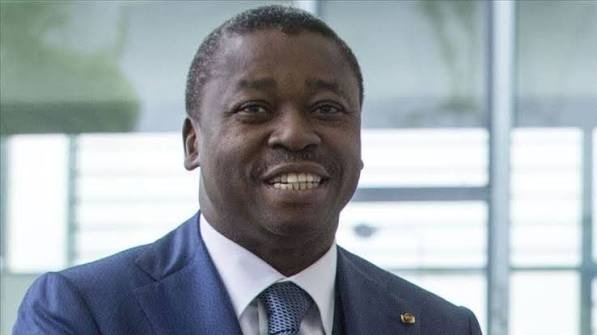
The collective, spanning human rights groups, legal experts, and pan-African movements, argues that the constitutional changes were a pretext to extend the tenure of President Faure Gnassingbé under the guise of a new role as President of the Council of Ministers. Their concerns are now backed by the ECOWAS Court’s binding decision, which underscores the illegality of such political engineering.
Civil society mobilizes for legal and diplomatic action
The 43 organizations issued a joint declaration, emphasizing that the ECOWAS Court’s ruling is not merely advisory but a legally enforceable directive binding on Togo as a founding member of the regional bloc. They stress that the country’s obligations under the 2001 ECOWAS Supplementary Protocol on Democracy and Good Governance must be upheld without exception. “If West Africa is serious about curbing military coups, it must equally sanction constitutional coups with equal rigor,” the statement reads.
A call for targeted punitive measures
The coalition’s demands, outlined in their communiqué, include immediate enforcement of ECOWAS sanctions against key Togolese officials. Their proposals target both the ECOWAS Commission and the African Union’s Peace and Security Council, urging the suspension of Togo’s participation in regional decision-making bodies until democratic norms are restored.
Their four-point agenda also calls for:
- ECOWAS Protocol enforcement: Activation of sanctions mechanisms for breaches of democratic governance.
- Diplomatic isolation: Review of Togo’s role in regional institutions.
- UN oversight: Appointment of a UN Special Rapporteur to monitor public freedoms.
- Inclusive dialogue: Restarting a nationally mediated political dialogue to resolve the crisis.
A defining moment for regional democratic integrity
The unfolding crisis in Togo has become a litmus test for the ECOWAS’s commitment to democratic principles. Over the past decade, Togo has faced repeated accusations of constitutional manipulation to prolong political power—raising questions about its credibility within the bloc. The decision facing ECOWAS leaders in the coming weeks will reveal whether regional stability or strict adherence to democratic governance takes precedence.
With the international community watching closely, Lomé now stands at a crossroads, forced to choose between diplomatic pragmatism and upholding constitutional democracy.