Deadly weekend attacks claim lives across Burkina Faso

A wave of recent jihadist offensives has tragically claimed the lives of at least 22 military personnel and civilian Volunteers for the Defense of the Homeland across Burkina Faso. The military junta, led by Captain Ibrahim Traoré, is intensifying its counter-operations in response to this alarming and persistent security crisis that has plagued the nation for years.
Over the past weekend, suspected jihadist assaults in northern Burkina Faso led to the deaths of at least 22 soldiers and their civilian auxiliaries. These latest incidents highlight the severe security challenges facing the West African nation.
Burkina Faso, under the military junta led by Captain Ibrahim Traoré since his September 2022 coup, has endured a decade of devastating offensives. Groups affiliated with Al-Qaeda and the Islamic State continue to wage deadly campaigns across significant portions of the territory.
“A rapid intervention battalion (BIR) base in Di, near Dédougou, came under jihadist assault Saturday morning,” a security contact revealed on Tuesday. “Despite a brave defense, we regret to report at least fourteen soldiers and seven VDP members lost their lives.” The Volunteers for the Defense of the Homeland (VDP) are civilian auxiliaries, recruited in their thousands, who bear a heavy cost in the anti-jihadist struggle.
According to the same source, “another attack targeted the Solhan detachment in the northeast, which also claimed several lives, including an officer.” This prompted a “large-scale response operation.”
Another security source confirmed both attacks, lamenting “heavy human and material losses,” without providing further details. A police source indicated that a third attack occurred on Sunday, targeting a military post in Séguénéga, a locality near Kaya in the centre-north.
“From Saturday, the coordinated response and pursuit operations led by the hierarchy resulted in the neutralization of several dozen terrorists and the recovery of various military equipment and logistical resources,” the police source emphasized. Solhan previously witnessed one of the country’s most devastating attacks in June 2021, which left an estimated 130 to 160 civilians dead.
On Monday, the Group for the Support of Islam and Muslims (JNIM), an Al-Qaeda affiliate, claimed responsibility for multiple operations against Burkinabè army positions “in several towns” and asserted the deaths of “several Burkinabè soldiers.”
Diplomatic shifts amidst insecurity
The authoritarian military regime, which has ceased public reporting on soldier casualties for several years, occasionally releases figures for its counter-operations. The General Staff of Burkina Faso recently announced, in a statement last week, that it had eliminated “over 400 terrorists” following “complex and coordinated attacks against our positions in the localities of Gayéri (Sirba region), Solhan, and Sebba (Liptako region).”
The Ouagadougou government has linked these attacks to its unilateral decision in late June to sever diplomatic ties with France. The Burkinabè authorities accused Paris of “incessant activism” against its interests and of “supporting” jihadists while “feeding a distorted narrative” on the country’s security situation.
After years of growing tensions, Ouagadougou formally ended its diplomatic relations with Paris. France, in turn, expressed regret over the military government’s “hostile and baseless” decision, subsequently withdrawing all its diplomats from Burkina Faso and demanding the departure of Burkinabè diplomatic personnel from France by July 6th. Ouagadougou has not publicly commented on the departure of its diplomatic staff from France.
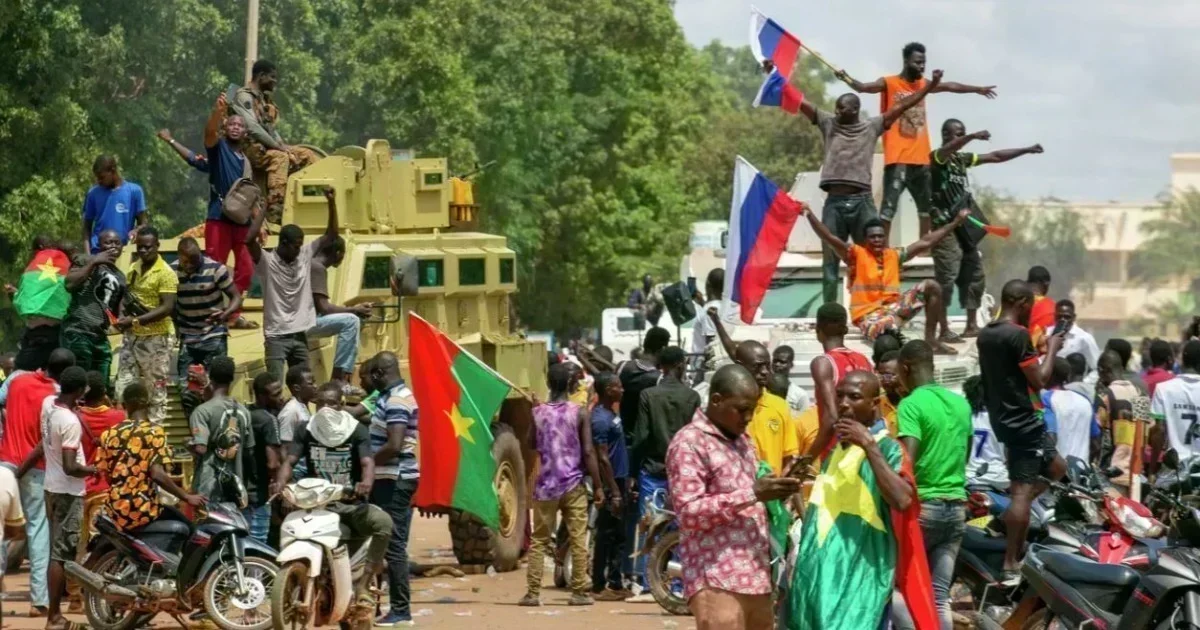
Shortly after assuming power, the junta had already demanded the recall of France’s ambassador to Ouagadougou, Luc Hallade, and the withdrawal of French forces, who had long been involved in anti-jihadist efforts. In a strategic shift, Burkina Faso has since cultivated new partnerships, including with Russia. It has also spearheaded the formation of the Alliance of Sahel States (AES) alongside neighboring Mali and Niger, a key development in regional security efforts.
Niamey is reportedly scheduled to host a meeting this Wednesday with the foreign ministers of these four nations, further emphasizing the regional cooperation in response to ongoing challenges.