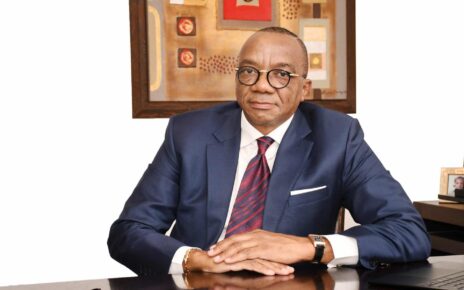
Aimé Boji Sangara, president of the Democratic Republic of the Congo’s National Assembly, has praised the resilience of conflict-affected communities in the eastern part of the country. He also reiterated parliament’s firm stance on national unity and territorial integrity.
In a speech on Monday, 15 June 2026, marking the close of the ordinary session that began in March, Boji first honoured internally displaced people and refugees, whose humanitarian plight remains dire. Addressing the populations of North Kivu, South Kivu and Ituri, he conveyed a message of solidarity and hope as they endured the impact of armed conflict.
“I take this opportunity to salute the remarkable resilience of our internally displaced compatriots and refugees. Their suffering remains at the heart of the National Representation’s concerns. Allow me at this point to send a message of solidarity and hope to our brothers and sisters of North Kivu, South Kivu and Ituri, who continue to show resilience and resistance in the face of the ordeal imposed on them by Rwandan troops and their auxiliaries, the AFC/M23,” he said.
Speaking partly in Swahili and French, the lower house president affirmed the unshakeable belonging of eastern DRC to the nation, insisting that the occupation cannot last forever.
“North Kivu, South Kivu and Ituri are and will always be an integral part of the Democratic Republic of the Congo, a blessed gift from God, a sacred heritage handed down to us by our ancestors. We are convinced that the illegal occupation of our country in its eastern part is neither final nor irreversible. Like every unjust situation in the history of peoples, this barbaric occupation will end.”
Turning his attention to those who advocate for the country’s balkanisation, Boji warned against any attempt to undermine national unity or the identity of people living in occupied zones. He reaffirmed the ongoing bond among Congolese citizens despite the current security crisis marked by war and occupation attributed to the AFC/M23, supported by Rwanda.
“This is the place to say out loud to all those who think that our brothers and sisters living in the occupied territories can renounce their national belonging or collude against the fatherland that they are mistaken, because we remain in perfect communion with them and continue to tirelessly defend national unity, territorial integrity and the sovereignty of our country. Indeed, our greatest weapon in the face of adversity is not only military; it is above all our high sense of patriotism, our national unity and our resilience,” he declared.
He rejected any attempt to divide or manipulate the populations of eastern DRC. He reiterated the indivisible nature of the Democratic Republic of the Congo and the institutions’ determination to defend every inch of national territory.
“Let the dark forces that attack our country in the east and try to mislead our compatriots living in the occupied areas know that we will oppose them with an insurmountable wall of solidarity. The Democratic Republic of the Congo is one, indivisible and plural. Whether you are in Goma, Muanda, Gemena or Lubumbashi, the blood that flows in the east is ours. National unity is not an empty word; it is the cement of our survival and our greatness. Let them know well that we will defend ourselves to the last square kilometre of our territory,” he insisted.
The security situation in this part of the country continues to deteriorate. Despite the existence of the Washington Accord, reached under the auspices of the United States of America, and the Doha process led by the State of Qatar with support from the African Union, and despite successive review meetings, the security and humanitarian situation in eastern DRC remains worrying. Civilian populations in this corner of the Democratic Republic of the Congo continue to bear the brunt of violence and forced displacement, further worsening an already catastrophic humanitarian context amid declining international funding for humanitarian aid.
Faced with this situation, calls continue to be made at national, regional and international levels for all stakeholders to respect commitments made under peace initiatives. However, these appeals have so far had no significant effect. The goal of bridging the persistent gap between ground realities and diplomatic progress on paper has yet to materialise. Each party continues to interpret the provisions of the accords according to its own reading, making implementation ever more uncertain.