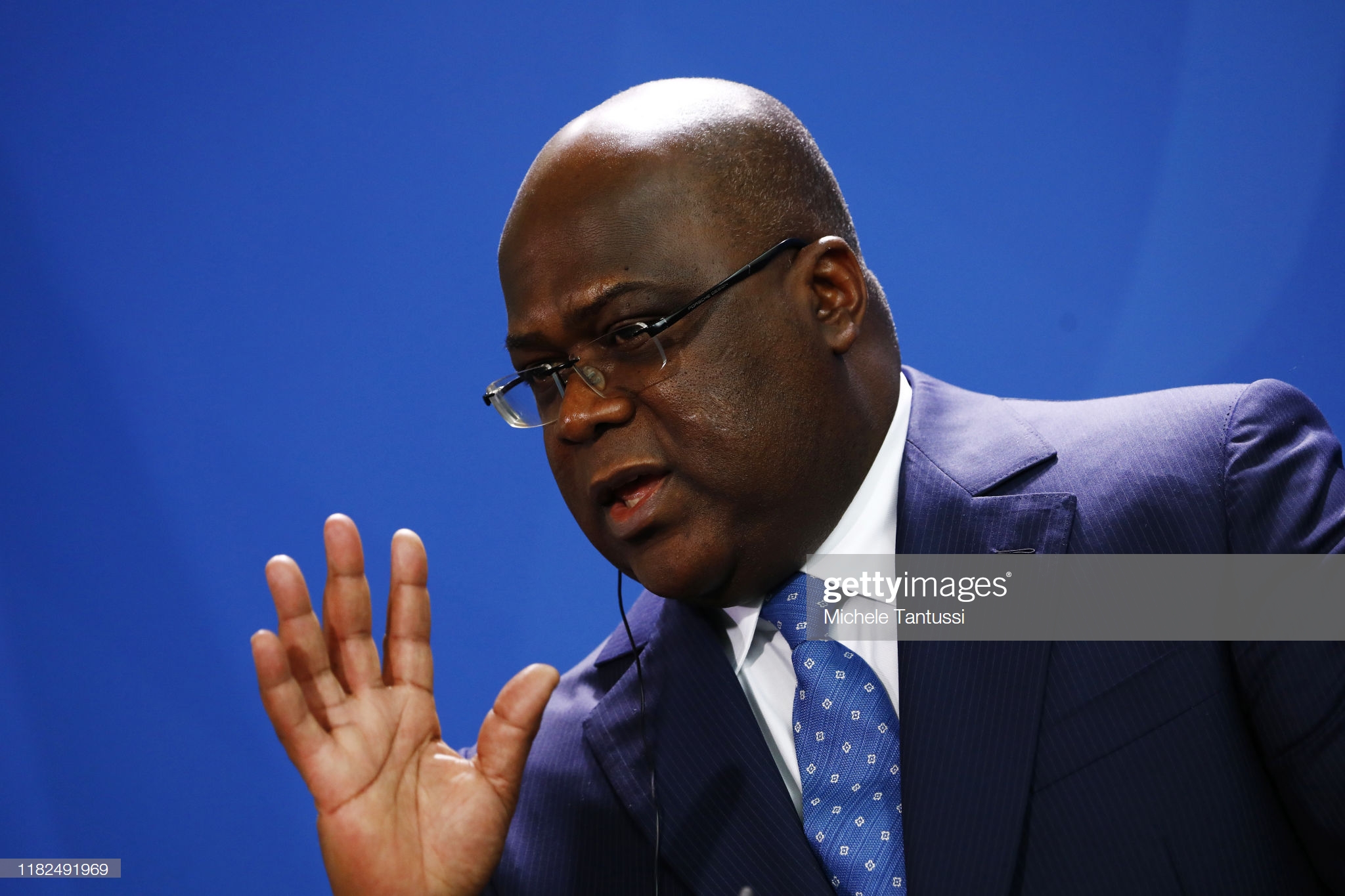
During an official visit to Luanda, Angola, where he received a warm welcome from his Angolan counterpart, João Lourenço, President Félix-Antoine Tshisekedi of the Democratic Republic of Congo (DRC) delivered a profoundly impactful and politically charged address.
Speaking from the podium at the 3rd edition of the United Nations Alliance of Civilizations (UNAOC) initiative, the head of state forcefully condemned the international community’s inertia in the face of the devastating security crisis gripping Eastern DRC, raising his voice against a global order he perceives as adrift.
For President Tshisekedi, the ongoing Congolese tragedy must no longer be dismissed as a mere regional incident but rather recognized as a stark indicator of a collective failure of international law.
“We cannot accept the silence of convenience”
Addressing an audience of world leaders, diplomats, and civil society representatives, the Congolese President eschewed polished diplomatic language, instead delivering brutal truths about the human catastrophe unfolding in his nation:
“We must reject the trivialization of war. We cannot be content with indignation that quickly fades. We cannot accept the silence of convenience, nor merely count victims to then forget them. We cannot allow International Law to become a ceremonial language devoid of genuine impact.”
This direct appeal unequivocally targets the lack of concrete action by major global powers concerning the Rwandan aggression, perpetrated under the guise of the M23 rebellion. By emphasizing that peace should not be reduced to empty rhetoric or a “temporary cessation of arms,” the head of state demands that justice, truth, and respect for national sovereignty finally guide multilateral resolutions.
Eastern DRC conflict: A critical test for global order
Broadening his perspective, Félix Tshisekedi warned the assembly that turning a blind eye to the security chaos in the Great Lakes region poses a systemic danger to the entire planet:
“The struggle waged by the DRC extends far beyond its borders; it does not solely concern the security of a Central African nation. It challenges the very solidity of the international order we claim to uphold, because wherever the law of the strongest prevails over the strength of law, no people can remain permanently safe (…).”
For Kinshasa, the situation in Eastern Congo represents a crucial test of multilateralism’s credibility. If the borders of a sovereign state can be violated with impunity, sponsored by neighboring countries without significant sanctions, then the global security of every nation is fundamentally undermined.
Strategic discussions with João Lourenço
On the sidelines of this forum, Félix Tshisekedi and João Lourenço, who serves as the African Union’s designated mediator for the DRC security crisis, engaged in a private discussion. The two leaders assessed the on-ground situation and deliberated on the next steps for the Luanda peace process initiatives.
As the DRC is set to assume the rotating presidency of the UN Security Council from July 1, 2026, this resounding address in Luanda marks the commencement of a significant diplomatic offensive aimed at compelling the international community to move beyond mere words and take decisive action.