France is grappling with a deepening security crisis as urban riots spiral out of control, leaving trails of destruction across major cities. After another night of looting, violent clashes, and barricades erupting nationwide, President Emmanuel Macron faces mounting pressure to address systemic failures within the government’s law enforcement apparatus.
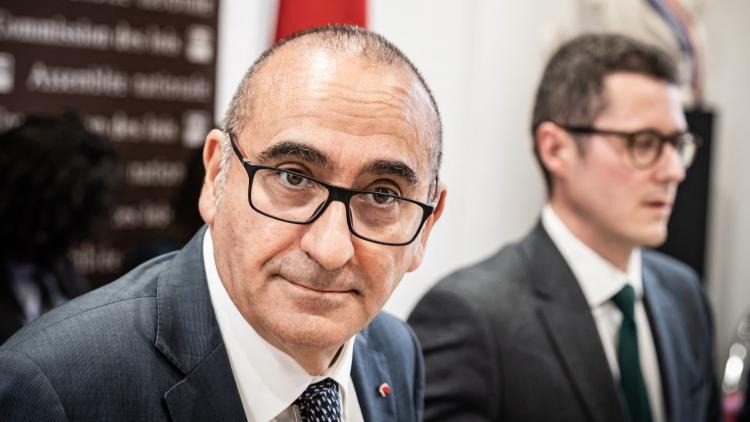
In a surprise move, Interior Minister Laurent Nuñez tendered his resignation, citing personal accountability for the mismanagement of public order during the unrest. Yet, in a decision that underscores the urgency of the moment, Macron has blocked the resignation, forcing Nuñez to remain at the helm of the Interior Ministry—provided he delivers on sweeping reforms.
Why Macron’s refusal of Nuñez’s resignation could be a double-edged sword
The Élysée’s decision to reject Nuñez’s resignation reflects a calculated gamble: maintaining leadership continuity during a critical juncture. With rioters targeting businesses, public infrastructure, and emergency services, the government argues that instability at the top could further embolden disorder. Yet, opposition leaders and protesters alike warn that blind loyalty to a beleaguered minister may undermine public trust in the long run.
The decree from the presidential palace was clear: Nuñez must overhaul policing strategies or risk swift replacement. This high-stakes mandate comes with a checklist of demands—starting with an immediate shift in tactical response to riot control.
From containment to confrontation: A new era for French riot police
The days of passive crowd control are over. Under Macron’s orders, Nuñez must deploy aggressive countermeasures to dismantle barricades, neutralize looters, and prevent targeted destruction of commercial and government properties. The tactics of the past—characterised by delayed interventions and piecemeal responses—have proven inadequate in the face of coordinated urban uprisings.
Proactive policing is now the watchword. Police units nationwide have been instructed to adopt zero-tolerance policies, including preemptive arrests and rapid deployment of specialized squads equipped to handle large-scale civil unrest. The goal? To restore order before the damage spirals further.
The intelligence gap: How France’s security apparatus failed before the riots
While the government focuses on operational fixes, analysts warn that the root causes of the unrest run deeper. Espionage and intelligence failures are emerging as critical issues, with reports suggesting that security services missed early warning signals of the impending escalation. Intelligence agencies are now under scrutiny for their inability to predict or contain the outbreak of violence.
Emmanuel Macron has tasked Laurent Nuñez with conducting an exhaustive audit of pre-event intelligence gathering and threat assessment protocols. The findings, expected within weeks, could reveal systemic flaws that go beyond mere tactical errors. Will the overhaul extend to reorganizing intelligence networks for better coordination with local and national law enforcement?
The pressure is on. With businesses shut, streets barricaded, and public sentiment turning against the government, the success or failure of this security reform could define Macron’s legacy as a leader who either restored stability—or presided over its unraveling.
What’s next for French citizens and businesses?
- Businesses in riot-hit zones are bracing for economic fallout, with many unable to recover lost revenue from closures and damage.
- Residents of affected neighborhoods face heightened security risks, including gunfire and arson, prompting calls for federal intervention.
- Police unions have criticized the reforms as rushed, raising concerns about officer safety amid escalating violence.
Can France avoid a prolonged crisis?
The coming days will be decisive. Macron’s gamble—keeping Nuñez while demanding radical change—will either recalibrate France’s approach to public order or accelerate the country’s descent into deeper unrest. One thing is certain: the status quo is no longer an option.