The recent recapitalization of Eramet, which saw Gabon acquire a significant stake, has sparked an unexpected political debate in Paris. Arnaud Le Gall, a French Member of Parliament from the LFI-NFP group, has formally questioned the French government regarding the true nature of this major capital transaction. According to the deputy, the narrative suggesting a boost to Gabonese mining sovereignty over its national resources may conceal a different reality: a financial bailout for the Duval family holding, a key Eramet shareholder through the Société de Développement et de Participations Minières et Industrielles (SDPMI).
Official narrative under scrutiny
Gabonese authorities had previously lauded the operation as a strategic triumph. As the world’s leading manganese producer via the Compagnie minière de l’Ogooué (Comilog), a long-standing subsidiary of the Eramet group, Gabon viewed this investment in the parent company’s capital as a powerful lever to capture more extractive revenue and enhance its influence over the group’s governance. Libreville has, for several years, pursued a policy of reclaiming control over its strategic resources, a direction evident in its revised mining code and the state’s renewed role in various sectors.
However, Arnaud Le Gall directly challenges this interpretation. The deputy argues that what is being presented as a gain in sovereignty for an African nation primarily serves as a lifeline for struggling French shareholders. The Duval family, with its historical ties to Eramet, has faced documented financial pressures within its patrimonial holdings. A recapitalization supported by an external sovereign investor inherently helps stabilize the shareholding structure without abruptly diluting historical positions.
Gabonese manganese at the core of the issue
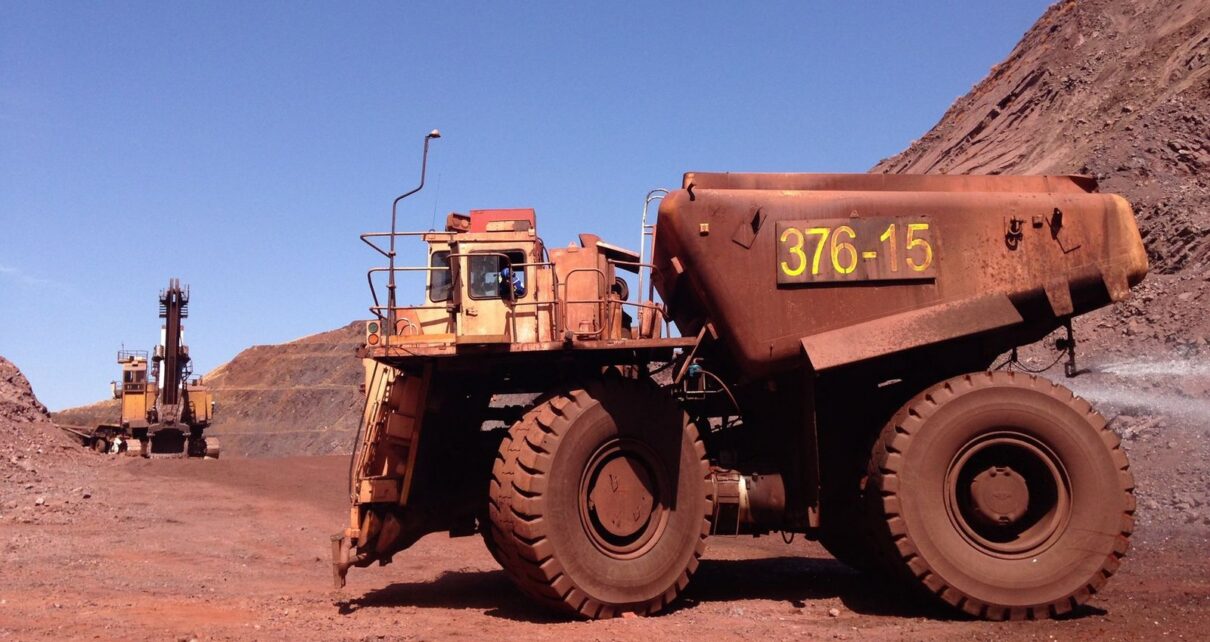
The industrial context heavily influences this discussion. Gabon contributes a critical portion of Eramet’s revenue through Comilog, whose manganese exports are vital for global steel production and, more recently, for battery value chains. Eramet is also advancing projects in nickel and lithium, metals essential for the energy transition. This operational dependence on Gabon’s subsoil creates an imbalance: Libreville provides the raw material, yet the added value and strategic decision-making reside elsewhere.
Gabon’s capital injection into the Parisian holding company was specifically intended to address this asymmetry. The parliamentary inquiry seeks to uncover the precise cost and the effective trade-offs involved. The LFI deputy is scrutinizing the financial terms of the operation, the governance guarantees secured by the Gabonese state, and any direct or indirect involvement of the French state in the arrangement. He has urged the French government to clarify its stance and specify whether any French public interests were associated with the transaction.
A debate extending beyond Eramet
Beyond this specific mining dossier, the parliamentary challenge reopens a persistent debate surrounding Franco-Gabonese economic relations. Following the political transition in Libreville, Gabonese authorities have expressed a clear intent to renegotiate inherited balances, both in hydrocarbons and mining. Several long-established French groups have seen their positions questioned or redefined. The Eramet episode fits into this sequence, but with a notable distinction: in this instance, it is the African state providing capital to a French group, rather than the reverse.
This inversion highlights the intensity of the controversy. Proponents of the operation see it as a sign of emerging African sovereign shareholding, capable of influencing the boards of European extractive majors. Detractors, including Arnaud Le Gall, question the financial rationality of the investment and its cost-benefit ratio for Gabonese public finances. The French government is expected to provide a written response to the parliamentary question within the stipulated timeframe, which may shed light on some of the more opaque aspects of the arrangement. This situation underscores the increasing complexity of economic ties between Paris and its African partners, where every significant capital operation now crystallizes competing interpretations.