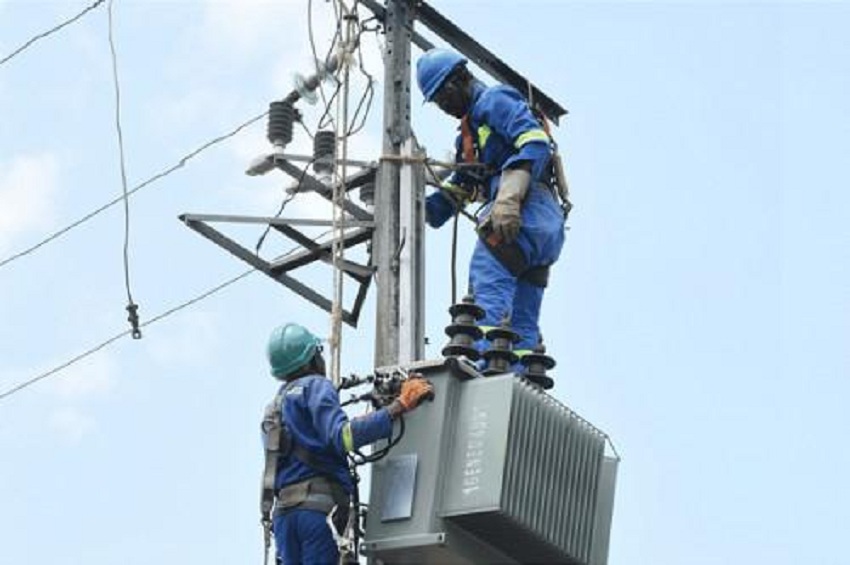
The african continent reaches a strategic milestone in its push for universal electricity access. With over 50 million people now connected across 40 countries, the “Mission 300” initiative is proving to be one of the most ambitious infrastructure programs of our time.
Driven by the World Bank Group and the African Development Bank (AfDB) Group, this momentum goes beyond mere promises. It delivers measurable, accelerated results that are reshaping the continent’s energy future, with Gabon now among the nations preparing to sign national pacts.
Beyond the numbers, a fundamental shift in approach is underway. African electrification is no longer a patchwork of isolated projects but a coordinated architecture where states, donors and the private sector advance on a shared roadmap.
Unprecedented acceleration fueled by new financial engineering
The 50-million-connection threshold marks an unprecedented pace. Consolidated data show access to electricity is now nearly twice as fast as when the program launched. This acceleration comes from an integrated strategy covering the entire energy chain, from generation to local distribution.
Emblematic results illustrate this scaling. In Tanzania, 7.5 million people gained connections, with the electrification rate increasing fivefold compared to pre-initiative levels. In Ethiopia, 4.6 million connections were made possible by reforms that made grid hookups more affordable.
This dynamic also relies on hybrid financial engineering. The two main institutions have committed nearly $15 billion, supplemented by about $4.5 billion in co-financing and over $7 billion from partner contributions. Grants, guarantees and concessional loans reduce risk and attract private investors to areas once deemed unprofitable.
In Nigeria, more than 4.5 million people were connected through private initiatives made viable by this investment-security mechanism.
Energy governance built on national pacts
One of the most transformative changes introduced by Mission 300 is the rise of National Energy Pacts. So far, 30 countries have adopted these strategic frameworks, designed directly by their governments to organize their energy transitions.
These pacts combine multiple levers: boosting electricity production, lowering access costs, accelerating renewable energy deployment, fostering regional integration and stimulating private investment. Above all, they reflect a desire for countries to regain control over national energy planning within a coordinated framework.
In the coming months, several nations will join this drive, including Burkina Faso, the Central African Republic, Djibouti, Rwanda and Uganda. Gabon is also on this path, with its national pact expected to be announced at the Africa Energy Forum in Cape Town. This participation confirms the country’s gradual integration into new continental energy governance standards.
An economic shift with global implications
Leaders of the major institutions involved emphasize a central idea: electricity is not just infrastructure, but a development multiplier. It underpins jobs, health, education and economic competitiveness.
For World Bank Group President Ajay Banga, the most important factor is not just the volume of connections but the initiative’s ability to create a sustainable platform that can be extended and amplified beyond 2030. African Development Bank President Sidi Ould Tah stresses that this progress must now translate into concrete gains for food security, health systems and economic inclusion.
This convergence of institutions, governments and investors signals the emergence of a hybrid model where development is no longer solely driven by states or donors, but by broad coalitions able to pool risks and accelerate results.
For actors like the Rockefeller Foundation and UN sustainable energy initiatives, the 50-million mark is only a starting point. Their goal is to anchor a replicable model at scale, where each connection becomes a lever for social transformation.
Toward a new african energy geography
The stakes of Mission 300 now go beyond simple electricity access. It redefines Africa’s place in global energy value chains. By structuring interconnected grids and attracting large-scale private capital, the continent is beginning to position itself as a strategic energy investment space.
In this context, Gabon and several other african states are no longer mere beneficiaries but actors in this transformation. Their integration into national pacts reflects rising institutional capacity and a commitment to a sustainable energy growth trajectory.
While the goal of 300 million connections by 2030 remains ambitious, crossing the 50-million threshold shows the trajectory is no longer theoretical. It is underway, accelerating and now backed by an unprecedented international consensus. The question remains whether this momentum can be sustained amid the financial, political and logistical challenges of a continent in rapid change.