Religious Influence Meets Political Strategy in Contemporary Senegal
The secular Republic of Senegal, where Sufi brotherhoods have long shaped societal and political landscapes, is witnessing a resurgence of interest in the anticolonial legacies of its religious leaders. This phenomenon is not merely historical but is actively being mobilized by political elites to craft narratives of sovereignty and national identity.
Political figures such as Bassirou Diomaye Faye and Ousmane Sonko are increasingly aligning themselves with the spiritual authority of these brotherhoods. Their engagement reflects a deliberate effort to resonate with the electorate while reinforcing claims of a uniquely African developmental model, untethered from foreign influence.
Institutional Pilgrimages and Symbolic Alliances
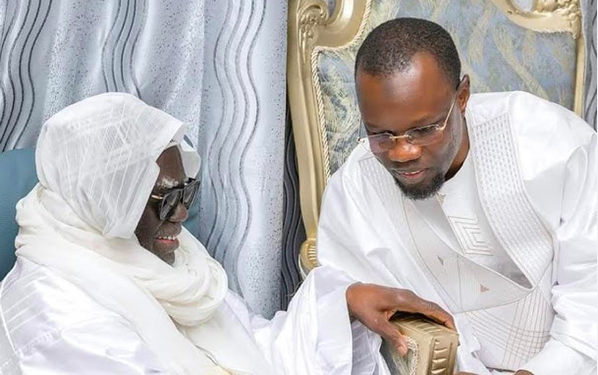
In late July, ahead of the Grand Magal pilgrimage, President Bassirou Diomaye Faye visited Touba to pay respects to Serigne Mountakha Mbacké, the spiritual leader of the Mouride brotherhood. Days later, Ousmane Sonko, now President of the National Assembly, followed suit. These gestures underscore the enduring role of Sufi leaders as « pillars of national unity » during periods of political instability.
Sonko’s visit to Touba was particularly symbolic. He drew direct parallels between his political vision and the principles espoused by Cheikh Ahmadou Bamba, the founder of the Mouride brotherhood and a towering figure in Senegal’s resistance to French colonial rule. Sonko highlighted Bamba’s rejection of French financial aid, framing it as a commitment to « securing the independence of local communities ».
Redefining National Narratives Through Religious Figures
This trend is part of a broader intellectual movement that reinterprets Senegal’s religious history through an anticolonial and militant lens. Cheikh Gueye, a Mouride scholar, notes that younger generations and political activists are increasingly viewing figures like Cheikh Ahmadou Bamba, El Hadj Oumar Tall of the Tidjaniya brotherhood, and Thierno Souleymane Baal—who established a theocratic state in the 18th century—as « political inspirations without deifying them ».
While this narrative aims to unify the nation under a shared history, it is not without controversy. Some religious leaders later collaborated with French colonial authorities, including by recruiting tirailleurs (colonial troops). This complexity is acknowledged by historians like Mamadou Fall, who is leading efforts to integrate these figures into Senegal’s national curriculum while addressing their dual roles as both anticolonial icons and, in some regions, perceived as violent conquerors.
Balancing History and Political Utility
The challenge lies in presenting a nuanced historical account that resonates with contemporary political ambitions. While figures like Bamba are celebrated for their resistance, others like Oumar Tall are remembered differently across the continent. This duality is a reminder that the past is often multifaceted, and its reinterpretation must be handled with care to avoid oversimplification.
The current political climate in Senegal suggests that the legacy of Sufi brotherhoods will remain a powerful tool in shaping national discourse. As the country navigates its postcolonial identity, these religious narratives are being repurposed not just for spiritual guidance but as instruments of political mobilization and national cohesion.