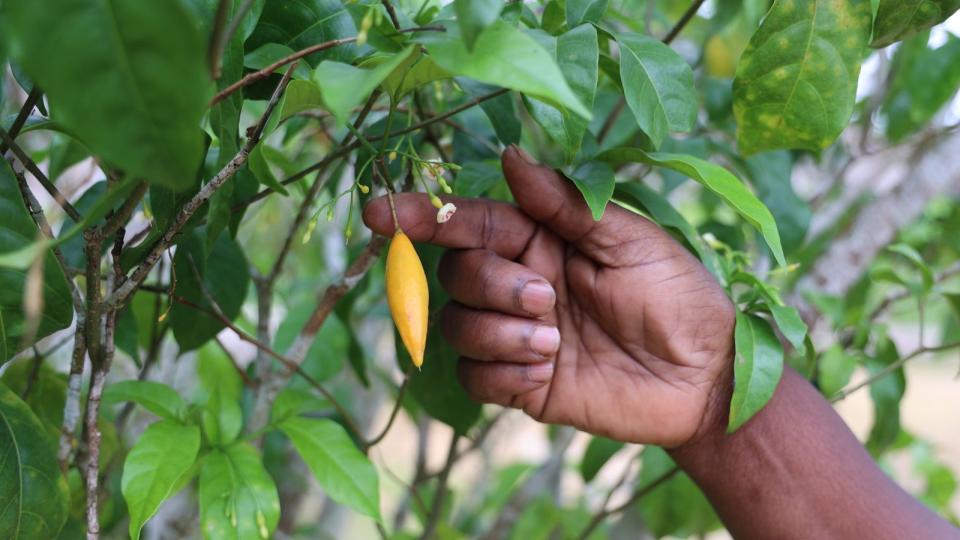
As the opioid crisis grips the US, the Gabonese government is seizing the opportunity to capitalize on the growing interest in Iboga’s therapeutic properties. The plant, a sacred species in traditional Gabonese rituals, has long been exploited by foreign actors, depriving the country of its economic benefits.
However, local resistance is organizing itself. In the Cap Esterias region, the International Development Research Centre (IDRC) Africa is now integrating Iboga into its agricultural projects. Ulysse Bekale, a local aménagiste, emphasizes the need for the Gabonese people to reclaim their patrimoine and calls for the creation of a ‘national medicine’ to bypass the black market.
Researchers are now focusing on valorizing local knowledge to create new products such as gels, liqueurs, or therapeutic chocolates. The ultimate goal is to unify Gabonese medical research.
The country needs to develop its technical capabilities to safely extract active principles from Iboga. The government aims to establish specialized centers where patients can experiment with the plant in a safe and controlled environment.
Conscious of these challenges, the Gabonese government has recently strengthened its legislation to regulate the access, exploitation, and commercialization of Iboga and related traditional knowledge. However, actors in the industry demand increased financial support for farmers and a genuine cultural diplomacy strategy.
The US administration is also pushing for accelerated research on Iboga due to post-traumatic stress syndromes. Despite being classified as a powerful psychotropic and banned in several European countries, the Gabonese government sees this as an opportunity to transform its mystical treasure into a modern medical cornerstone.