Gabon’s CAP 2030: a bold agricultural transformation plan
Libreville, July 13, 2026 – Gabon stands at a critical economic crossroads. Blessed with vast arable land, favorable climate conditions, and abundant water resources, the country paradoxically remains heavily reliant on food imports to feed its population.
This dependence not only strains the national trade balance but also exposes Gabon to the volatility of international markets. Recognizing this challenge, the government has elevated food sovereignty to the top of its strategic priorities.
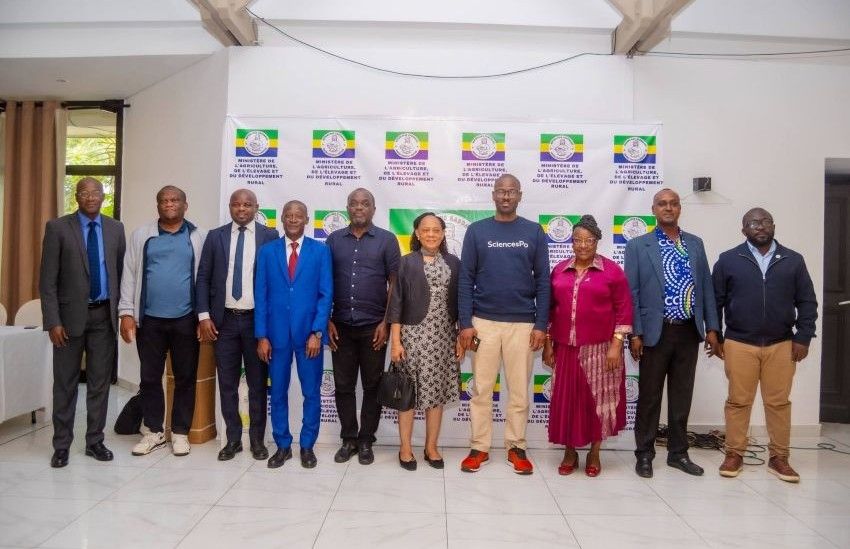
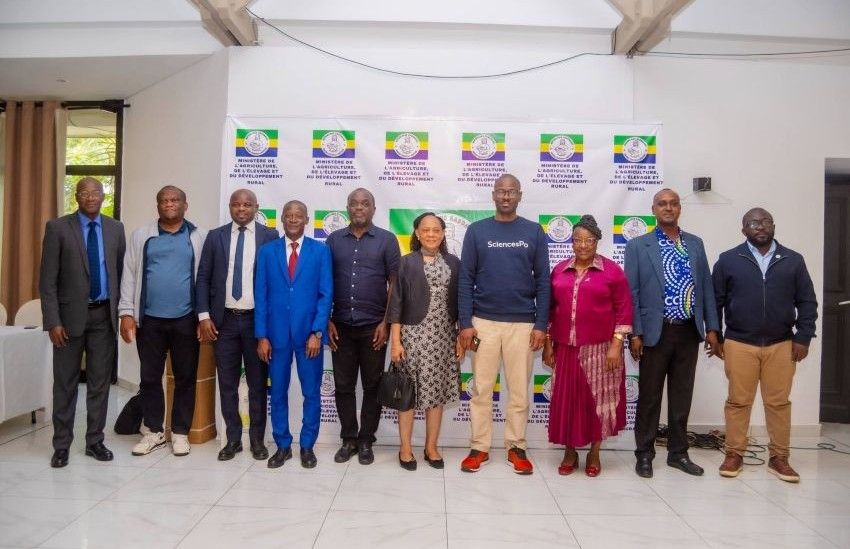
In response, the Ministry of Agriculture, Livestock, and Rural Development convened a two-day strategic retreat in Libreville. The gathering brought together top ministry officials to redefine governance methods and accelerate national agricultural transformation by 2030.
Led by Minister Pacôme Kossy, this initiative transcends a routine administrative exercise. It signals Gabon’s commitment to placing agriculture on a performance-driven trajectory, with measurable outcomes and managerial accountability at its core. The overarching goal is to slash the country’s food dependency and position domestic production as a cornerstone of economic diversification.
Under the banner “CAP 2030: Aligning Management, Accelerating Results, Securing Gabon’s Food Sovereignty”, the retreat assembled cabinet members, general directors, provincial leaders, and affiliated agencies. This mobilization underscores the sector’s emergence as a pivotal national security issue in the 21st century.
Modernizing governance for national ambition
Food security is no longer confined to traditional agricultural policies. Global health crises, geopolitical supply chain disruptions, climate change, and volatile food prices have reshaped state priorities worldwide.
For Gabon, achieving food sovereignty now means boosting production, local processing, supply chain structuring, and long-term national supply security. The Libreville retreat was designed to embed a new culture of public governance in the agricultural sector. The ministry is shifting its management mechanisms toward performance, administrative efficiency, and sectoral accountability.
The stated objective is unambiguous: every directorate, agency, and provincial representation must now align its operations with measurable outcomes and precise indicators. This marks a departure from conventional administrative models, which often prioritize inputs over results.
The upcoming Managerial Performance Pact, to be finalized post-retreat, will outline specific commitments with quantifiable targets and regular evaluation mechanisms. The introduction of a national performance dashboard reflects this commitment to results-based governance as a key reform driver for Gabon’s agricultural sector.
Massive investments to overhaul the sector
This strategic reflection follows an ambitious first-half 2026 report from the ministry. Officials reveal that nearly 7.575 trillion CFA francs in private investments have been mobilized through five strategic agreements aimed at modernizing agricultural value chains, livestock, and processing infrastructure.
If these investments materialize as pledged, they could represent one of the largest funding waves ever recorded in Gabonese agriculture.
Strengthening support for local producers is another ministry priority, with the aim of scaling up national farms and fostering an entrepreneurial agricultural sector capable of sustaining urban markets.
A major milestone involves finalizing the Agri-food System Transformation Plan (2026–2030). This strategic document will serve as a national roadmap for the coming years, setting priorities in production, processing, marketing, and climate resilience.
Food sovereignty as a pillar of national power
Beyond metrics and programs, the ministry’s approach signals a deeper shift in Gabon’s economic vision. In a world marked by trade wars, logistics crises, and raw material tensions, a country’s ability to feed its people has become a key indicator of sovereignty.
Agriculture is evolving from a mere productive sector into a strategic lever for social stability, national security, and economic resilience. For Gabon, the stakes go far beyond increasing yields. The goal is to build a model that creates jobs, revitalizes rural areas, reduces food imports, and strengthens the economy’s resilience to external shocks.
The retreat concluded on July 12 with the validation of the ministry’s strategic priorities. Stakeholders, investors, and international partners will be watching closely, as CAP 2030 embodies a broader ambition: to propel Gabonese agriculture into an era of performance, industrial transformation, and food sovereignty.
For authorities, the era of diagnosis is over. The focus is now on execution, measurable outcomes, and fulfilling commitments.
In the global race for food security, nations investing today in their production capacity will hold a decisive strategic advantage tomorrow. Gabon appears determined not to remain a spectator in this historic transformation.