Gabon’s Djoutou honey hub: a local economic transformation in action
Libreville, July 17, 2026 — In the global debate on natural resource exploitation, one question has persisted for decades: How can territorial wealth be converted into sustainable prosperity for local populations? Gabon’s answer lies not in its vast oil fields or manganese mines, but in a honey production facility inaugurated deep within the Djoutou forest.
What appears at first glance as a modest initiative actually represents a fresh approach to local development—one rooted in traditional knowledge, community entrepreneurship, and rural economic autonomy.
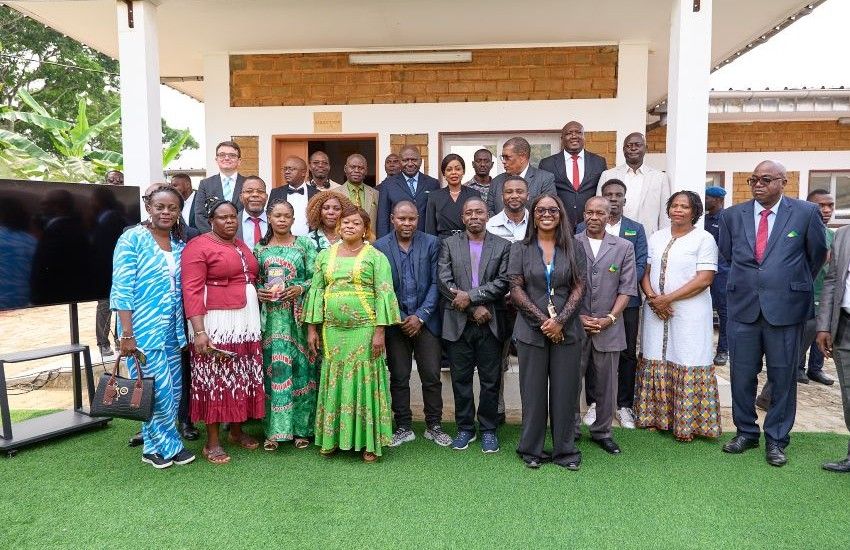
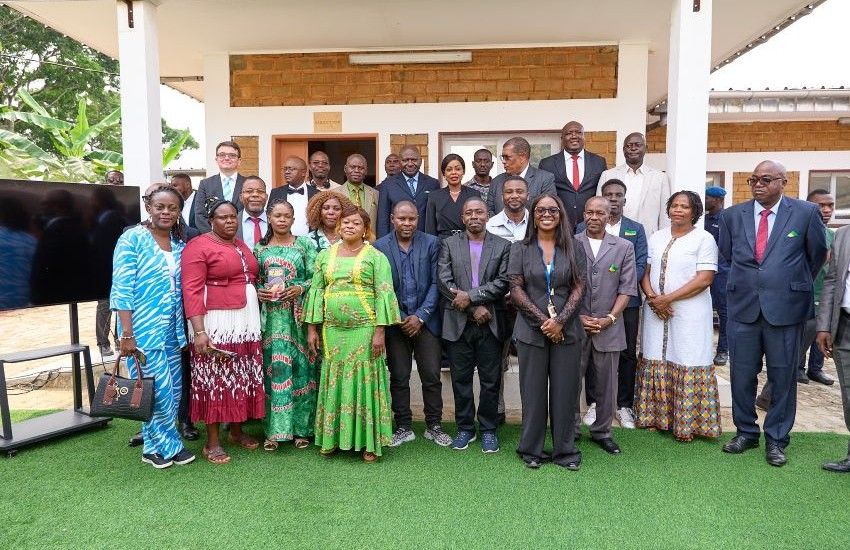
The facility’s launch on July 15, attended by the Minister of Entrepreneurship, Commerce, SMEs, and Youth Entrepreneurship Zenaba Gninga Chaning, transcends the mere opening of a honey production unit. It marks the emergence of a development model where communities become architects of their own economic transformation.
Turning the forest into lasting wealth
The Djoutou cluster unites six villages that have chosen to leverage a long-undervalued asset: traditional beekeeping. For generations, local populations have mastered honey harvesting techniques in an exceptional forest environment.
The formation of the Mes-Bouyi-Mes-Mbouka community cooperative has been pivotal. No longer content with simply collecting honey, the initiative now structures an entire value chain—from production to processing and marketing—aimed at reaching markets far beyond the province’s borders.
An investment of 200 million Central African francs underpins this ambition. The facility boasts 100 hives spread across three apiary sites and employs eight beekeepers, with an estimated annual production capacity of nearly 14 tonnes. In a continent still heavily reliant on food imports, the emergence of a competitive local sector sends a powerful signal.
A new generation of economic responsibility
This initiative aligns with Eramet Comilog’s Act for Positive Mining program, which prioritizes sustainable income generation over temporary financial compensation. The approach reflects a fundamental shift in how extractive industries view their role in African territories.
Zenaba Gninga Chaning encapsulated this philosophy succinctly: the goal is no longer merely to fund infrastructure, but to nurture self-sustaining projects that progressively strengthen community autonomy.
This strategy resonates with international development trends favoring long-term productive investments over perpetual aid mechanisms.
Rural Africa enters the value-added economy
While the immediate economic impact remains modest—ten direct jobs for local youth and women—the project’s true significance extends far beyond these figures.
The Djoutou honey hub is already planning to expand into value-added products, broaden its network of partner producers, and position Djoutou honey as a premium national and eventually international brand. This upward mobility strategy may prove the initiative’s most innovative aspect. Historically, African rural economies have focused on exporting unprocessed raw materials. Today’s generation of initiatives seeks to capture greater value locally through on-site processing and the creation of strong territorial brands.
As global consumers increasingly demand authentic, traceable, and eco-friendly products, Africa’s forest territories possess untapped potential waiting to be harnessed.
The Djoutou honey hub exemplifies a growing conviction across the continent: Africa’s economic future depends not only on large-scale industrial or mining projects, but also on transforming local resources, ancestral know-how, and human capital into engines of sustainable prosperity.
In this context, the honey produced in Djoutou’s forests could become far more than an agricultural product. It may symbolize a new development paradigm—one built on local value addition, community entrepreneurship, and territorial economic sovereignty.