Gabon’s new diplomacy: sovereignty and regional influence in focus
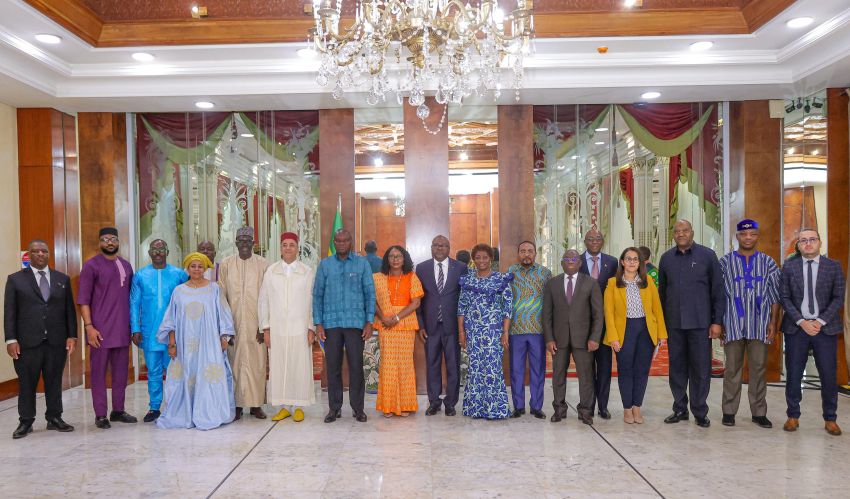
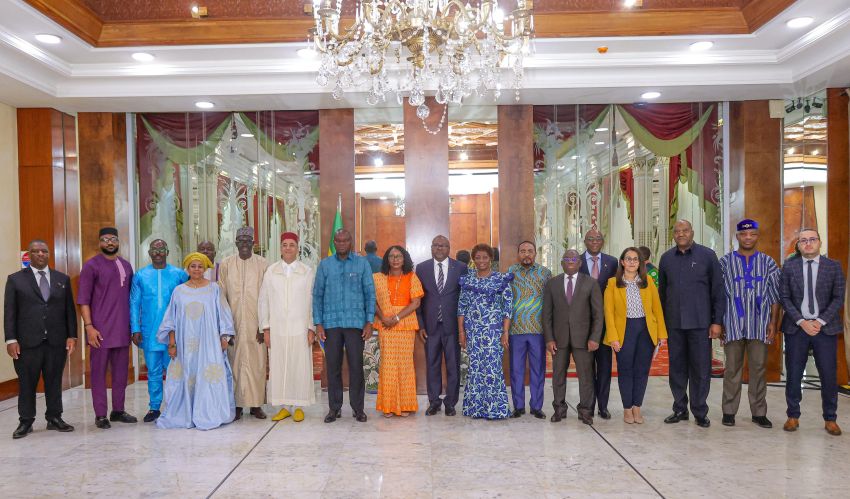
On a recent Friday in Libreville, President Brice Clotaire Oligui Nguema convened the nation’s African ambassadors for a landmark gathering. This was not merely a formal diplomatic event—it marked the unveiling of a bold vision to reposition Gabon as a key player in Africa’s evolving geopolitical landscape.
In a continent where security challenges, competing foreign influences, and shifting economic models dominate the conversation, Gabon’s leadership is making a clear choice: to prioritize African solutions to African problems. The president’s address outlined a strategic framework built on three pillars—regional integration, South-South cooperation, and national capacity-building—designed to transform Gabon from a stable nation into an influential regional force.
Building Africa through African leadership
The core of President Oligui Nguema’s message resonates across the continent: Africa’s future must be shaped by Africans. This principle underpins his administration’s push for greater sovereignty in economic, security, and institutional matters. Gabon is positioning itself not just as a participant in continental debates, but as a catalyst for action.
The first pillar focuses on accelerating regional integration, particularly by boosting intra-African trade—which remains among the lowest globally. The second emphasizes strengthening South-South cooperation to share best practices and foster economic complementarities. The third centers on strengthening national systems so that each country can independently address its development challenges.
This approach signals a shift from traditional rhetoric on African unity toward a results-driven, pragmatic model of cooperation.
From stability to influence: Gabon’s diplomatic pivot
Diplomatic observers have noted the tangible progress Gabon has made in infrastructure, urban development, and public services over the past three years. Now, the government aims to convert this stability into regional influence by deepening partnerships in energy, transport, agriculture, digital innovation, and education.
Key initiatives include the revival of joint commissions with African partners and a strategic bid to host the 2027 African Union-Regional Economic Communities biannual meeting. Additionally, Gabon’s candidacy to host the 2030 Francophonie Summit reflects a broader ambition: to position Libreville as a vital diplomatic hub connecting Africa, the Francophone world, and beyond.
Balancing openness with governance
The meeting also addressed the status of African residents in Gabon, with ambassadors raising administrative and consular concerns. President Oligui Nguema reaffirmed Gabon’s commitment to international conventions and improving service delivery for foreign nationals. Yet he emphasized a crucial balance: while Gabon remains open to African communities, this hospitality must align with national laws and governance standards.
In a powerful gesture, the president extended a message of reconciliation to the Sahel Alliance countries—engulfed in political and institutional tensions. He called for dialogue, mutual understanding, and collective problem-solving as the primary tools for resolving disputes, positioning Gabon as a credible mediator across Africa’s diverse political spectrum.
This stance underscores a broader ambition: to make Gabon a voice of reason and stability in a region often defined by division and uncertainty.
As this first-ever collective gathering with African ambassadors concluded, one thing became clear: Libreville is no longer content to be seen as a quiet capital in Central Africa. Through a diplomacy rooted in cooperation, peace, and regional integration, Gabon is stepping forward—not just to be heard, but to lead.
Yet the real test lies ahead. In today’s Africa, influence is measured not by words, but by the tangible outcomes they produce.